Author Archives: Ognian Georgiev
SHIRLEY MCLAIN: RELAX AND HAVE FUN WITH YOUR WRITINGS
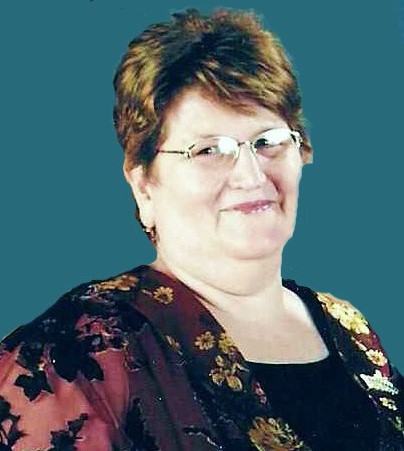
Our next guest Shirley McLain saw a lot of pain and people’s drama during her professional life. She worked as a nurse. After her retirement she published her first full book “Dobyns Chronicles”.
– How would you describe Dobyns Chronicles?
– Dobyns Chronicles follows a young man who has tragedy thrust upon his family and he takes the responsibility for his brother, David, and sister, Viola. In this story you follow his life from the mid 1800’s until 1955. This is a story of a changing way of life and adaptations made to survive. Charlie’s strong passion for life and dignity equipped him for survival as he raised his siblings with, likeability and dignity. It’s a story of loss, misfortune, hard times and heartbreak, but also love, determination, kindness, joy and spirituality.
Follow Charlie’s life through the adventures that shaped the man he became, and that of his family for generations.”
– When and why you decide to write the story?

– I thought about writing this book for many years. I grew up listening to my mother tell me stories about her Grandfather. I knew one day I would share this story. Parts of the story are fact but I had to create a lot about his life that I didn’t know. This story is tribute to my mother and her family.
– What was the biggest challenge during the write up process?
– Making sure that I showed Charley Dobyns as the man he really was. I did a lot of genealogy work on my mother’s family, tracing where they lived and other details.
– Is the main character someone, who you know from the real life?
– He was my Great Grandfather.
– Tell us more about it?
– I do remember meeting him and my Great Grandmother as a child in Oklahoma. We were on vacation from California we were lived at the time. We were heading back and stopped by their apartment in McAlester to tell them goodbye. I remember both of them standing out on the sidewalk hugging and kissing me and telling me goodbye. As I said before, I grew up listening to the stories my mother told about his life.
– What may we found in Shirley’s Shorts and Flashes?
– That book is a collection of short stories in different genres. There is something for everyone, from love to fantasy and horror. It was a fun book to do.
– Do you plan another book?
– I have a sequel to The Tower which is the YA mystery started. It’s going slow because of the promotion I’m doing for Dobyns Chronicles.
– What is the best part about being an author?
– I think creating the book or the story. I like the creation process with everything it entails from the setting to the characters to the story line itself.
– Do you have any advice you would give to a teen or young aspiring author?
– If you have had thoughts in your head that you want to write then just sit down and start writing. Let the flow happen, and it will. Relax and have fun with it. Get it on paper and then go back and add and subtract from it.
– Who are you?
– I was born and lived the first ten years of my life in the bay area of California. My parents moved back to their home state of Oklahoma and I then became an Okie. I have one sister so there’s just the two of us.
I am married to a wonderful man who spoils me rotten and I love it. I have two grown children, six grandchildren and a set of twins for Great Grands.
I retired from 32 years of being an RN (registered nurse). My specialties were Geriatrics as well as Labor and Delivery. I wouldn’t trade a minute of all my medical background and the adventures I encountered while practicing.
– Since you worked 32 years as a nurse. Do you miss something from your work?
– I miss interacting with my mothers and babies but most of all I miss the friends that I made along the way.
– Would you share the tough and the good moments of your profession?
– Labor and delivery is one of those areas that the majority of the time everyone is filled with joy at having this new tiny person in their life now. But when things go bad it is devastating for all who are involved. I can thankfully say that it didn’t happen many times over all the years I was practicing.
– What is your opinion on American health system and what you will change if you have a chance to do it?
– Our system has some good qualities but overall it is broken. It is overpriced and too many people are left without care. This is a topic that I could spend hours talking about and I don’t want to do that here.
– Every animal has some interesting story and a character. Tell us with one sentence, including their names, something about your three dogs and three cats.
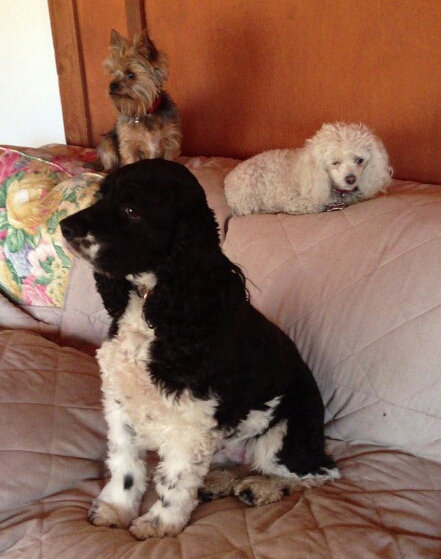
– Andy is my Springer Spaniel and he is the boss. Angel my teacup poodle thinks she is a princess and Booker, my teacup yorkie, thinks he’s a big dog. He protects everything.
If you are interested of Dobyns chronicles order here via Amazon
Learn more about Shirley:
Personal web page
FACEBOOK STORE
Twitter
PATRICK BRIGHAM: WRITING IS ABOUT 20% OF ANY PROJECT
The next guest Patrick Brigham is very interesting for me. The reason: He lived for many years in my country. He was in Sofia during the most controversial years in Bulgaria – late 90s. So here we are with the next Q&A:

– Patrick, Tell us more about your last book Abduction: An Angel over Rimini?

– Look at http://www.PatrickBrigham.co.uk and see the synopsis (I posted it below the interview).
– When was the first time when the story came up to your head and why you decide to make it as a novel?
– Rather like you I do not like trivial stories and with a background in journalism, the stories which capture my imagination are usually important. One of the EU’s great secrets is the story of illegal immigration. Bulgaria has had dreadful problems over the years, with refugees coming across its border with Turkey and elsewhere across the Black Sea. But Greece has been a favorite crossing point on the River Evros at the border where it meets Turkey and Bulgaria near Svilengrad. Inspired by the sad story of Madi McCann – who is just one of many unfortunate children abducted from within Europe – I modeled a fictional tory around an incident in Italy. This allowed me access to the Adriatic and to pursue a well traveled smuggling route from Greece, through Bulgaria and up into Western Europe.
– What was the biggest challenge during the write up process?
– You are a journalist and used to having deadlines! Having mapped out the story in my head – with many diversions I might add – it is a matter of good research and detailing, before embarking on the writing process, which comes with practice and of course my allotted time.
– What about your main character? How do you find him?
– Michael Lambert has been around for a long time. He is not a loud mouthed bully or a drunk and is a thoughtful and diligent detective. But he has suffered the usual policeman’s torment of a broken marriage, which inhibits him a bit, having been married for a number of years. In Abduction: An Angel over Rimini, there are some romantic interludes, which at the end of the story give both our main character and my readers a little hope.
– How long did it take to finish the story and publish it?
– I usually take about six months to complete a 85,000 word book. I have written three books in the last 18 months but that is just ‘the tip of the the iceberg!’
– Who are you?
I am an Englishman now living in Greece but I also lived in Sofia for some years where I started the first English language news magazine in Bulgaria, called The Sofia Western News.
– Writing is about – lets say – 20% of the any project, the rest of the time being devoted to promotion and getting ones profile in front of the reading public. This accounts for the remaining 80% and these days, which is the difference between success and failior.
– What is the current interest of the book and do you already plan your next one?
– It is early days to map out the success of this book which was only launched some three weeks ago but so far I have been interviewed on American radio and managed to fill up a few pages on Google.
– I know that your wife Madi is a PR specialist, but what do you think about promotion and marketing of the book?
– She is the expert but a word of caution to other writers: don’t be in a hurry, don’t expect things to happen quickly, and don’t be afraid to do some promotional work yourself.
– Tell me more about your first book Herodotus: The Gnome of Sofia?
– Herodotus: The Gnome of Sofia, is a fictional and humorous story about the British Embassy in Sofia, just after the changes. Herodotus is in fact a garden gnome which has been tampered with by MI6 – the British Secret Service – and is now a small and inconspicuous telephone base station, situated in the front garden of the embassy, and equipped to send and receive secret encrypted messages form its network of spy’s.
– How you ended up in Sofia and what do you think of the city?
– I first came to Sofia in 1985, during the old regime, and met many of the names and faces which have either been forgotten or have become a footnote in some historical account of the changes. Sofia in those days was bleak and rather grey and the only places of interest were hotel restaurants or if one was lucky a private party at a friends house. Artists, writers, musicians and actors, have always been the life blood of any capital, and Sofia was no exception. I haven’t been to Sofia for a while, but from memory it now looks much like any other modern European city.
But in the beginning, and after the changes, it became clear that the so-called democratization of Bulgaria was a myth and that the same people who were in power under Todor Zhivkov continued to pull the strings of those puppets who miraculously claimed to be politically unique and newly enlightened. You must tell me if this has changed – and by how much too – because people get old and die, and inevitably the mantle of power is then handed on to their young lieutenants.
– What is your Top 3 of the Bulgarian dishes?
– Bay Ganyo Restaurant serves up many good Bulgarian dishes – tongue cooked in salty butter, chicken kavarma, shopska salad and a good bottle of Khan Krum sounds about right.
– What is the difference between Bulgarians and the people from Western Europe in your personal view?
– The difference is how Bulgarians see themselves and this rather depends on how old they are too. The older generation were brought up to despise westerners under Communism. In those early days many would tell you that Bulgarians were generally disliked by the rest of Europe, and that consequently they had come to dislike other Europeans in return. But this was Bay Ganyo speaking on your behalf and having been a pawn at the Yalta Conference, it was no surprise that Bulgarians felt that they had been badly treated, and these memories do not go away in a hurry! But they are not your memories and this plethora of political contemp has now been swept away with modern technology the internet and the world wide web. Young Bulgarians are now open minded, uncomplicated, well educated and very ambitious. Good!
– You’ve been in Bulgaria during so called hungry democracy years. How you would describe those times?
– You don’t want to hear any more stories about bread cues and helpless optimism. The question is, did the Americans save you or was it the EU? I was there in the square with US Ambassador Saul Polanski outside the Sobranie that famous day in Spring where I heard all the grand hopes for Bulgaria and their US cousins. ‘You know Ralitza Vassilеva is a Bulgarian and she reads the news on CNN’ – there was a kind of forlorn hope amongst the crown that having left the strangle hold of the USSR, that Bulgarians in general would be saved by these kind and generous benefactors. Not true!
– Do you feel the touch of mafia in Sofia during the late 90-s?
– It was how much of business in Bulgaria was transacted. Bulgarian gangsters tried to emulate the Russian Mafia and were heavily involved in some very big frauds including fuel and gas fraud, VAT manipulation and of course drugs and prostitution. They were always on the lookout for new possibilities but generally, they were limited by their own intelligence. Unfortunately, this gangster steriotype has left its mark on Bulgarian society and many young people tend to develop this tough guy image as a matter of course.
– What is the most memorable moment of your stay in Bulgaria?
– The Sofia Western News used to put on a ‘Six a Side’ football championship. Up to 40 teams would take part, and it was managed by the late and great Rouman Yankov, who had been a Bulgarian professional footballer in his time, and also a TV personality. This tournament went on for some three years and took place at the Military Academy – which also had a team and also won the tournament on one occasion – and occupied a whole week. It was so popular that the players – who were all allegedly amateurs – were given time off from work by their employers, who also sponsored the occasion. It was great seeing Mobikom being thrashed by M Tel!
Take a look at Patrick’s books:
Abuduction: An Angel over Rimini
Judas Goat: The Kennet Narrow Boat Mystery
Herodotus: The Gnome of Sofia
Synopsis of Abuduction: An Angel over Rimini:
Detective Chief Inspector Michael Lambert has left the Thames Valley Police Authority and is now working for Europol as a front-line Europol Liaison Officer at The Hague. He has left England and, because of his recent divorce, now lives permanently in his holiday villa in the Calvados region of Northern France.
In An Angel over Rimini, his first case for Europol involves the abduction of a little English girl from a campsite in Riccione in Italy. It is a cold case, which has been re-opened due to public pressure, the intervention of the British government and the agitation of leading English newspapers.
DCI Lambert goes to Rimini to help the State Police re-investigate the kidnapping of little Penelope Scratchford, only to find that the investigating authorities are quite determined to blame the parents for her disappearance and murder. It becomes clear – as his investigation progresses – that there are too many unanswered questions and that much of the evidence has been ignored by the original investigating officer, Vice Inspector Daniel Bosola.
Whilst in Italy, DCI Lambert also finds time to catch up with his father’s mysterious past, during his wartime service in Bari as an RAF officer in a Pathfinder Squadron. This reveals some interesting, if not spectacular, revelations about his father’s secret wartime exploits and his peccadillos too! For Michael Lambert it is also an awakening, and romance in the shape of Countess Beatrix d’ Aragona finally brings the Europol detective back to life emotionally, somehow blotting out the past and his sterile marriage to Arabella.
Continuing his pursuit of the missing English girl, his investigations take him to Greece and the established smuggling routes through the Evros River delta up into Bulgaria. In Greece he discovers the horrors of organised illegal immigration, people trafficking and the gangsters involved. He also finds out that these established smuggling routes are Al Qaida’s way into Greece and the EU.
In his travels he comes across corrupt lawyers and orphanages in Bulgaria, but in so doing he also manages to pinpoint an established child trafficking trail which ultimately leads him back to Central Europe. The discovery of an illegal child adoption group in Hanover,the criminals who operate it, and the information gleaned during his trip through Bulgaria help DCI Lambert to learn if little Penny Scratchford is alive or dead.
HOW TO BEAT WLADIMIR KLITSCHKO
In the last 17 years the World heavyweight boxing champion Wladimir Klitschko has just three losses. The first one was in 1998. In front of his country-mates the Ukrainian was knocked out by the American outsider Ross “The Boss” Puritty.
As you probably know, I am a Bulgarian and a sports journalist. On 6 September 2014 I will travel to Hamburg, Germany, to cover and to commentate for Nova Tv the fight between Wladimir Klitschko and Bulgarian Kubrat Pulev.
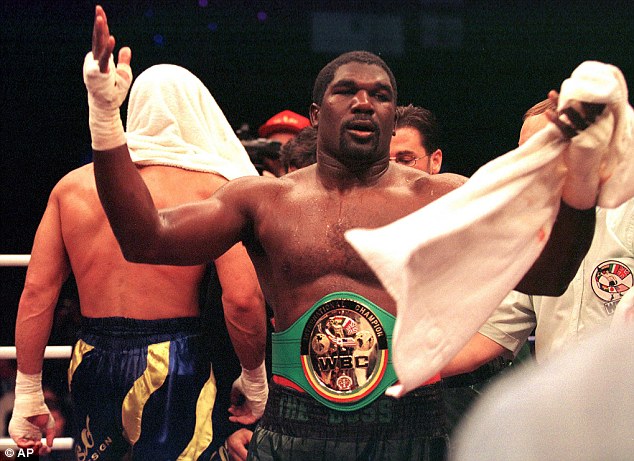
This was the reason to contact with Ross “The Boss” Puritty. He was very gentle to give me an interview via phone. The entire story you may read on the most popular boxing news source fightnews.com, where I am contributing from time to time. Just in short:
– Overhand right is the best shot against Wladimir
– Never box with Klitschko, you must fight him
– The stamina and the good chin are essentials
Check out the full interview here
MADI PREDA: THE FIRST PERSON WHO SHOULD PROMOTE A BOOK IS THE WRITER
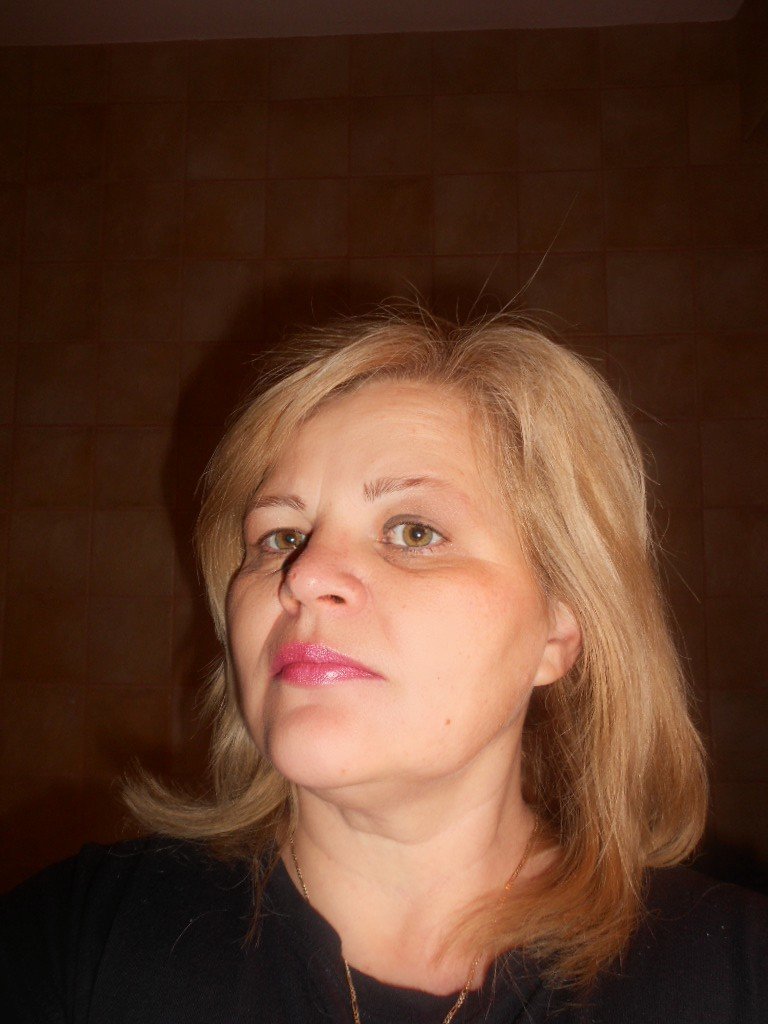
Madi Preda is a very special author. All the reviews of project “How To Promote and Market Your Book – Publicists Tips & Tricks” are very positive. She dedicated her time to help authors. This is why Madi is so interesting to all of us – indie authors.
– What is your book about?
– First of all I want to thank you for having me as a guest on your blog today. As the title sais “How To Promote and Market Your Book – Publicists Tips & Tricks” is a book about book marketing,based on my experience as a publicist and its meant to be a help for every writer. The book contains general notions about book marketing, step by step ideas on how to build an author brand. Three case studies for promotion on different genres and lots of resources and useful contacts.

– How you decide to write this kind of book?
– I have met many authors complaining that their publisher don’t do much publicity for their books and I think here is a bit of misunderstanding. The first person who should promote a book is the writer because he knows best what the message of his story is and he is the most qualified person to share this message with the audience. How readers perceive a book has an important role when it comes to brand yourself as a writer, to promote a book efficiently and the ability to do this has become essential. No matter how talented an author is – if the readers don’t know about a book, how will they know to buy it or if it is a good one or not?
How To Promote and Market Your Book by Madi Preda is an easy to read and understandable guide designed to help every author to chart their own path and stand up and say to the world “Here is my book” and communicate the message from between the covers in an original way that call to action and make their book a must read.
Writing a book without promoting it is like waving to someone in a dark room. You know what have you done but nobody else do.
– What was the biggest challenge during the write up process?
– The biggest challenge for me it was not to write in my language, which is Romanian and always there was the fear that I will make mistakes and readers will penalize me for that. I was lucky enough to meet Nancy King – the author of Changing Spaces and she did the editing for me. So that problem was solved.
Another challenge it was my determination to do everything on my own, and that was a big one. I designed the cover and I had to find out how to format an e-book. Many new things for me and I had to study a bit in order to complete this project.
– How much time you need to finish the story and to publish it?
– It wasn’t such a long time. Many materials such as lists of bloggers and other resources were part of my daily activity as a marketer. Then there was a pre order campaign for about a month and finally the book was published on 1st of July. All together about three months I think.
– Who are you?
– This is a tough one. You know, I can do PR for other people quite easy but I find difficult to talk about me. So,lets start with…I am Romanian and I am living now in Greece. I was dreaming to become a doctor and I ended up by being an economist. Because I couldn’t practice that here in Greece and because I didn’t manage to learn the language, I was trying hard to find something to do online using English language. I like reading and when my husband published his first two novels, “Herodotus The Gnome of Sofia” and “Judas Goat The Kennet Narrow Boat Mystery” I helped him a bit by designing some electronic newsletters and spread the word about his novels. After that the idea grew and here I am doing promotion and public relations for authors.
About my human being, I have to say that I always liked to see only the good side in people and in everything which happens to me.
– Do you have some kind of system or writing procedure when you wrote the book?
– Not really, it is my first book and I like to say that I am unique, not necessary as a plus. Everything it was about back and forwards, cutting some pieces off, developing some others, cover design before finishing the book.
– Are you satisfied by the sales of the book and do you plan another one?
– I think it is a bit early to discuss the book sales, and it is not that the point. More important for me is the engagement and the response for my targeted audience; with that yes, definitely I am satisfied. The book it has a few reviews on GoodReads, and lucky me all of them are five stars.
Also I am satisfied with the number of downloads during the pre order campaign and I have to say its worth the effort to set it up and this is an advice for every single author. If they do pre orders and they promote the pre-order campaign efficiently they will be pleased with the results.
– What are you doing to promote the promotion book?
– You made me smile with this question. You know what is amazing, I found myself in the position of others now and sometimes I am a bit shy to say, hey here is my book. Funny enough I think I do less for my book than I have done for others.
*Please list the Top 5 advises that authors must follow in order to make good promotion?
*Do research to find the right audience
*Draw a marketing plan
*Be cooperative, ask and offer help to other authors
*Start marketing the book before its finished (post excerpts, do a cover reveal, mention it as a work in progress every time you can)
*”Think outside the box” and find new and original ideas
– What is the rate of importance between being a good author and good promoter in order the book to be well discovered by the readers?
– I don’t like to talk about numbers and statistics, what I can say is that being a good writer is not enough.
– You are born in the Balkan peninsula, how would you describe with three phrases this part of the earth?
– In that part of the world, generally speaking, people are very sensitive and caring people with an open and sincere display of emotions. Abroad this is not always so… and the humanity has been polluted by materialism and wrong values. Probably being away makes me to idealize a bit and to remember only the good things.
You may find “How To Promote and Market Your Book – Publicists Tips & Tricks” on:
Barnes & Noble
Smashwords
Kobo
DO YOU WANT TO KNOW MORE ABOUT ME?
Then check out my interview for Ira’s Love Hate Poetry web page. Go here
BOOK IN THE TRAINING BAG
Here is a very interesting photo, made by Ian Haya! Credits to him and his club (www.Facebook.com/justliftinc and http://www.JustLift.ca)!
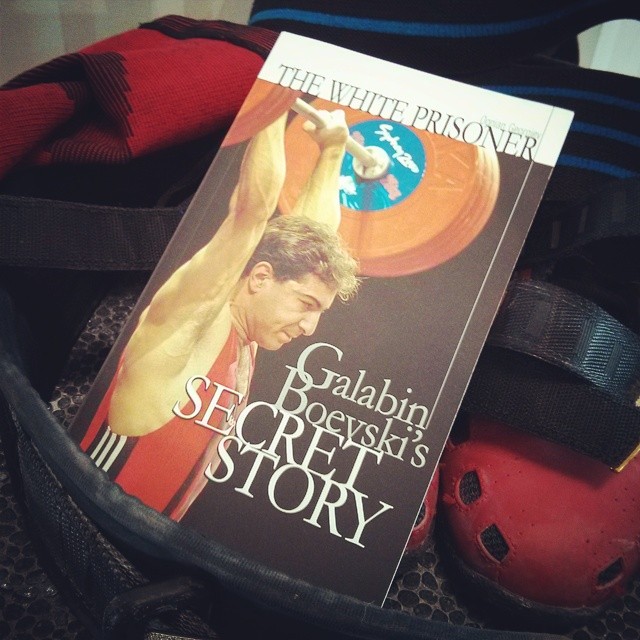
The print copy of “The white prisoner: Galabin Boevski’s secret story” is available here:
CARMEN STEVENS: I CRAFTED THE MAIN CHARACTER FROM THE DARK SIDE OF MYSELF
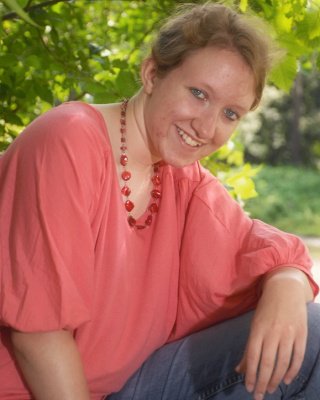
The next guest in our Q&A interviews with authors section is Carmen Gross. She is known by her pen name as Carmen Stevens. The American is born in Fargo and is one of the youngest writers around. Her first book “Anne” was published last year.
– What is your book about?
– My book is a historical thriller, titled “Anne”. It involves an egotistical, orphaned girl in eighteenth-century England who longs for true happiness in her life, but it’s not until Anne endures a series of hardships that she realizes what it means to be truly satisfied.

– How you decide to write the story?
– I have always loved to write, and I felt that I needed to write a story that would tell the world of the importance of loving and getting along with one another, not to take anything for granted, be rich in love, and all of the other themes that my story is about.
– What was the biggest challenge during the write up process?
– I didn’t have too much difficulty, except in some punctuation and grammar matters. I have trouble with commas.
– Tell us something more about your main character? Is it close to someone from your real life?
– I think Anne is a very interesting, complex character, and I think I kind of crafted her from the dark side of myself. Anne is fiercely independent, haughty, indifferent, seductive, potentially cruel, and way too prideful for a girl of her circumstances. She’s also incredibly selfish, putting her own well-being before anyone else’s. However, Anne dreams of a better life, a life in which she doesn’t live on the dirty streets of London, England, and in order to find this happiness, she must endure certain sufferings and gradually learn to be a kinder person.
– How much time you need to finish the story and to publish it?
– It actually took me a few years to finish writing “Anne,” but it took less than a day to publish it. This is because I self-published it.
– Who are you?
– I’m Carmen Gross, but my pen name is Carmen Stevens. I’m a 22-year old full-time college student and author. I’m studying law, but for the summer I’m working. I self-published “Anne” in July of 2013.
– What are your writing habits?
– I like to totally flesh out a story before writing it from the beginning. I believe that a person should know where a story is going to go before writing the actual story.
– Are you satisfied by the sales of the book and do you plan another one?
– I read somewhere that if a self-published author makes under 100 sales in his/her first year of having the book published, then that is a good thing. My book has only been out for a year and I’ve about made this goal, so for now, that has me satisfied. I love writing, so I certainly wouldn’t mind writing another book someday, but I think that would depend on what kind of reception my current novel takes and if my readers ever desire for me to write another.
– What are you doing to promote by the best possible way your book?
– I have several things I’m trying to do for promoting my novel. I have a blog that I write in, I ask people to review my story, and I keep my eyes open for any opportunities to expose my book, like author interviews and spots on others’ blogs.
– Who was the first person who took a full look into your book and what he told you?
– I don’t exactly remember who the very first person was who read my book, but one of the first must have been a blogger who I followed. She’s an author herself, and she was very willing and generous to read and review my book and give it a high rating.
– If you may select just one thing to do on Saturday evening, what it will be and why – to write, to go out with friends or to read a book?
– I like having my fun on weekends, so I think I would definitely love to hang out with friends on a Saturday night. If my friends happened to be busy, though, I love the thought of curling up at home with a good book. I love reading, and I love how it can take you away into a whole different, exciting world.
Check out “Anne” here
To read more interviews with authors go here
ROY DIMOND: CO-WRITING IS A DEEPER, RICHER EXPERIENCE
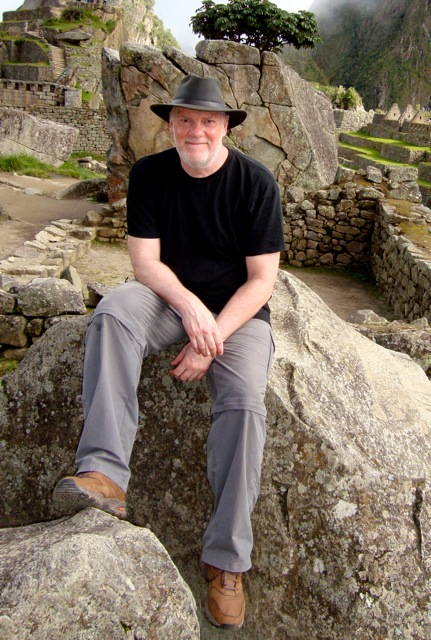
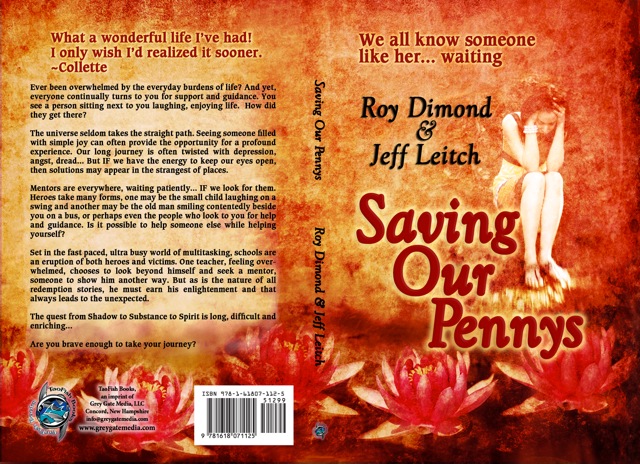
Roy Dimond is the next guest at our virtual Q&A room. Honestly, one of the reason for starting such a section in the blog is to meet some special people. The co-author of “Saving Our Pennys” is one of them. Why? The answers are below…
– What is your last book “Saving Our Pennys” about?
– First Ognian, please allow me to say thank you and tell you how much I appreciate you taking the time to interview me. It is greatly appreciated. Saving Our Pennys, is a work of non-fiction that I co authored with my good friend Jeff Leitch. It is best described as focusing on Self-Help and Personal Transformation with some humor and insight into the human condition. It is the story about a person who happens to be a teacher and he feels that something is missing in his life. He feels unfulfilled. The main character goes on a journey from Shadow, to Substance, to Spirit, and learns how the choices we make affect our lives.
– How did you decide to write the story?
– Combined, Jeff and I have worked for over 70 years in the education system and one day, while hiking, we decided that we wanted to write something of substance. Hopefully we have written something that will help others find their joy and therefore help them reach their potential.
– What is the difference between being an author and a co-author?
– Excellent question. The difference is significant. Writing alone is such a solitary experience. You are the master of the story and control everything that happens. A wonderful experience. Writing as a co-author however means giving up much of that control. But writing with someone else also means the story often soars to places unseen. I think working on a story with another in many ways is a deeper, richer experience. To do this successfully you must have great trust in the person you are writing with. Fortunately, Jeff and I have had a long friendship so we knew where we were both coming from. We are both able to set our ego aside and make it all about the story.
– Tell us something more about your main character? Is it close to someone from your real life?
– Yes and no. The main character is a composite of both Jeff and me, but we also included many characteristics of the people we know. We placed the main character in a school. First, because it is an environment we know well and also because that setting is filled with so many heroes. In any school, anywhere, someone is always trying to help another and that makes it a perfect setting to tell a story about redemption. Our hero grows from being unfulfilled in his life, to understanding what makes a life filled with joy. He finds a mentor and is taught that he can tell how he is doing by the things he values. His life takes on meaning. So I think you can see that our main character can be anyone. Anyone on a journey to find oneself.
– What are your other two books “The Rubicon Effect” and “The Singing Bowl” about?

– The Rubicon Effect, is the story of an environmentalist who takes on American Right-Wing politicians. International corporations manipulate politicians who in turn manipulate the church into proclaiming the End of Days. While the world ignores Global Climate Change until it is too late, a leader of the right wing by the name of Michele Yakin comes up with a horrific plan to deal with global change.
The story asks two fundamental questions. Who are we? And what do we believe in? I am very proud to say that the Pope I describe in this novel was created before the new Pope was ordained. The similarities are quite startling, down to having my character born in Buenos Aires and becoming the first Pope from South America.

The Singing Bowl, Will forever be my opus. A grand tale about a monk who is displaced from Tibet when the communist Chinese invade. His monastery is destroyed and his teacher, The Tenzin, meaning, The Holder of the Teachings, sends him on a quest to find a book that has been lost to the world. He travels the world looking for clues that lead him on a journey to ultimately learn that all quests are internal.
– Who are you?
– No easy question. Like most people, I am many things. A writer, husband, friend, wanderer, and searcher. I was a Youth Worker for thirty years in the education system and tried to help those who were struggling. I travel the world with my wife and gather insight from all those around me.
To be honest, if I had to describe myself in one word, I would say that I am a… listener.
– What are your writing habits?
– The first thing I do each morning is write. I write till I have nothing else to give for that day. Then I usually go for a hike or sit on my deck enjoying my life. I live in a very beautiful area of the west coast of Canada in a place called Garden Bay. So contemplating the beauty around me inspires my writing.
All three of my novels were at sometime enriched by the natural beauty I see everyday. If I do get stuck on a character or scene I ask my wife to join me for a walk around the three lakes near our log home and she usually has some helpful advice. If not, sometimes the deer, or birds, or bears provide insight.
– Are you satisfied by the sales of the books and do you plan another one?
– I don’t know many writers who are satisfied with book sales. We write not only for profit, but so that others may read our thoughts and feelings. So no matter how many read our books all authors wish another would pick it up.
I am presently working on my first children’s book about a small child struggling with change. I have just signed a contract recommended by my agent, Malaga Baldi, for a book with the working title of Silence and Circumstance. It will be coming out from Untreed Reads this January. It is about the eleven days that Agatha Christie went missing and is told from the perspective of her governess. I have also just completed a manuscript called I, Bully a Young Adult novel revealing the seriousness of bullying from both the perspectives of the bully and the victim.
– What are you doing to promote the best possible way your books?
– Unfortunately I think the best and most underrated way of promoting books is word of mouth. It’s unfortunate, because we authors have little control over that. But the better book you write the more people will talk about it.
I do find LinkedIn helpful and Madi Preda, a marketer, has been a great help.
– You worked with at-risk children and their families. How important is it to help those kids in time and what percentage of them may be helped along their life road?
– One of the interesting things about working with at-risk families is you seldom really know who you help. Some are obvious and you see change, but others evolve over time and if you are lucky you find out years later that you bumped them, in a small way, towards a better life.
Helping someone as early as possible is fundamental not only to their happiness, but for the well being of society. It takes less time and has longer lasting results to intervene as early as possible. To break bad cycles now can save generations in the future.
As to what percentage is helped, I honestly believe that 100% of those who realize we care, are helped. It may not show immediately, but the next person that cares, or the next, or the next, may make a breakthrough because others before them cared. If we ignore those who struggle, I do not know if their life’s road is more difficult. And as a society that should be important to us.
– You traveled on four continents. Please make a top 3 destinations that you visit and why you selected them?
Tsumago in Japan… It is a small village of no more than a hundred people that is located in the Japanese Alps. It has been kept exactly as it was for hundreds of years.
Santorini in Greece… To watch the sun set from your cave home is an experience well worth having.
Machu Picchu in Peru… (the author’s picture is in front of the famous monument) From high in the sacred mountains, to look through a window carved in the stone, knowing that hundreds of years ago, another stood there looking down to the river thousands of feet below, transports you to another time and place.
If you want to take a look over Mr. Dimond’s books, check them out here:
Saving Our Pennys
The Rubicon Effect
The Singing Bowl
Roy is very interesting person. I recommend you to check his web space
DISABLED BY MEDIAS
Monica Garcia Sanchis
Ognian Georgiev
Lionel Messi, Roger Federer or Tiger Woods. Their names are on the media stream every second. The biggest sports stars on the planet are winning event after event. There are many other successful sportsmen, who are crowned as sport champions on local, national or international competitions. Some of them became №1 in Europe or in the World. Their names are never typed by correspondets’ fingers. The cameras are missing in the airport when blind, deaf or some other disabled champion returns with gold medal from big championships.
Vesselin Kushnerenkov throws the ball to the other part of the field. The sphere sounds with a rattle tone, which is the only reference point for the defenders. In front of adhesive tape three guys with bands on the eyes are waiting in a dog position. There isn’t a wooden or metal goal. The ball’s speed is rising. One of the players jumps with his body to stop the sphere, but without a success. The ball scores in the virtual net.

Vesselin Kushnerenkov throws the ball
Vesselin gives right away new instructions. He is the national coach of Bulgaria goalball team. Some of the guys are 100% blind. Others have some vision left. They all gathered for one of the two weekly training sessions in the volleyball hall of University of Sofia’s Biological faculty. The net in the middle stand sometimes on the way, but the players are not allowed to put it down. Instead of the traditional goals, used in goallball, they stick an adhesive tape on the floor. Before each practice the guys say a prayer against rain, because the roof is trickling.
The players taped so called “doors”
“During the day I am working as masseur.” Says his story Vesselin Kushnerenkov. He’s got just 10% of the normal vision. “Evenings we are coming here for two hours. Everything is on voluntary level. I’ve got family and a child.
My wife is angry at me because instead of being home, I am practicing. But the sport is above all.” Vesselin trained footabll and track and field before loosing his vision. He was studying in a normal school until 13 years old. Then was moved to a blind school, where found the passion for goalball. “It’s very important for blind people to do sports.” Explained Veseelin Kushnerenkov. – They are learning coordination. Start to rely on the guy next to him. They see what is to win or lose together. Without vision not every one of us may move free, which is extremely important for us.” One of the best Bulgarian football players Daniel Dimov comes to watch the practice of Bulgarian national goalball team. He is part of the most famous club in Eastern European country
– “Levski” (Sofia). The defender never expected that may see such a hard practice from the blind guys.
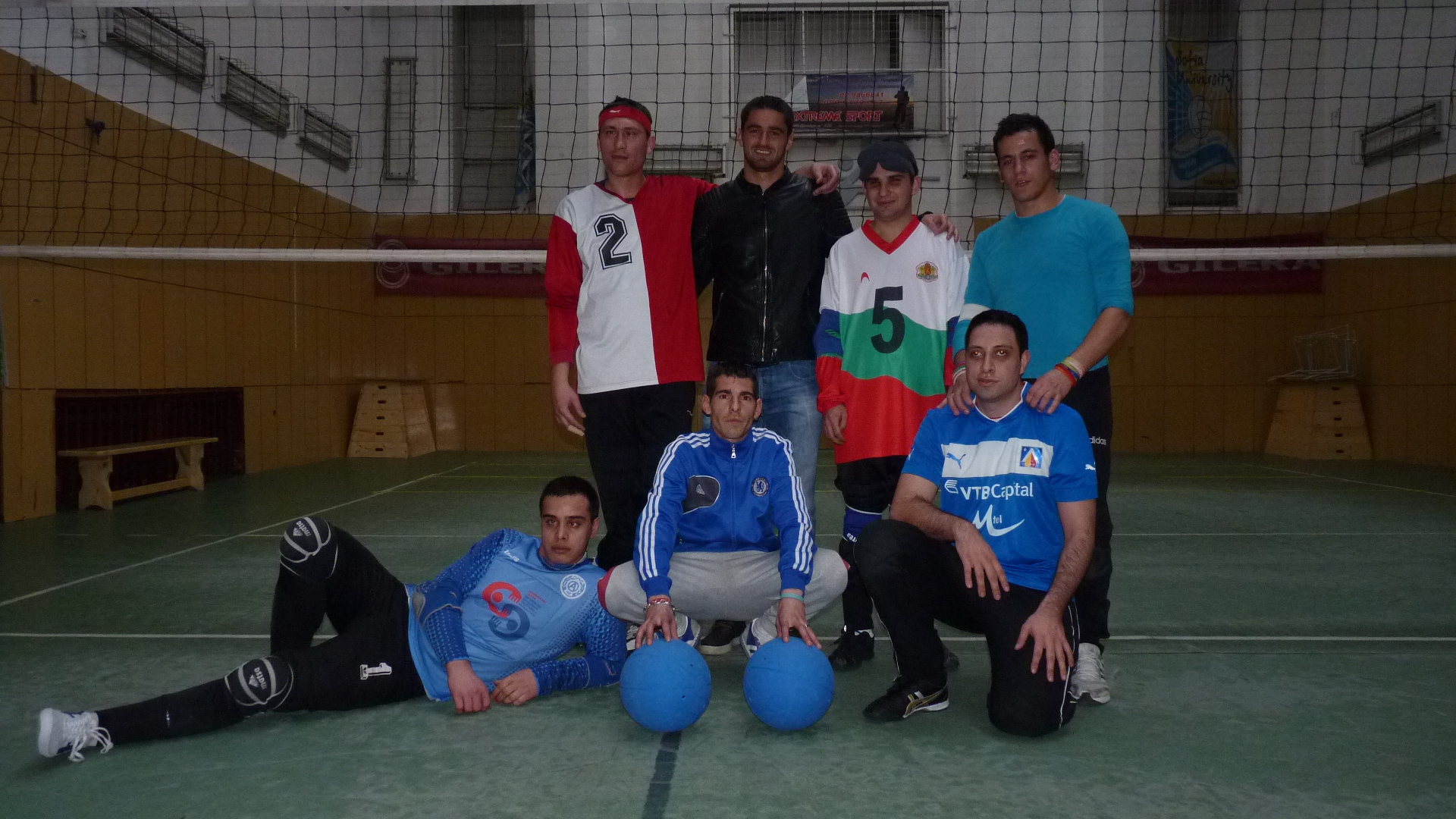
Daniel Dimov (with jacket) with Bulgaria national goalball team
“I am very happy that they have such a desire.” Tells Daniel Dimov his impressions. “They are doing good. Their spirit is high and never give up despite the lack of vision. It’s a pity that almost no one helps them. I’ve got inspired, when I saw the way they train. We, the football players, must take an example from them. Everything is given to us. We’ve got big salaries and now I see that the newspapers are correct when sometimes described us like a bunch of mollycoddles.” Vesselin Kushnerenkov admits that the media coverage of the national goalball team and the sports for blinds is weak. “I am angry, because they remember us just for some projects, charities, Christmas, Easter or during The white cane day” Express his opinion Vesselin Kushnerenkov. “We are not interesting, because
The Medias are searching for some yellow and chilly news
The Bulgarian national television is always very good toward us as well as some other TV stations. At the beginning they put a report of our event in the social part of the news. But it changed. Now we are part of the sports emissions.” The sport organization of blind peoples in Bulgaria is staging competitions in goalball, chess, archery, showdown, sports fishing, backgammon and track&field. 26 clubs are licensed and send their representatives to the events.

Chess for blinds, the national champion Ilinka (left) shows her class
“I am satisfied by the media coverage at all”. Confess the chairman of sports for blind organization in Bulgaria Ivan Yanev. – Bulgarian national television, Bulgarian national radio, some newspapers and internet editions are following our events. There are some serious private televisions, who are invited by us every year. They came just once or twice. We’ve got a case when a reply came to our invitation. It was a money offer per minute of TV time. We wish to have some funds to pay, but we have nothing.” The result of cooperation between blinds and Medias is visible. “If you ask 12 years ago what is goalball, everybody will look strange at you.” Adds Ivan Yanev. “Now, they couldn’t remember right away, but some of the ordinary peoples remember the rattling ball. We are working well with the social Medias. Some of our guys made YouTube clips. There are shown our sports as goalball, showdown or archery for blinds. The rules are explained with subtitles. Others find our club and the sports we practice, because of our internet web page.” Ivan Yanev knows how important is the media coverage not only for showing the sports for blinds, but also to recruit new players among blinds. “As much as popular is one sport, there is bigger chance that some sponsor may appear” Shows his hopes Ivan Yanev. “The Medias are our force, because thanks to them we reach that level. We would like to start a campaign in mass schools for kids with vision problems. They may be forwarded to our clubs, where will have a chance to practice specialized or adapted sports. This is the way
how kids with disabilities
may find a way to do some physical exercises.” The legendary gymnastics champion from Bulgaria Yordan Yovchev participated in a record six Summer Olympics. He is one of the few government officials in Bulgaria, who is taking the disabled people’s problems with heart.

Six times Olympian Yordan Yovchev now is deputy sports minister in Bulgaria
“They are limited in some things, but this doesn’t mean that we must limit them as well” Says Yovchev, who is deputy ministry of Sports and youthfulness in Bulgaria. “We, the people without disabilities, have got everything, but most of the times complain how we are missing something. There are men and women who are blind or deaf. They are stronger than us and we must learn from their spirit.” In fact, spirit is something that is not missing in any word of Jesus Santana. He is the top scorer in the First Division Men’s Goalball in Spain, with 92 goals scored in 2013. With only 23 years he has managed to be an indispensable part of the Spanish national federation, which was runner-up in the most important competition in Europe for Goalball, the Championships A. He would be the equivalent of Leo Messi and Cristiano Ronaldo for our football, but with the difference that this is the first time Media called him for an interview. “Once I was shown quickly in a program of the second Spanish national channel (La 2) because the producer is my friend, but that’s it, the mass media are more interested in showing the look of Sergio Ramos than telling the achievements of any professional in a minority sport” says Santana with energy and some anger.

Jesus Santana and Kim Lopez are high level Spanish sportsmen
The same feeling that shows Kim Lopez. This 25 years old Spanish sportsman has been proclaimed as the disk world champion in a paralympic competition.
Interviews, thought, nor even smell them
He remembers that once he received a call from a radio. He was very excited because he thought that it may be at last the start for him to be on media landscape. But it did not happen that way. “It was the first and the last call” says Kim with the disappointment of those who accept that reality is unchangeable. After a train of 6 hours a day, he has no time for anything else. His phone rings. It’s his girlfriend. “I wish I could have more free time but if I want that I need to quite training, and for me sport is too important”, Kim admits. Both agree that it’s the sport what has given them enough strength to overcome his blindness and feel useful and socially integrated. Jesus Santana says that it makes him feel like any other person and that he forgets about his disability while practicing. David Casinos, the most famous Paralympic athlete in Spain, shares this view. “It’s amazing how playing sports you feel that there are no borders, but then every pedestrian crossing is an obstacle,” he says on a coffee accompanied by his dog Ximena.

Paralympics legend David Casinos and his dog Ximena
For Casinos, the process to become a star was not easy. Fifteen years ago he lost his sight because of a sugar raise incompatible with his diabetes. The first thing he did was joining ONCE, the National Organization for blind people in Spain which promotes lots of programs and facilities for blinds. He started practicing sport to forget what happened and now he is one of the few who can dedicate himself professionally to it. He has won four consecutive gold medals in the Paralympic Games in Sydney, Athens, Beijing and London, where he was the bearer of the Spanish Paralympic Team in 2008. His name rings a bell for almost everyone and
he appears in the pages
of the most famous sports newspapers in Spain, as you can see in this image from Marca. However, his fame did not come alone. At the beginning, though he had already won several competitions and made a huge effort to be on the first page of Spanish sport, David did not get any results. His achievements were not news and his story either. He started beating around the bush and he came up with a conclusion. “If nobody sees you, you do not exist. We’re great professionals but if we do not appear on television we are not anybody,” he concluded. So it was clear for him that he had to hire a communications agency. Since then, with the PR on his side, his media and sports career has not gone in one direction but up. Thanks of it he can dedicate himself one hundred percent to the sport. “When you go on media, private companies become interested in you and they want to be your sponsors. This is an indispensable aid due to the fact that without money you cannot give the maximum of you because you have to work or to study” he details. In addition, being on the news has helped him to be a part of society and to be admired rather than deplored. “I have received letters from people saying that they want to be like me, can you imagine that? Like me, that I’m blind! ”
David hired a PR to get media attention
David Casinos is the perfect example of how Medias help minority groups not only to be more integrated into society but to success on their careers and personal lives. As Jesus Santana says: “I think that media should promote not only the best payers but every sport. Not looking only for medalist sportsman. They should show reality, things that happen every day, and that’s much more than a won medal. You know well that what it’s not on TV is like it does not exist, we are only on TV less than 5 minutes during the Olympics and that’s all. But is not only about Paralympics or blinds, it’s about sports that are not football and sportsman that are not the most famous ones. If any champion of athletics is not on TV… How the hell are we going to be?”- He wonders.
TV Broadcaster Sasho Yovkov: We are debtors
The sport journalist and TV broadcaster from Bulgarian national television was one of the main organizers of Deaflympics Games that was held in Sofia last year. It was the 22-nd edition of the event. The first one was in 1924.
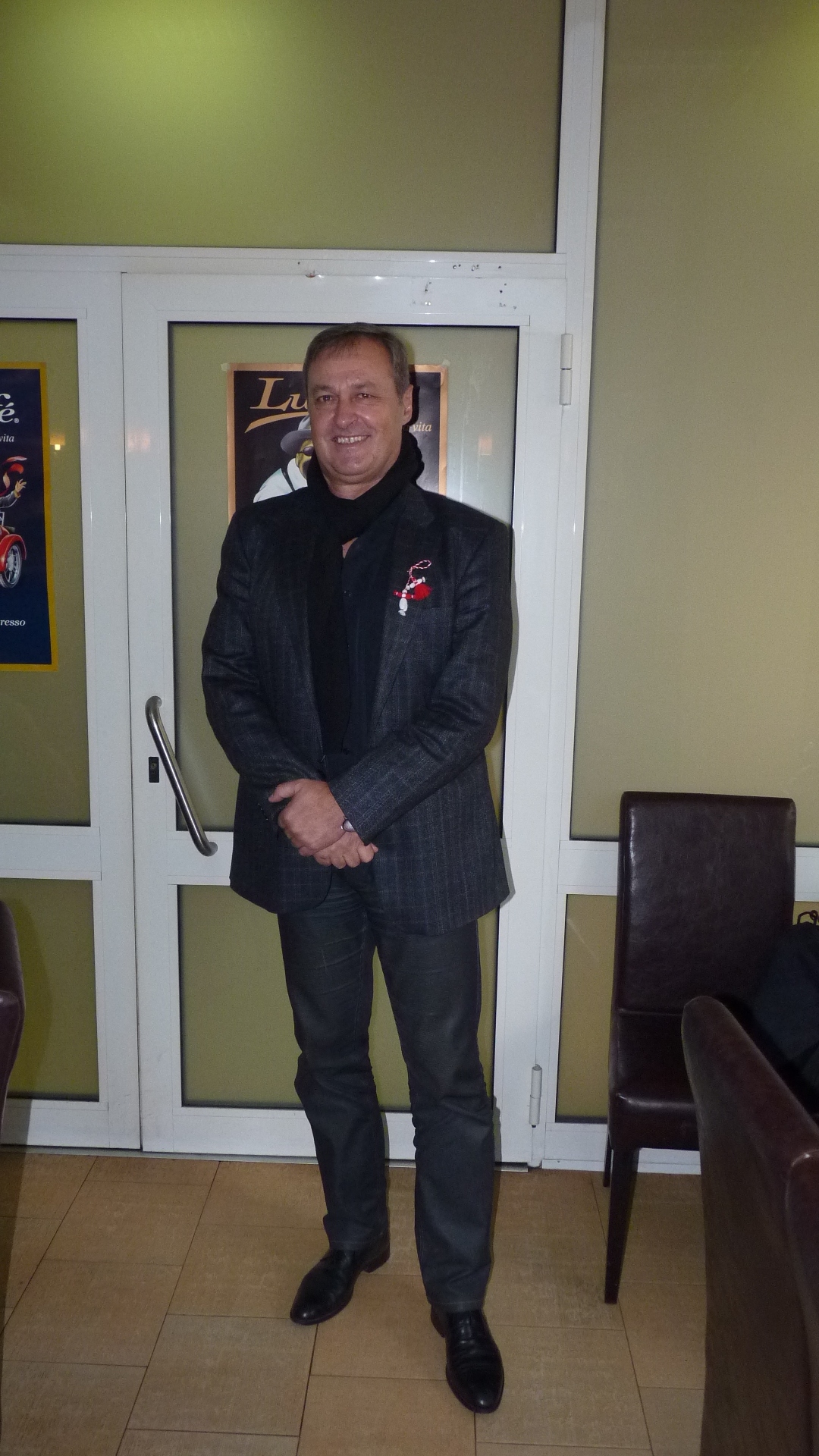
One of the most popular Bulgarian broadcasters Sasho Yovkov is helping deaf peoples for 30 years
Q:Mr. Yovkov, how tough is to organize event like Deaflympics?
A: 4600 sportsmen from 91 countries came in Bulgaria. They participated in 18 different sports. The organizing committee was just 8 persons. Only we know what it cost to us. The Games were given to Greece initially. They refused to stage them in 2011, because of the financial crisis. Then Hungary was elected for the host, but they couldn’t do it as well and gave away after just two months of organization. During the Summer Olympics in London it was decided Bulgaria to be the new host. We did the entire organization in 10 months. When i went to some companies to ask for sponsorship, they told me that no money will be given for such Games. There were other peoples, who helped a lot and do not want it to make it public. This wasn’t just pure help, but also a showing that in Bulgarian society the things are changing.
Q:What is the difference between ordinary sports competitions and those for deaf?
A:The sport is a competition for everybody. The most important is that deaf and the people around them feel that they do not need help, but sympathy. It’s 30 years i am working with them. During my career as a volleyball player, there was a national team for deaf people. I was their coach. We beat the strong team of Soviet Union 3:0 at the finals of European volleyball championships for deaf in 1984. These peoples must demonstrate far more power, character and will to overcome all the problems, that was not in front of ordinaries. They are high-strung with strong senses. Falseness is very easy to be feel by them. At the same time they are incredible human beings when see a true attitude.
Q:How the sport helps deaf people?
A: When you don’t have hearing and there is no one in the family or society to help, your brain is not stimulated. The mental development stops. It’s very important that the society not only to include disabled people in special schools, children gardens or to do prophylactics on them, but also to accept them as equal.
Q:How important are the Medias for people with disabilities?
A:It’s crucial. The problems of disabled peoples are very difficult to reach the society. I don’t want to criticize my colleagues, but Deaflympics, for example, were covered just by Bulgarian national television. Those competitions are not commercials and do not bring money. They are giving something else – humanity, sympathy and civilization. We’ve made some meeting with sports ministry and in the sports commission in Parliament. Because of that now the medalists for Deaflympics will get government pension when they retired, just like it’s with Paralympic Games. I know that blind people got some problem, but if they aren’t shown in the medias, noting will change. We, the medias, are debtors of disabled peoples. Seems like we underestimate or ignore their pain, because it’s not on our head.
Special needs for sport
The sport organization of blind people in Bulgaria don’t have a specific sport center for their needs. They used another places to practice, but often the halls are not practical enough, just like the volleyball field, where national goalball team does its trainings.
After 3 years of searching the organization finally finds a spot, which may be the dream one. The project for the reconstruction of the current property to become a sport center is around 250 000 euros. “We’ve got some meetings with deputy minister of sport and youth Yordan Yovchev, but for now it’s just talks.” Says the chairman of blind people sport organization in Bulgaria Ivan Yanev.
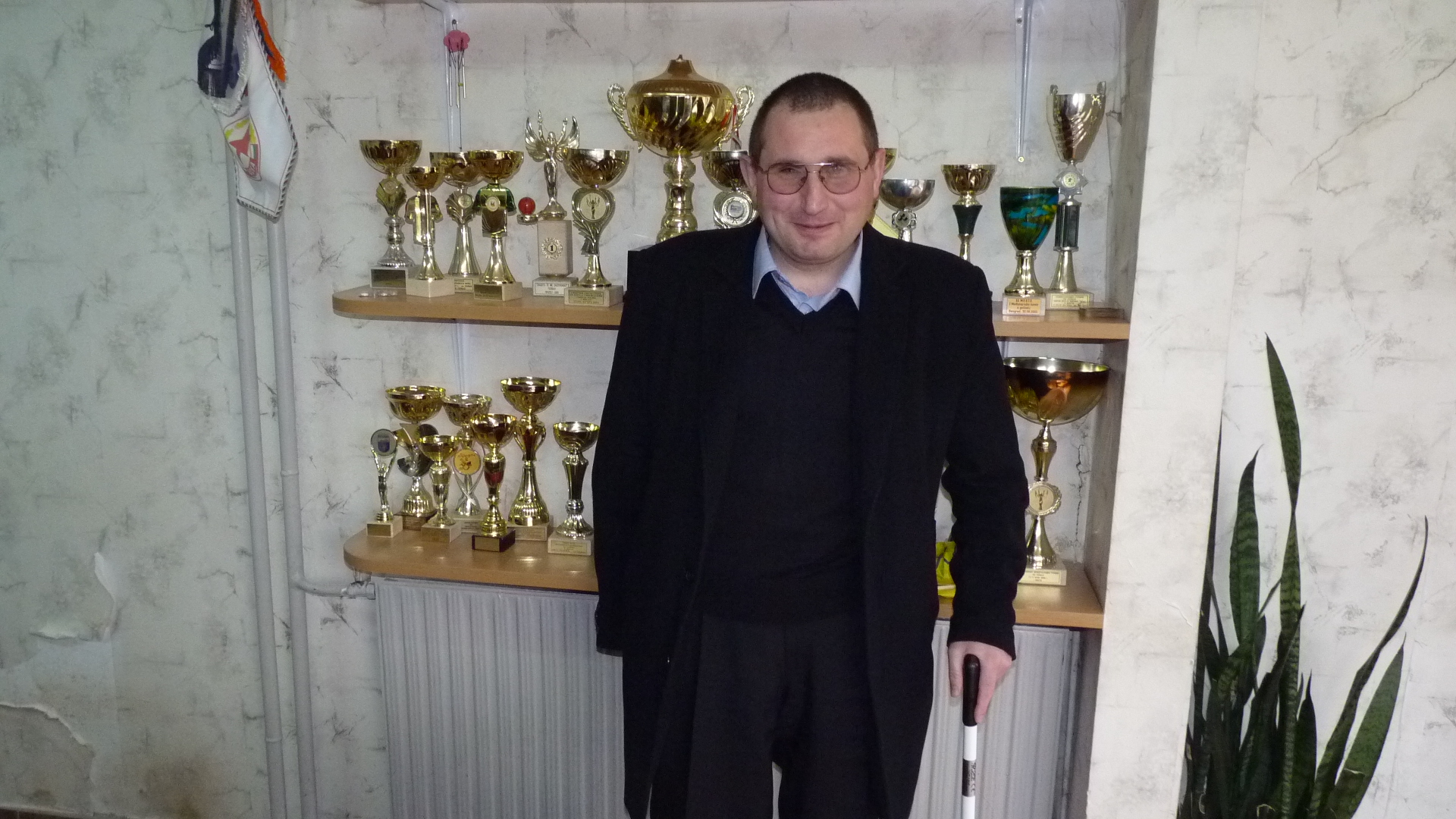
The chairman if Bulgaria blind sport organization Ivan Yanev is fighting for a hall
Yovchev who is very much into the project. He thinks that there is a major problem that must be solved
before the approval of the funding
“We’ve got a person, who will give the property for free where blind people may use for a sport center for a period of 10 years.” Adds Yovchev. “The problem is that the owner is a private company. It’s complicated, because if we give the money and the reconstructions will be made, then the owner may throw away the blinds and to took back his property. In this case the government would make the rebuild, but we don’t know how to protect the rights of those guys to stay. The possibilities are being in search so everything will be solved by the best possible way.” Right now the national goalball team, which is the only representative in Bulgaria at international competitions for blind, is preparing in terrible conditions. “We are send for two weeks in Belmeken mountain camp before European championships and for another two weeks we may train in a normal hall in Sofia with goals.” Gives an example the coach of the Bulgarian national goalball team Vesselin Kushnarenkov. – The summary is that once in every two years, we’ve got the chance to prepare in good condition for 4 weeks.”
Bulgarian goalball team has good history. The squad finished on 10th place in Seul’88 Paralympics. Bulgaria was close to qualify for “A” division of European championships, but lost in decisive playoff in 2010. Jesus Santana, the goalball national player, does not have to face these problems. Of course, he’s got some others since he does not receive any salary for his dedication so he has to complement it with his studies in and Administration and some economical help from his family. But despite that, he trains with his team three days per week in Valencia. They meet one hour and a half on Mondays and Wednesdays and four hours on Saturdays in a goalball pitch with all the facilities that they need. Then, before the championships, the national players train all together in different sports centers of Madrid. In Spain there are 7 goalball teams in the first division, 10 in the second one and 10 in the third one. Also 11 female teams. As it happens in football, the best players of each first division teams participate on the championships representing Spain. They’ve got a professional coach and also a place for living offered by the National Blind’s Federation. As a result, the Goalball Spanish team is one of the stronger ones in Europe. It won the silver medal on the last European Championship. In professional Athletics, things are a bit different since it’s not a team sport. Kim Lуpez started training when he was 19 and it took him 4 years to become gold champion of shot put of the world. During that time
he did not receive any money
for any national or European competition that he won, but when he became a gold sportsman, things changed a little bit. He did not receive any money for the medal but the Spanish Paralympic Committee saw that he was an athlete with future so when he threatened them to leave competitive sport because he didn’t get any money and he needed to work, he was offered a scholarship of 400 Euros per month. Also, his got all the training facilities that he needs. He used to train with other blind sportsman but now he can use the standard athletic pitches and practice almost by his own every time he wants to. His official trainings are six hours a day.
Huge difference in the funding
There are huge differences in the sports funding of people with disability in Bulgaria and in Spain. In the Eastern European country more then 16 000 are registered as blind (~0,2% of the population) and more than 7700 are deaf (~0,1% of the population). The main funding for all groups of disabilities is given by the Ministry of Sport and Youth. The last year budget of deaf people sport organization is approximately 270 000 Euros. Most of them were used for the staging of Deaflympics Games in Sofia. Blind’s budget is just 8 000 Euros per year. There is another organization for disabled people – Bulgarian paralympic association. They are sending competitors for different paralympic events and receive a yearly budget of approximately 273 000 Euros per year. “We’ve got other programs, which may benefit disabled people federations and their clubs.” Explains deputy Sports Minister of Bulgaria Yordan Yovchev. “Everyone may apply for them. We are trying to raise the number of disabled who are doing sports and stays active.” The deputy Sports Minister of Valencia, Vicente Carratalа, also explains the programmes that are being promoted by the government so that each time more disabled people practice sports.

Vicente Carratalа explains the municipality programs for disabled peoples
The Valencian government -in Spain each region has its own institutions- is giving
14.000 Euros per year
to general programmes with this objective. In addition they spend 25.000 per year in a specific programme called Hospi-Sport, where the main goal is to assist people in hospitals that have lost their vision, or a leg or any part of the body so that they are integrated. They also offer with this money free entrance to a swimming pool where the disable are the main users. Finally, they give
100.000 annual Euros for prizes of elite sportsman, with deficiencies and without them. This is only for Comunidad Valenciana, one of the 17 regions in Spain and also, it’s mainly to encourage non-professional sport.
This is something that the National Federation for blind people, ONCE, knows very well. This private organization has been developing sport programmes since early 80’s and it is its labor the one it needs to be thanked in this area. Julio Santodomingo, the sports director of the delegation of Valencia, explains that for ONCE sport has always been a priority.
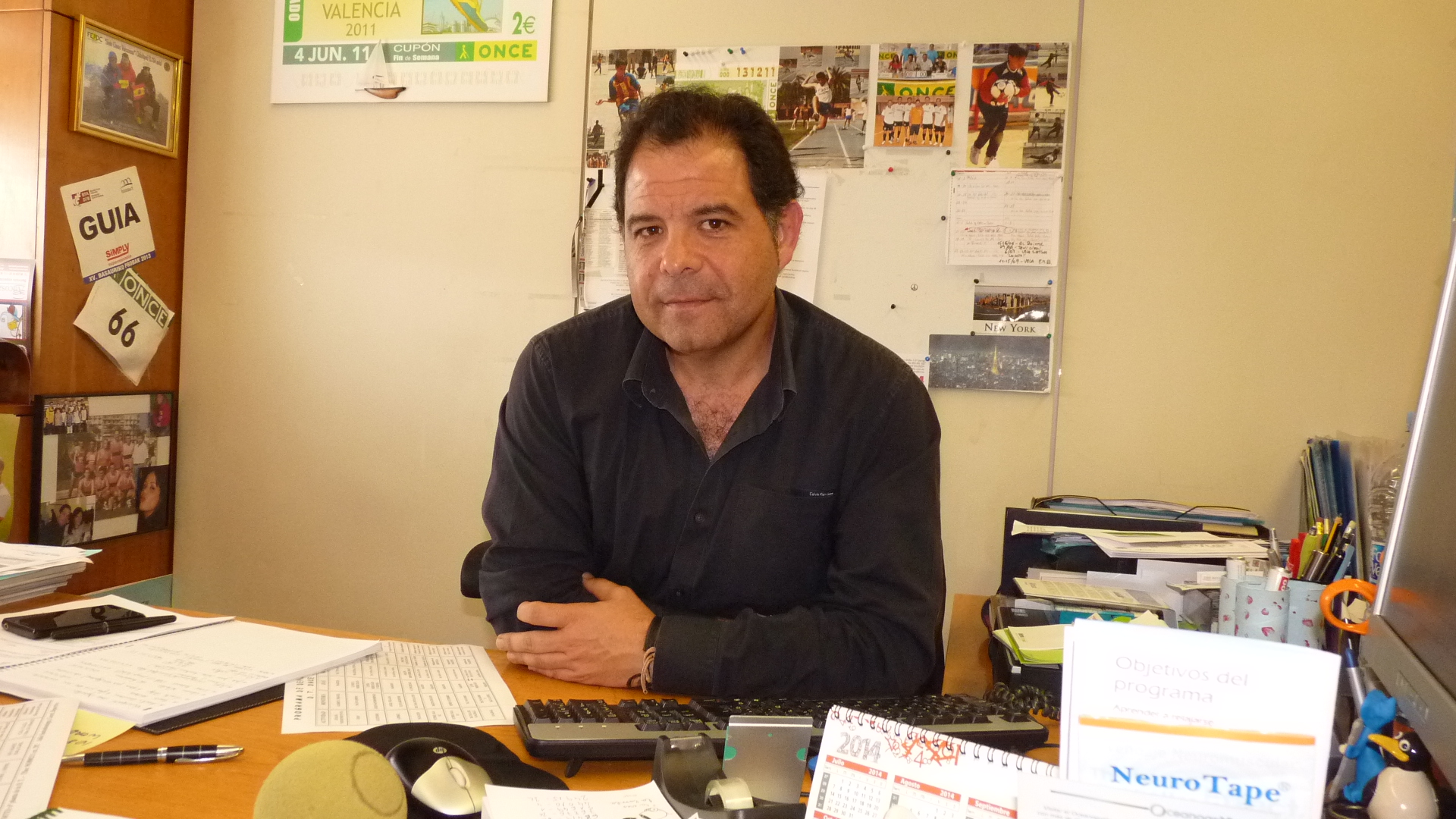
Julio Santodomingo is very important part of ONCE organization
Their funding comes from the lottery that people with disabilities –mostly blind- sell on the streets and also from some companies that foundation ONCE owns. Only in Valencia province there are 70 professional blind sportsmen using their aids, 110 blinds that practice sport as a hobby regularly accompanied by 30 volunteers who help them and 64 children practicing every week. “The sport is really necessary to them because they learn how to move and coordinate and they also learn to win. Is a group that is not very use to it and when they see that they train hard and they get something back, they start thinking they can do everything”, explains Julio. He doesn’t tell the exact amount of money that the corporation spends in sport all over Spain. However, if the example of goalball is taken the differences are very explicit. If the total amount for blinds sports in Bulgaria was 8.000 Euros per year, only the amount for goalball in Valencia is
5.000 annual Euros without counting the money spent on competitions (travel fees, accommodation, etc.). This money is only for the 3 teams of the region and is mainly spent on the salary of the coaches. Recently in Spain
paralympics sports are starting to be interesting for companies
since each time they appear more on televisions and newspapers. Moreover, taking part of its funding or activities it’s still considered as a social action by the society, so the corporations use it to give a more compromise attitude towards people. That’s the case of Plan ADOP. The Paralympic Sport Support Plan (ADOP) is an initiative of the Spanish Paralympic Committee, the Sports Council and the Ministry of Health, Social Services and Equality, which aims to provide the Spanish Paralympic athletes the best conditions to carry out preparation and to undertake successful Spanish team participation in the Paralympic Games. The most known Spanish companies participate in this plan, such as Iberdrola, Telefуnica, El Corte Ingles, Ford or Renfe. The program lasts for four years and it always begins after a Paralympics, because it’s objective is to be prepared for the following. Now it’s the third edition which started after London 2012 and will be on until Rio 2016. The total budget will be 3.340.325,27 euros. But still, is not gold everything that shines. The difference between a Paralympic and an Olympic medal is almost 70%. The first one is worth between 15,000 and 18,000 Euros while the second is about 90,000.
The article was part of MEDIANE program for diversity inclusiveness in media
Ognian Georgiev is the author of the book “The white prisoner: Galabin Boevski’s secret story”
INDIA WAS ONE: A JOURNEY BY ANONYMOUS AUTHOR
“India was One” was described with the following comment: “As a love story it breaks your heart to read of a married couple separated by country and culture”. Sounds familiar? Well, here we would like to introduce the author of the book. He preferred to stay anonymous and used just his nickname “An Indian”.

– What is your book about?
– It’s a ‘what-if’ book. What if India was further divided into two countries? Here is a brief synopsis: …Suddenly, he saw something shiny at the bottom of the abyss. He squinted his eyes to see what it was. He ran back to his binoculars and turned them to see what it was. Sharp barbed wires that separated the two mountains came into focus. He had come as far as he could in his country. But she was standing in another country.
He was in South India and she was in North India…
Have you ever imagined India being divided into two countries? What happens to the millions of Indians who are from South India but are now residing in North India? Kaahi & Jai were two such people who got trapped in this situation. Everything was going smoothly for them and suddenly, their world turned upside down.
How will they get together? Will India become one again?
Take an exciting journey with them from their college days in Mumbai to their life in the US and back to India when they find o- ut that India is divided.
– How you decide to write the story?
– I’ve been toying with the story in my mind for some time. I finally decided to pen it down.
– What was the biggest challenge during the write up process?
– I would not call it a challenge as I don’t consider myself a writer. I am merely the author of the book.
– Tell us something more about your main character? Is it close to someone from your real life?
– I’ve loosely based my characters of my experiences when I was growing up in India, and when I moved to the US.
– How much time you need to finish the story and to publish it?
– It took me less than a week to pour down my initial thoughts. It then took over a year to expand on them.
– Who are you?
– An Indian.
– What are your writing habits?
– As I said earlier, I’m not a writer. I am a web developer.
– Are you satisfied by the sales of the book and do you plan another one?
– Not really.
– What are you doing to promote by the best possible way your book?
– As every author knows, it’s extremely hard to market one’s book. Reviews, social-media, website, etc. are the best tools.
– Please describe the book market in India? How popular is reading in your country?
– Reading is extremely popular in India. The Indian readers are very aware of the latest happenings in the western world. All the best-sellers are immediately available in India. However, there are very few Indian authors who are famous in the west, even though they are famous in India. Those authors are only well known among Indians living abroad.
– What is the best Indian food that you may recommend to the first time visitors of Indian restaurant?
– India is too vast and diverse to have one single ‘best’ food. There is not one ‘best’ food. It doesn’t exist. That’s why, I’d highly recommend a first visitor to read my book to appreciate India’s diversity. People who have never visited India, and have read my book wrote comments like, ‘I didn’t know how diverse India is’, ‘I learned so much about the Indian culture’, etc. But the comments I am really proud of is when they say, ‘I want to visit India after reading your book’.
You may found the author here:
Website: http://www.IndiaWasOne.com
Facebook: http://www.facebook.com/IndiaWasOne
Twitter: http://www.twitter.com/IndiaWasOne
Order “India was one” here
 Land Of Books