Author Archives: Ognian Georgiev
PATRICK MICHAEL MURPHY: MY DREAM IS TO LIVE UNENCUMBERED BY ECONOMICS
Our interviews continue with another extremely interesting author. Patrick Michael Murphy is a motion picture cameraman, who saw amazing things during his career in USA army. He won Emmy award for his works. As a writer Patrick is evaluated very high by Amazon readers. All his three books are with average rating 4.7 stars or higher!
Going down into the lines of the interview I started to feel some chill in my body. I remembered how I dreamed to be adventurer as a kid. I am wondering if you will feel the same.

– What is your last book A forest, A river and me: off-grid wilderness adventure about?
– A Forest A River and me, is a memoir about my time living an off-grid life in a small cabin I built in the wilderness of Northern Idaho, in the United States. Because it was located so far back in the woods, I often had to walk in carrying all my provisions, even as much as 4 miles each way from where I parked my car. It is also about my life, and the questions confronting me; questions that I think confront us all. It’s a search for reason and a simpler life.

– How you decide to write the story?
– I decided to write the story because I wanted to understand what had happened to me during that time. I became a different person in many ways. There were joyous times, and times of desperation. The experience peeled me to my core. I wanted to learn all I could from that, and so I used the benefit of times passing, and the exercise of writing it down. I also wanted to preserve my memories.
– What was the biggest challenge during the write up process?
– The biggest challenge to writing a memoir is to truly be honest with yourself and the reader. I didn’t want to tell only the surface experience… I wanted to better understand my world and my own choices, my situation, and to try and communicate that clearly, for whatever it is worth to the reader.
– Tell us something more about your main character? Is it 100% you or just for this adventure you changed from your normal life?
– This is a true, nonfiction memoir and accounting of what happened. Nothing is fictionalized other than a couple words, because I could not recall every word of every conversation, so I made certain to be true to the essence of every conversation.
– How much time you need to finish the story and to publish it?
– It took about one year to write the entire story, though that time was broken in two. I love to rewrite. Writing is rewriting, for me. A first draft and a final draft can be quite different. I sometimes rewrite 5 or more times. And it is very important to let a lot of time go in-between those rewrites, so I can gain separation – so that when I do go back and reread I don’t know every word or passage before me. It is, in essence, new reading. Mistakes, clunky wording, wordiness, pop out at me more this way.
– Tell me more about your other books On The Banks Of The Animas: Outdoor Adventures, Environmental Observations and Across the Desperate Miles?
– On The Banks Of The Animas: Outdoor Adventures, Environmental Observations is a collection of travel and nature essays from life experiences around the world. The stories range over a 45 year period of my life. Some are funny, some scary, others may make a person angry or awed. Across The Desperate Miles is my first novel (I have another on its way out in several months.) It’s about Rand and Kera, a husband and wife, who must journey across America to try and recover their children in a time of an uprising that has all government and public services at a standstill. It’s a contemporary fiction, with thriller aspects. It seems to resonate well with a lot of readers.
– Who are you?
– I was born in the Midwestern United States in the 50s, a small town, middle class guy who left home and got out into the world. I have been a bit of a wanderer and I have great curiosity about this planet we live on. I tend to be moved by wide open spaces and vast landscapes, not to mention a good love story, or a story of faith and companionship. My own relationships have been very hard work and I think that’s reflected in my writing.
– What are your writing habits?
– I was first a television cameraman and writer. Then I became interested in screenplays and novels. I love to write. I do take quite a bit of time on a project and between projects. When I am writing, I enjoy mornings the most, because I feel clearer. I used to write for many hours at a time, often eight. But I now seem to write for an hour or two at a time. I still work, running my own small business, so I have to keep moving. My experience is that once I flush out my idea, organize it in my head or on paper, I am able to write about two maybe four pages in an hour… I get into a flow. I don’t over edit as I write a first draft because I think it’s important to just let your creativity, your inner voice, speak. When I begin a day’s writing I usually read what I wrote the day before, then pick up where I left off… that gets me into the energy of it. Stories have not always gone where I thought they would go. Characters absolutely do come alive. Even in my memoir, my realizations as I wrote took chapters in new directions, or created new chapters entirely. I like that. I let go when that happens. Stuff gets birthed on its own, and in there is the gold.
– Are you satisfied by the sales of the book and do you plan another one?
– I would like more people to discover my writings. I do write to communicate with my human family, even if I am also writing to preserve my thoughts, experiences, and creations. I am not a grand publicist. How I wish I was. I believe I will always write. It’s my creative outlet and a way of considering things. I am writing another novel now and will have it out later this year, before Christmas.
– What are you doing to promote by the best possible way your book?
– I place my books on Amazon mostly, where I also have an Author’s page. I have my Facebook author’s page as well. I try to line up readings and book signings. I belong to a reading group or two. I speak with those I know. I just did a book giveaway on Goodreads. I strongly believe in word of mouth. I feel that if I write well, those who read it will let others know.
– Which story that you covered in Army is the one that you will never forget?
– One is my five trips to Enewetak Atoll in the South Pacific. It was used as a nuclear testing site in the 40s and 50s, and afterward the United States had to return and clean up the islands. It was a terrible project in a magnificent place. A tragic story really. I wrote about that in On The Banks Of The Animas.
– To record a good video or to write a story? Which is more difficult for you?
– They are unique and each a wonderful challenge in their own way. Video or film, you have to capture light and motion and sound. You have to be ready at all times, intensely prepared. You often piece intricate scenes together to make a whole, and it needs to make sense and be fun and interesting to watch. The written word, you have one plane you are working on. People cannot hear or see what you hear and see unless you write it well. You have time to reflect, but also time to lose the passion of the moment, of the exchange. Or you try to communicate that motion, that light, that sound, that emotion only to find… you can’t quite capture it with your words. It’s humbling. In either case, you have to tell a story. If no one knows what you are trying to reveal, or consider, in your message, it falls as flat as a bad joke in a comedian’s standup. Very frustrating for all concerned.
– What is the adventure that you dream to do?
– One lifelong dream was realized and told in A Forest A River and me. I have another dream of living freely, unencumbered by economics and the constraints of my own thinking. That would be my ultimate adventure – to be free to simply experience anything I wanted in this grand life and world we live in, and to get out of my own way.
Find out more about Partick at his facebook page
Check out his great novels
A FOREST A RIVER and me: off-grid wilderness adventure
On The Banks Of The Animas: Outdoor Adventures, Environmental Observations
ACROSS THE DESPERATE MILES
MICHAEL PARKER: I CALL MY WRITING PROCESS THE “SWEET CURSE”
Michael Parker is an author with big experience. He’s got two pages with books, that are published in Amazon. The British writer continues to release quality novels. Let’s hear something more about his next book and others interesting topics that we discussed in the interview!
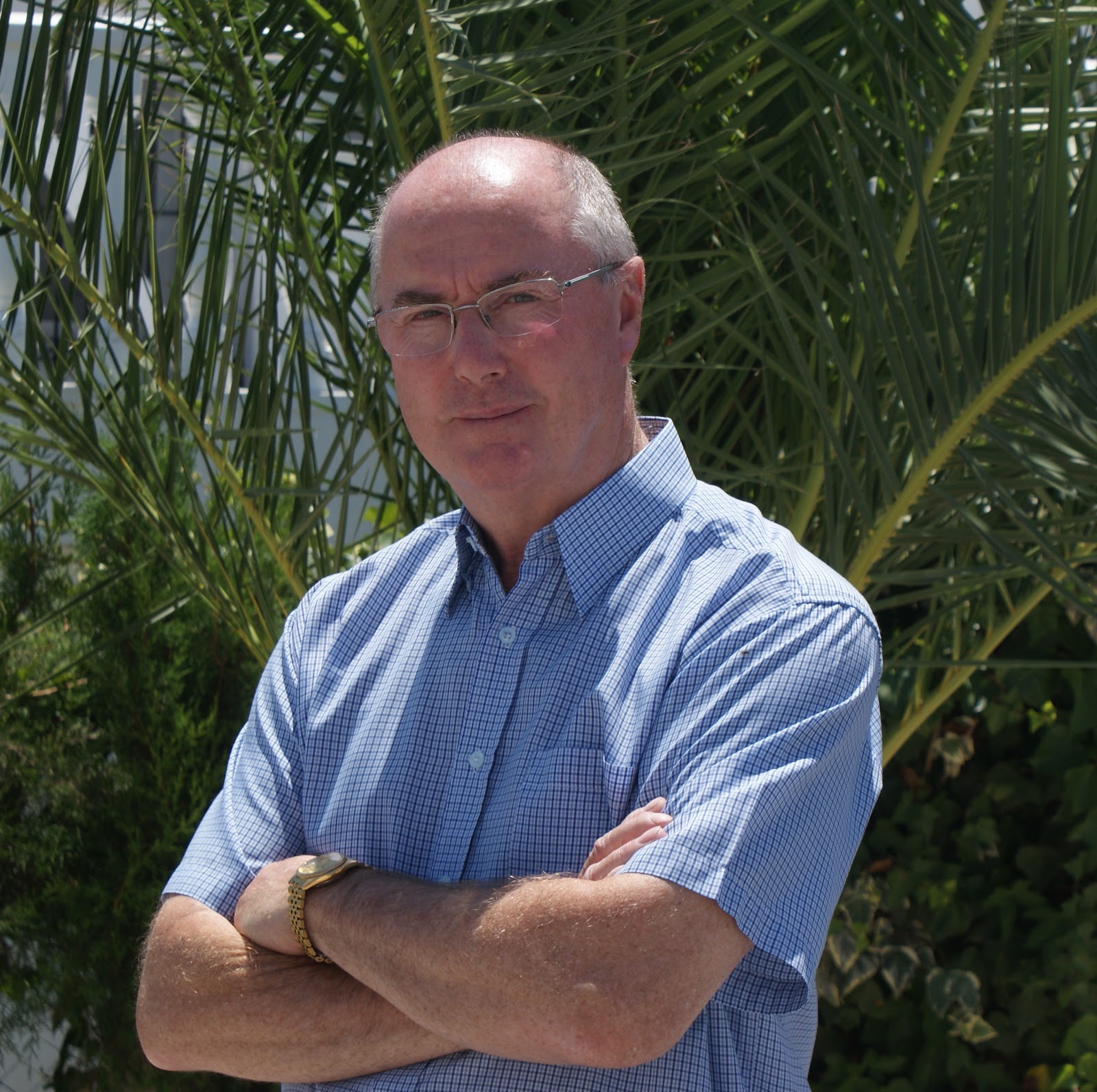
– Michael, What is your last book The Eagle’s covenant about?
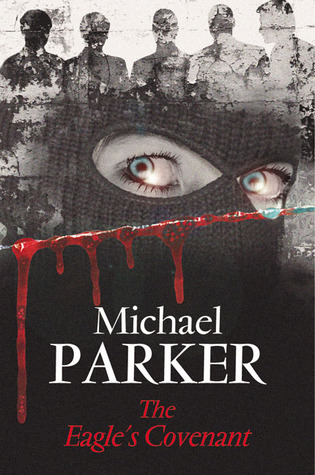
– The Eagle’s Covenant is set in modern Germany and is about the kidnap of a week old infant that goes badly wrong. The baby is the grandson of the world’s most powerful citizen, Manfred Schiller, whose empire touches almost everything people come into contact with during their everyday lives. Schiller plans to hand over his entire business empire to the Israeli nation because of his advancing years, and it is a plot by Franz Molke, leader of the Volkspartei that leads to the kidnap of the child. The group who kidnap the infant are led by a beautiful, South African, white extremist name Breggie de Kok. Among the group is Conor Lenihan, an ex SAS soldier and IRA terrorist. Conor is betrayed by Breggie de Kok and almost killed after a brutal blackmail leads to the death of most of the kidnap gang. Conor now seeks revenge, and persuades the baby’s mother, Joanna to help him find her baby. It is because of Joanna’s remarkable computer skills that she and Lenihan are able to wage a cyber-war against Manfred Schiller and his covenant to the Israeli nation.
– How you decide to write the story?
– There was no long thought out decision about the story. The idea drifted into my head and I began some research at my local library (in England). Eventually I contacted the German Embassy in London who sent me a comprehensive work on the German police force. This meant I was able to use all the correct ranks, department terminologies and processes that help to make the thriller more enjoyable.
– What was the biggest challenge during the write up process?
– Simply writing the book. I’ve always called my writing process the “Sweet curse”. I love writing but its hard work. It almost always takes me a year to complete a novel. Bearing in mind of course that it is my hobby; not a career.
– Tell us something more about your main character? Is it close to someone from your real life?
– Conor Lenihan is a figment of my imagination, and I’m glad I don’t have friends like him.
– How much time do you need to finish the story and to publish it?
– This book was first published by Robert Hale Ltd., of London. It usually takes them about a year to publish the print copy. Once I had acquired my paperback and e-book rights from them, it took about two months to publish on Amazon. The process is much quicker now because I am at the top of the learning curve. It’s still a fiddly job though from finishing the first draft to seeing it through to completion.
– You’ve got so many published books. Please give us highlights of the Top 3 of them that you value as the best ones.
– North Slope was my first novel. It was inspired by the discovery of oil in Alaska in 1968. I had set out to write a novel set in Canada. It was published by Macmillan when I was 38 years old. I thought I’d made it then as a writer. So that’s my favourite book. Hell’s Gate, a colonial venture set in Africa in 1898 is what I would call my masterpiece. I loved writing it and still think it’s a wonderful book. It was inspired by the building of the railway line from Mombassa to Lake Victoria at the end of the nineteenth century. There really is no No.3, but if pushed I think I would have to go for Roselli’s Gold. I just liked the idea of writing something to do with the Vatican, so arranged to have a fortune in Vatican gold secreted in the Sahara desert during the Second World War.
– Who are you?
– I have been writing thrillers for many years and have experienced the highs and lows of being a writer. My first novel, NORTH SLOPE was published in 1980, and is now available as a POD paperback and Kindle on Amazon. I have been married to Patricia for fifty four years and we live in Spain. We have four sons, ten grandchildren and one great grandson. My hobby is writing, of course, and to date I have had eight novels published. You can see my list in Author Central. My other hobbies are snooker, speedway, football and music. I play snooker, watch football and speedway, and play the keyboard (not too well). I am a born again Christian and played keyboard in my fellowship for several years. I worked as a maintenance technician most of my adult life, serving sixteen years in the Royal Air Force, and about seventeen years with a food manufacturer. I retired in 1996 (I was fifty five years old) and moved out to Spain a year later. Pat and I have lived here, on the Costa Blanca for seventeen years. We are now planning to return to the UK. Other jobs I have done include Merchant Seaman, Office boy, and general maintenance for a chicken farmer! I have received many excellent comments about my writing, but the proof of the pudding, as they say, is in the eating. I am a member of the International Thriller Writers and used to be a contributing editor with them. In 2009, I worked on a global project with eleven other writers and produced a novel called PASSAGE TO REDEMPTION. This is now available as a POD novel and Kindle by Acclaimed Books Ltd. (www.acclaimedbooks.com) of which I am an associate. For those of you who want to know a little more about me, and see me ‘in the flesh’, check out my website at http://www.michaeljparker.com, where you’ll be able to see a couple of TV interviews I have had. My last thriller novel titled THE BOY FROM BERLIN was released in December 2011. It has been picked up by Harlequin who have purchased (leased) the English language paperback rights for North America and Canada. This has been published (2013) now in paperback. Meanwhile my current paperbacks; NORTH SLOPE, A COVERT WAR ROSELLI’S GOLD, HELL’S GATE, THE DEVIL’S TRINITY, and SHADOW OF THE WOLF (March 2013) are available on Amazon and Kindle. THE EAGLE’S COVENANT paperback is available on Amazon.co.uk only because Harlequin have now agreed to publish THE EAGLE’S COVENANT in USA and Canada. My latest title, PAST IMPERFECT will be published by my London publisher, Hale, in 2014. This is a romance with a rough edged back story. Something of a change from my other titles!
– What are your writing habits?
Terrible. I still haven’t mastered the art of self-discipline when it comes to writing habits. It is probably due to the fact that I worked shifts for many years, including nights, and my writing has always been a hobby.
– Are you satisfied by the sales of the book and do you plan another one?
– I would like to sell a million books, but living in the real world I have to say that I am happy to be a writer who sells books. My figures are not high, but I have enjoyed a moderate success occasionally.
– What are you doing to promote by the best possible way your book?
– This is something that I call my ‘scattergun’ approach to marketing, and I keep promising myself I must do better. I blog all over the place, am on Twitter, Goodreads, Facebook, Stumble, Google plus, LinkedIn etc., etc. I spend money on advertising, but not all the better websites are amenable to a low, amazon ranked author.
– What is the secret to deal with publishers, as you’ve got a long successful story with them?
– Always remember that they will drop you the moment they think you are no longer worth their investment, but never forget that the publisher who takes you on has a certain amount of faith in you, and is taking a gamble. So make sure you respect the relationship and don’t get pushy.
– You’ve got great experience in writing. What are the biggest mistakes that you made as author?
– First mistake: believing I was as good as authors already published. Second mistake: Believing in the publicity (I was described as a ‘Gifted narrator’ in the Financial Times). Allowing my ego to get the better of me. Finally; not working hard enough.
– You have been married for 54 years. What is the secret of such long relationship?
– I love my wife.
– Why do you prefer Spain over UK?
– We came out to Spain seventeen years ago because I retired early and my wife was very keen on the idea of living out here. But now we are moving back to England where we will see the rest of our years out. Personally, I don’t prefer Spain over UK, but I’ve always been happy to defer to Pat’s choice unless I was strongly opposed to it.
Check out more about Michael on his
web page
Here are the top books of Michael Parker:
North Slope
Roselli’s Gold
A Covert War
The Eagle’s Covenant
The Devil’s Trinity
Hell’s Gate
DENYSÉ BRIDGER: IF MONEY IS YOUR SOLE REASON TO WRITE, YOU WON’T BE IN THE BUSINESS FOR LONG
Denysé Bridger is a master of short stories. She published seven since the start of the year. Her last one is 1-900-Surprise. Look out for some very interesting info about this extremely specific genre.

– Denysé, you are a specialist in short stories. Tell us about your last one?
– The last one was actually a challenge kind of story, I had a strict word count limit, and for me that made it truly interesting to attempt to tell a fully rounded story within a set number of words. In the end, the story became a very hot little erotic piece, but as reviewers noted, it has a beginning, a middle, and an ending that fits, so in that regard it was a success.
– How you decide to write in such format?
– I never consciously set out to write short stories. It’s always interesting to discover that an idea I think will be a novel instead tells itself in the course of 20,000 or so words, and sometimes the opposite happens. Recently I created what was meant to be the concept for a piece of flash fiction, falling between 1500-2000 words – after I began outlining and detailing the idea, it became the template for my first series. So, I am developing a set of stories to go with the characters who have stepped forth in my mind and introduced themselves to me.
– What was the biggest challenge during the write up process?
– Sometimes the biggest challenge is to discover precisely what the story is going to be about. I often have the characters well developed before I know what it is they are meant to do in the story. Occasionally, an entire story will present itself, then I have to find out about the people who are going to convey that vision to readers.
– How do you find your characters? Are they close to someone from your real life?
– I rarely base any character on a real person I know. There are times when I will “cast” a character in my mind to help me connect with them, so what happens is I will give that character the traits I “see” in the face I’ve chosen to represent the character. Inevitably, what and who I begin with changes, sometimes dramatically, by the time the story is told.
– How much time you need to finish a 50 pages story and to publish it?
– There have been times when I can write a 50 page story in a few days. Other times, it takes much longer. Much depends on if there is research to do, or if the story I began changes and I have to rethink it. Recently I’ve simply stopped writing, and it’s been many months since I wrote a new work. The past few weeks, for the first time in a long time, I am actively writing again. I think I was just suffering burn out from non-stop work for almost ten years. I’ve learned to work more slowly now, and to stop the near desperate rush to publish and produce new works.
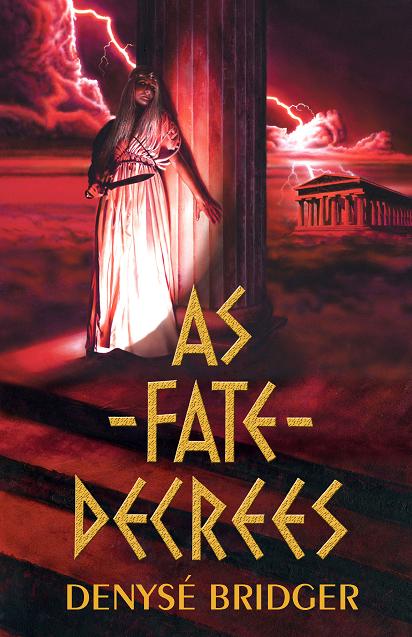
– As Fate Decreesis based in ancient Greece. Was it tough to write in such times, when we know from history books that love was very different, compared to our days (dynasty marriages, homosexuality was something normal…etc)
– I read many, many books about mythology before I began writing
As Fate Decrees. The idea was one of those that came to me almost fully developed, then I needed to begin the process of learning my background, and evolving a solid story. Being based on Greek mythology, there was a great deal of flexibility, so it made the writing a lot of fun once I began crafting the novel. I see much I would have done differently if I was writing the story now, but readers have embraced the book as it is, and continue to ask for sequels.
– Who are you?
– Interesting question. I am a Canadian girl with an imagination that finds beauty and stories in everything I see, hear, and experience. I think the voice of my soul is expressed through written words, and in that voice is the real me. If I can touch others, and make them smile through the stories I create, that’s the real measure of personal success.
– What are your writing habits?
– I tend to write whenever I can find a few minutes, so it’s erratic most days. I’m a caregiver for an aging parent, so I have to fit in my personal time as I’m able. Ideally, I like to write mornings and evenings into the night, but it doesn’t always work that way.
– Are you satisfied by the sales of the books and do you plan another one?
– I’m always planning another book, I have several novels all outlined and ready to write when I am able to find the time to get them out of my head and onto the page. Sales can always be better, but if one focuses solely on the monetary compensation of writing, you will miss the real joy of it all in the end. And, if money is your sole reason to write, you won’t be in the business for long. There are few financial successes without a great deal of time and investment.
– What are you doing to promote by the best possible way your book?
– Promotions and marketing is an endless learning curve. What works for one book may not work for the next one, so each time it’s a new experience. I buy advertising space, do blog tours, actively participate in author events. All of the things that have become the normal course of business in recent years. There are no sure-fire ways to assure your book reaches any audience. Word of mouth is still any author’s greatest asset.
– You are writing a lot for the love, but do you find the meaning of this word in the real world?
– I try very hard to maintain an optimistic view of humanity, despite the lack of empathy many show. It’s my honest belief that if you don’t try to remain positive, you will ultimately become bitter and isolated. I’d rather hold only my hope for love, than believe in a world where it just doesn’t matter. When the end of a life comes, it is the love we’ve given and received that is the true measure of our wealth and success in this life. Idealistic, perhaps, but rather that than cynicism.
– Italy? Is it something lovely to you? Explain why you like so much this part of the planet?
– For me, Italy represents both the past and the future. It’s a country steeped in history, but one whose people are passionate, creative, beautiful souls. Old world respect and appreciation for the happiness of living is in evidence with so much of the culture. I feel a special connection with that energy, with the positive nature of it. The language is lyrical and pleasing to the ears, the spectacular landscapes are a pleasure for the eyes, the food is an incredible experience in taste… for me, this is the one place on the planet that is “alive” in all the best ways. I’m sure there are others, but Italy resonates for me and speaks to my heart, always.
Check out Denysé introducing video
Her web page
Here are some of Denysé’s best selection books:
As Fate Decrees
Stolen Rapture
Winner Take All
Champagne and Chocolate
HENRY MOSQUERA: I READ THE DIALOGUES IN MY BOOK OUT LOUD
Henry Mosquera’s second book Status Quo was published in 2014. The author already established himself with his first novel “Sleeper’s run”. Here is the interview with him for our blog.
QUICK GOOD NEWS UPDATE: Henry just won 2014 Best Indie Book Award for Best Mainstream Novel for Status Quo! Congratulations!
– What is your last book Status Quo about?
– Status Quo is a about a frustrated author trying to turn his writing into a self-sustaining career. It’s part-satire of the entertainment industry, and part-exploration of what it is to be creative; to have an uncontrollable urge to pursue something you love and what happens during that journey.
– How you decide to write the story?
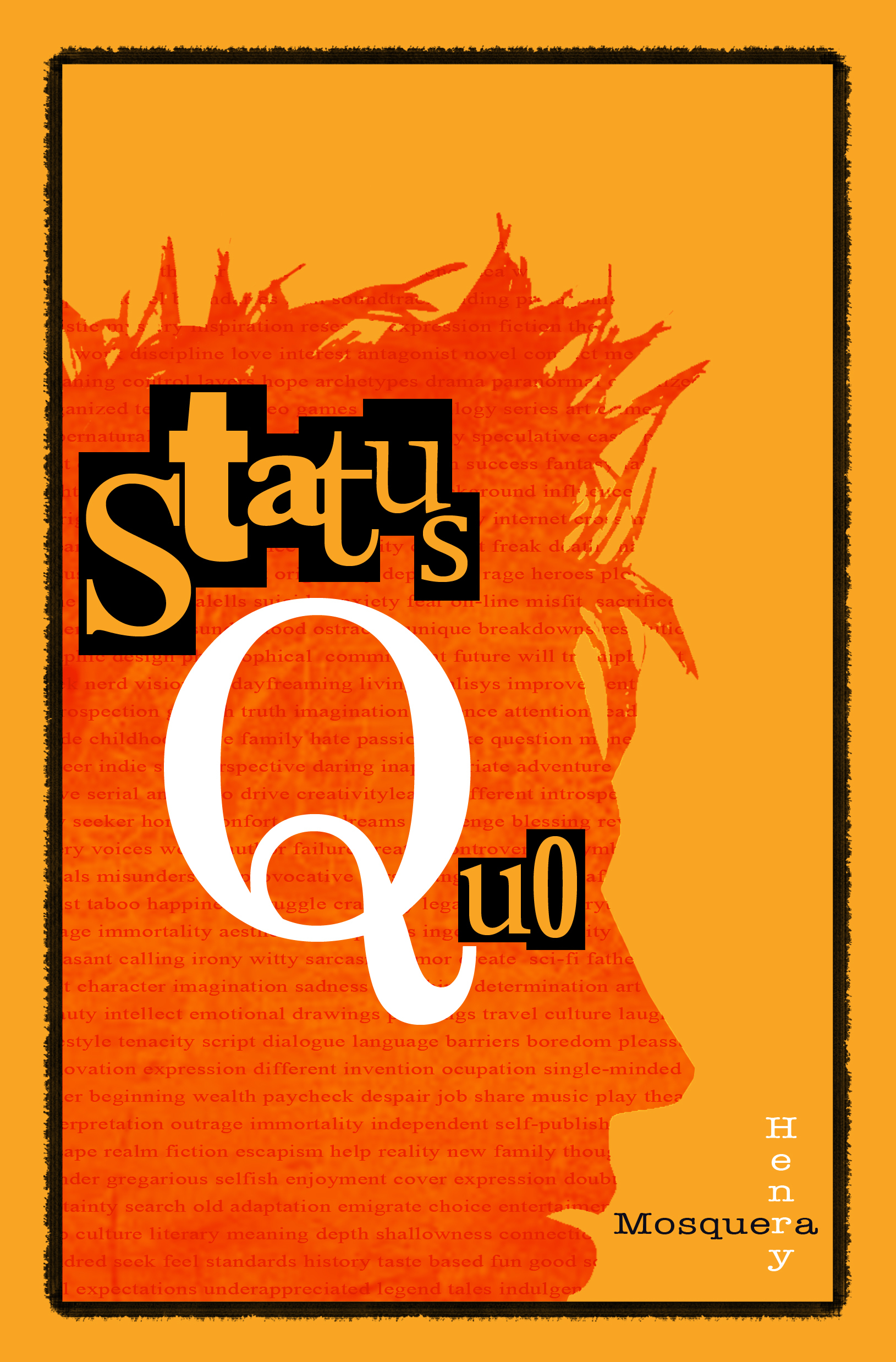
– I always wanted to write an offbeat literary fiction novel populated with quirky characters. Curiously enough, Status Quo decided to write itself, not the other way around. It was definitely in the pipeline, marinating in my head. But then, one night I went to see Roger Waters performing “The Wall,” and after that, the story was constantly spamming my mind to the point were I had to stop the novel I was working on to put Status Quo down on paper. That had never happened to me before. I have a pretty good hold of my creative output: what’s just an idea, what I’m currently researching, what I’m currently working on. I guess Waters’ masterpiece of an artistic, introspective journey affected me more than I thought.
– What was the difference of being author and co-author?
– I’ve never co-written anything, so I don’t have a personal insight in what would constitute the differences. Interestingly enough, I don’t know if I could actually be a co-author on a fiction project. I’m at my best when left to my own devices. Also, the way I write would make it very difficult for someone to just step in. When you deal with layers, themes, and symbolisms injected into your stories, you’d have to find someone who sees the world as you do, and that’s a pretty tall order for anyone. Plus my stories tend to be very personal.
– Tell us something more about your main character? Is it close to someone from your real life?
– Lemat is a frustrated author who’s incredibly creative and driven, but life didn’t turned out so well for him. We always hear about how so and so had a tough time, but he miraculously managed to break into (fill in the blanks with the creative endeavor of your choice). But we never hear about the legion of others who, in spite of working hard, having talent, drive, and making sacrifices, never made it. They never met that one person who helped them out or were at the right place at the right time. That’s the basics of the character.
Lemat is basically me, or at least an isolated part of me that served as the seed for the character. Most characters in Status Quo are based on people I’ve known, or an amalgamation of certain individuals. That is the foundation of the characters in the beginning. Then you start writing and they grow and take personalities of their own.
– What is your first book Sleeper’s Run about?
– Sleeper’s Run is a political thriller that takes place largely in Venezuela. It’s about a Special Operations Forces veteran suffering from PTSD, who is trying to rebuild his life after years of fighting terrorism. Then suddenly, he finds himself tangled in a conspiracy that destabilizes the country and sends his life into a tailspin. I’m keeping it vague because I don’t want to give anything away. It’s a pretty frantic ride that sucks readers in until the very end.
– Who are you?
I’m a genre and literary fiction writer who was born in Caracas, Venezuela. I’ve lived half my life in the US. I’m also an artist; my first self-published work was a paranormal graphic novel called “Metasearch.” I love martial arts, food, traveling, and film. If you follow me on twitter @odditymedia, you’ll get to see a lot of the stuff I’m into. I have the most amazing wife in the world, and a dog that I adore.
– What are your writing habits?
– That depends on the project. If I have to research, then I go through a lengthy process of learning everything I can about the topics I’ll be touching on. For Metasearch, it was a lot of reading and stepping into the world of metaphysics and see who, why, and how these people go about their business. For Sleeper’s Run, the reading alone would have earned me a PhD. I also trained in some of the skills you see in the book like Urban Escape and Evasion, flying airplanes, tactical weapons, knife fighting, etc. It’s fun, but time consuming and expensive. I think in the end, all the research pays off because it grounds the writing in reality. Status Quo was all life experience and sheer creativity.
As for the mechanics of writing, I’m very disciplined. I write as much as my time allows every day, including weekends. If I can do twelve hours a day, so be it. But again, every project has been different. Each one brings a unique challenge. I write to music that suits the chapters I’m working on. A lot of it actually ends up showing up in the books. I read all the dialogues out loud (my neighbors probably think I’m crazy). And I go through as many re-writes as needed. Some people hate doing that, but I actually enjoy them. That’s when you see the story really take shape.
– Are you satisfied by the sales of the books and do you plan the next one?
– There are probably very few writers who are satisfied with their sales, indie or otherwise. As for the next book, I’m neck deep working on my next novel as you read this. It’s a sci-fi story that should be out next year.
– What are you doing to promote by the best possible way your books?
– The whole promotion thing mystifies me. For Sleeper’s Run, I had a larger budget so I went for broke: blog tours, interviews, international trade shows, press releases, social media, reviews, competitions, advertising, the works; you name it. It went on to win numerous awards and critical praise. For Status Quo the budget is way lower so, social media, reviews, giveaways, and interviews so far. I hope to do a blog tour later on, we’ll see. But it’s tough out there. Promoting a novel and getting any kind of decent attention is like winning the lottery.
– Tell us something more about Venezuela, what is the Top 3 of must see things in the country?
– Venezuela is currently going through some pretty hard times. I haven’t been there in long time, so I’m very disconnected with the day-to-day. There are many wonderful things to see like the tepuis, Angel Falls, the archipelago of Los Roques, and so on. Nightlife in Caracas used to be pretty amazing too, but it would be irresponsible of me to advise anyone to go there right now. It’s dangerous. This is definitely not the same country I grew up in.
Check out Henry’s books:
To leran more about Henry Mosquera check out his twitter
ELLIS SHUMAN: IN ISRAEL, WE PRAY FOR PEACE
Valley of Thracians: A novel about Bulgaria was a book title that took my attention. The author Ellis Shuman wrote with great passion for my country. Now it’s huge pleasure for me to introduce in the blog the Israeli writer. He is living in a small community near Jerusalem and works in online marketing. Writing is his hobby. He posts book reviews at The Times of Israel and travel articles at The Huffington Post. His great blog is nice place for some hints about indie publishing.
In my opinion this is one of the most interesting interviews for the blog and is a must read.

– What is Valley of Thracians about?
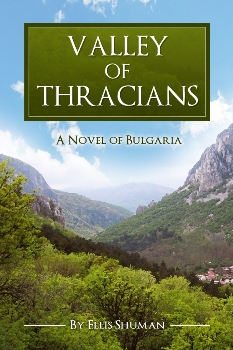
– Valley of Thracians is set in modern day Bulgaria. An American youth has come to the country to serve in the Peace Corps, but he goes missing and is presumed dead. The boy’s grandfather, believing that he is still alive, arrives in Bulgaria and travels around the country in search of his missing grandson, assisted by a beautiful Bulgarian history teacher who specializes in Thracian culture.
On the surface, the novel is a mystery, one that follows the clues to discover what happened to the missing Peace Corps volunteer. But more than that, Valley of Thracians is an introduction to Bulgaria, to the country’s rich history, traditions, culture, and people. Not many westerners have visited Bulgaria, but they will learn a lot about the country by reading this novel.
– How you decide to write the story?
– My job in online marketing was relocated to Sofia for two years, 2009 – 2010. During our time in Bulgaria, my wife and I traveled extensively around the country. We learned a lot about Bulgaria, enjoyed eating Bulgarian food, visiting picturesque villages and museums, and made many friends. Unfortunately, we failed to learn how to speak Bulgarian, but we managed just fine in English.
After returning to our permanent home in Israel, I couldn’t stop thinking about Bulgaria. As a writer, it was quite natural to begin to write down my experiences. I have published many travel articles highlighting how wonderful it is to visit Bulgaria, a country that is quite unfamiliar to western tourists. In addition, I began writing Valley of Thracians. I decided to develop the book as a suspense story, to keep readers turning the pages, but I couldn’t help myself from including a lot of background information about Bulgaria in the book.
– What was the biggest challenge during the writing process?
– I work a full time job and my commute is about an hour in each direction. By the time I get home in the evening, I am quite tired, both physically and mentally. On the weekends, I spend time with my family, read, and travel around Israel. The biggest challenge for me has always been finding the time to write. There are just enough hours in the day!
I solved this problem by finding an extra hour. I get up very early in the morning and drive to work before there is a lot of traffic on the highways. I park my car at the office, but then head to a coffee shop for an hour of creative time with my laptop. For some reason, the sound of coffee machines seems to stimulate my creativity. I get a lot of writing done during that early hour, and by the time I get to the office to start my work day, I feel that I have already accomplished quite a bit.
– Interesting idea! And very useful one for those, who may wake up very early. Tell us something more about your main character? Is it close to someone from your real life?
There are four main characters in Valley of Thracians, but the story highlights an American university professor, someone brave enough to travel to a foreign country and follow leads for his missing grandson, even when he is warned that he is wasting his time. This professor is quite unlike anyone I’ve ever met in real life. Many of my previous attempts at writing novels failed because the main character was too auto-biographical. In this novel, I succeeded in distancing my fiction from my real life. The characters and what happens to them are totally unlike anything I’ve experienced in real life.
– How much time did you need to finish the story and to publish it?
It took me about a year to write Valley of Thracians. Even though I work as an editor, I turned to a professional editor to help me improve the grammar and texts in the book. The process of revisions took some time as well. I spent about six months looking for a literary agent and/or publisher, but in the end I self-published the novel. It is now available as a digital e-book sold exclusively by Amazon, and as a paperback as well.
– Who are you?
– I was born in Sioux City, Iowa, in the United States and moved to Israel as a teenager with my family. I finished high school in Jerusalem and served for three years in the Israeli army. My wife and I were founding members of a kibbutz, in Israel’s southern desert. My experiences living on that small, agricultural community formed the basis for the stories that appeared in my book, The Virtual Kibbutz.
In 1983, when we had a growing family of three children, we moved to a small community near Jerusalem to be closer to our families, and to have a more independent lifestyle than what was offered on the kibbutz. I trained in hotel management and worked for many years in hotels, including my last position as Food and Beverage Comptroller at the Jerusalem Hilton.
I began writing on the Internet, and served as the Israeli Culture Guide at About.com. For four years, I was the editor of Israel Insider, an online magazine reporting news and views about Israel. Since 2004, I have worked in the online gaming industry in various marketing positions. This was the job that was relocated to Sofia for two years.
– What are your writing habits?
– I have already mentioned that my best writing time is early in the morning, sitting over a cup of cappuccino in a coffee house not far from my office. But I do a lot of writing at other times – as I drive to work, as I sleep. I often wake up with ideas that I quickly have to write down. On the weekends I take long exercise walks. I come back with many new ideas for my writing.
– Are you satisfied by the sales of the book and do you plan another one?
– As a self-published author, I have had some success marketing my novel. Nearly 10,000 copies of Valley of Thracians have been downloaded, but I assume that not everyone who downloaded the book has actually read it. I have tried various marketing tactics to increase sales of the book, including offering it for free, and also reducing its sales price from $4.99 to $0.99.
They say that the best way to sell a book, is by writing another one. I have followed this advice and am now in the final stages of revising my new novel. Again, the story will be set in Bulgaria, but this time the book will also have a very strong connection to Israel.
– What are you doing to promote your book?
– As I mentioned, I did give my book away for free at one time, and also temporarily reduced its sales price. As a result, I have quite a few reviews for the book posted at Amazon. The more reviews that an author can get, the better, even if not all of them are favorable. (The vast majority of my book’s reviews are very favorable).
I believe that an author must have a platform and establish himself/herself, and that this is the best basis for promoting one’s books. My book reviews in The Times of Israel and my travel articles at The Huffington Post, in addition to the many articles I post on my private blog, help establish my name.
In addition, I have become very active on Twitter. I have more than 24,000 followers, and the funny thing is, I never tweet to them, “Buy my book.” Instead, I tweet links to my book reviews, travel articles, and blog articles. As a result, many people are reading what I write. And as a side benefit, some of them are actually purchasing my book.
– What impresses you most about Bulgaria?
– I lived for two years in Sofia, and over time, I came to love and appreciate the city. But even more than that, I really enjoyed traveling around Bulgaria. What impressed me most was that even though Bulgaria is a very modern country, trying hard to catch up with the rest of the world, there is a very strong respect for the past. Many villages retain their appearance from the 19th century; there are many interesting ethnographical museums; and festivals where citizens wear colorful costumes. There was always something happening, and we continued to learn new things about Bulgaria the entire time we lived there.
– How do you describe the people of Bulgaria?
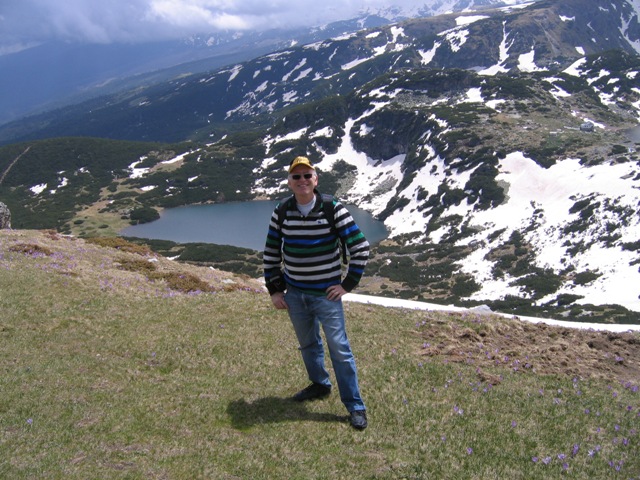
– We felt very comfortable living in Bulgaria and found the people very hospitable, and willing to share their traditions and customs. I hiked in the Rila Mountains with my Bulgarian friends. My wife attended a traditional pogacha ceremony following the birth of a colleague’s son. We dined out a lot, visiting the tasty restaurants of Sofia, but our most enjoyable experiences were when we ate in the homes of our friends, drinking homemade rakia and toasting ‘Nazdrave’ to each other.
– What is the next country you plan to visit and why?
– During the two years we lived in Bulgaria, we also managed to travel in the region. We visited Serbia, Turkey, Romania, Macedonia, Hungary, Italy, and the Czech Republic. We still have a huge desire to travel but unfortunately, we don’t have the time or resources to do it that much these days. We did just get back from a trip to Bosnia, Montenegro, and Croatia, a trip which gave me huge inspiration for future writing. Who knows, maybe these countries will feature in my future novels?
– How tough is to live under rocket bombardments, terrorist attacks and during so many military actions in Israel?
– Wow, this is a huge subject, and I could write a long article to tell you what it’s like to live in Israel these days. (Readers are invited to my blog to get a full picture of my feelings and thoughts about the war in Gaza).
In short, it hasn’t been easy. Israel is a very small country and citizens everywhere had the danger of rockets flying over their heads. I can’t imagine what it would be like to live in a community near the Gaza Strip with the danger of terrorists tunneling into their homes with the sheer purpose of killing as many civilians as possible.
Israel fought back in what we describe as a “just war.” Yes, many innocent Palestinian civilians were killed, and this was truly regrettable, but that is due to the nature of the enemy we were fighting. Israel uses its rockets and missiles to defend its citizens. Hamas uses its citizens to defend its rockets and missiles.
The bottom line is that Israel’s war is not against the Palestinians, but against the terrorist Hamas organization. In Israel, we long and pray for peace. I hope that day will come soon.
Here are the books of Ellis Shuman:
Check it Ellis Shuman’s blog
Learn more about my country with this very intriguing post by Ellis Shuman at
Huffington post
VITOSHA MOUNTAIN IN THE SPRING
I am not a poet, but one thing is for sure – The spring is the time of new beginning. When I was a child in Bulgaria the winters lasted three full mounts. There were a lot of snow and we went every day to sledge down from the hills.
I am not sure if the global warm is the problem, but currently we have very short winters. In my city Sofia the snow lasts not more than a total of month now. That’s why I enjoyed very much to go to our nice mountain Vitosha, which is right to the biggest settlement in our country.
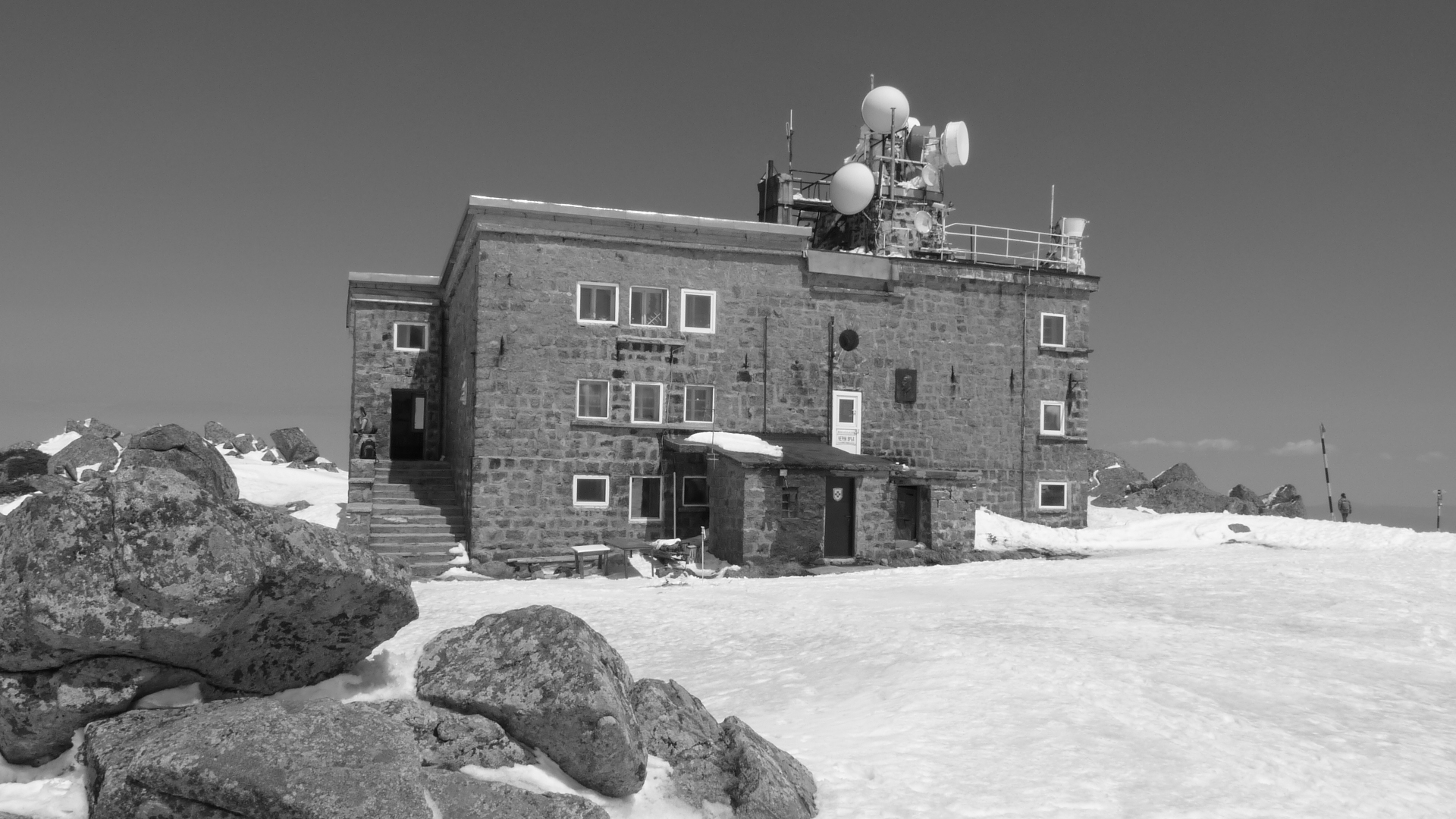
The highest peak is Cherni vrah (translated as Black peak). Its height is 2290 m. If you start climbing from some of the city points, you may go up for around 4 and a half hours in good tempo.
Here is the gallery of one spring climb of the Cherni Vrah few years ago, when I still wasn’t father of my sweet daughter Valeria.
On the lowest slopes there isn’t snow

Mixed zone

Always love B&W photo

The snow is standing

The beauty of the hills

We are very high
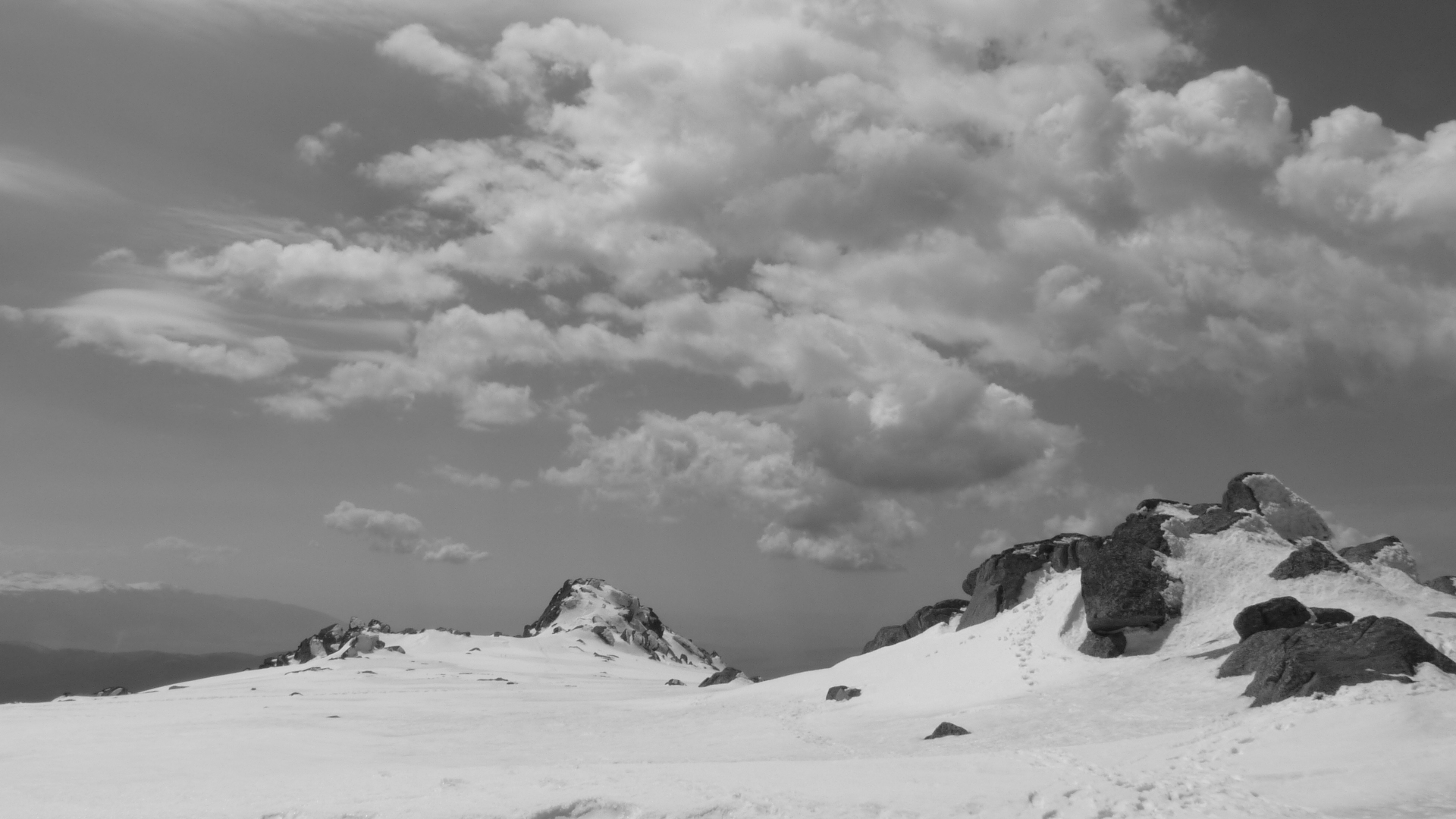
Cherni Vrah’s tea house
Time for some rest
The spring is so nice
The Sky is very close

Abandoned land
This is how the night Sofia is looking

So happy with my girl Ralitza
OFFICIAL VIDEO TRAILER OF THE WHITE PRISONER
Finally the official video trailer of “The white prisoner: Galabin Boevski’s secret story” is on!
Check it out and say what you think about it!
Great thanks to Ellis Shuman and his wonderful blog for opening my eyes how easy is to make a trailer by myself.
You may order a print copy of the book with B&W photos here
The digital/e-book version of the novel is available on Amazon.com. To order click here
NICOLE MADDALO DIXON: I LOVE THE SENSE OF FREEDOM IN WESTERNS
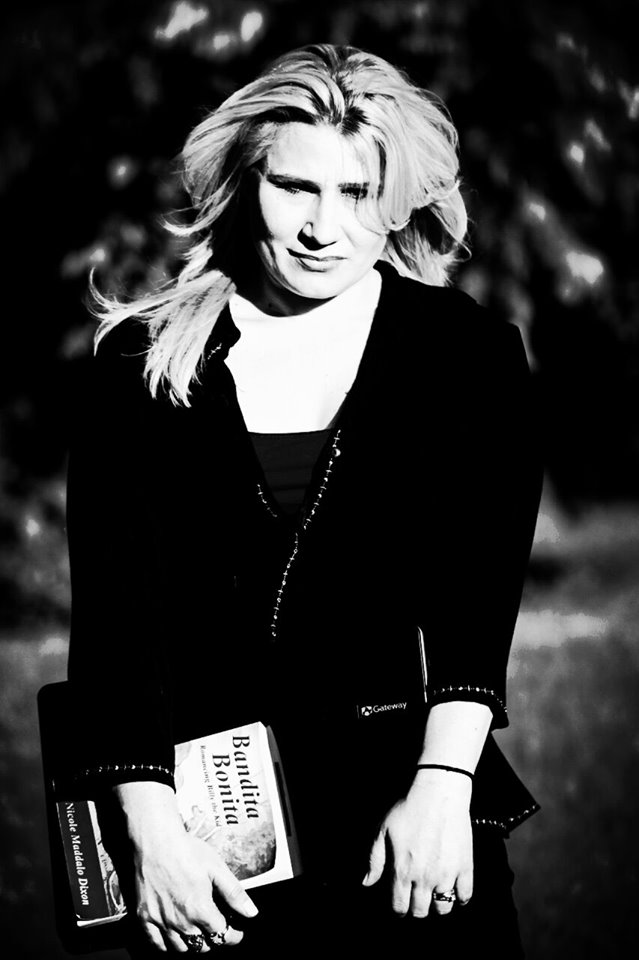
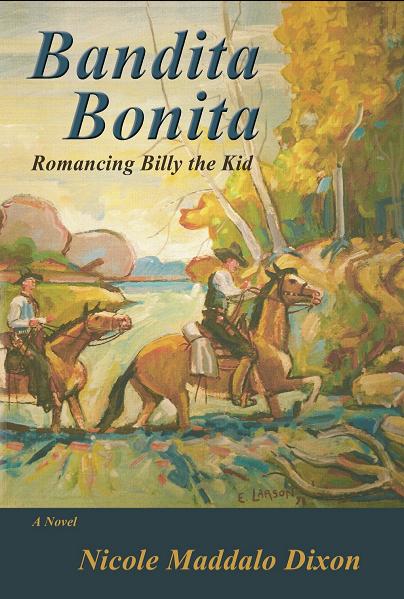
Nicole Maddalo Dixon published her first book Bandita Bonita: Romancing Billy the Kid in December 2013. I was always been lover of westerns, so this book is kind of reminder for my child years. I never stop wondering why cowboys, Indians, gold miners are almost forgotten in the current literature. Well, I am stopping with my nostalgia talks, because here is the interview with lady Nicole Maddalo Dixon.
– What is your book Bandita Bonita: Romancing Billy the Kid about?
– Bandita takes place in 1877 New Mexico and is the story of a young New York heiress, Lucy, who is sent out west to marry her pre-contracted fiancé during the volatile days that lead up to what eventually breaks out as the infamous, bloody Lincoln County War in Lincoln County, NM.
Desperately inconsolable at the prospect of marriage to a man she does not love, she becomes close to and falls in love with a hired farmhand, William H. Bonney, who will soon become known to history as the notorious Billy the Kid.
Lucy’s fiancé is murdered in cold blood by his competitors, the Santa Fe Ring—a move that sparks the infamous war—and Lucy’s life is then in jeopardy as she is next on their list. She is then placed under the protection of the deputized Lincoln County Regulators and is forced to ride the trails with Billy and the boys, becoming a witness to the bloody battles that occur. During this trial, Lucy uses the war to her advantage as her own personal battle to win freedom from a life that is oppressive.
– How did you decide to write the story?
– I have always been fascinated by Billy the Kid and the kind of person he was. After my years of research I finally decided that I wanted to contribute to his legacy by helping to perpetuate the truth of what happened and who the Kid really was despite myth and legend. I thought I might tell it in a unique way that would appeal to a broader demographic, and therefore decided to write it as historical fiction while keeping the names, accounts, and events accurate.
– What was the biggest challenge during the write up process?
– Fortunately, the only challenges I have and do encounter are keeping the facts as accurate as possible. This presents a challenge only because it involves having to interrupt my writing flow in order to suitably double and triple check information before committing to writing it down responsibly. Other than that, writing the story is an absolute pleasure. It’s very cathartic and exhilarating for me to spin my version of the tale.
– Tell us something more about your main character? What is the difference with the real Billy the Kid?
– My main character, Lucy, is a brat, but charmingly so. She has a brilliant sense of humor that is sometimes acerbic, but always fun to play around with. She’s truly a strong-willed female during a time when women did not have many options. She and the character I’ve created for Billy play off of one another nicely, as I am able to create a composite of who I think Billy may have been based on accurate witness accounts. I’ve tried to maintain a total sense of truthfulness in regard to Billy’s personality according to the several accounts that have been documented by reputable sources.
– Why you decide to write a Western?
– I have always been partial to westerns. I love the sense of freedom that always accompanies such stories, but in this particular case and in wanting to write about Billy, I hadn’t much of a choice but to stick to that particular genre.
– How much time do you need to finish the story and to publish it?
– I wrote the first book in 3.5 months, but that was after having thought about it and mulling it over in my mind for 3 years prior. At present Book II is nearly complete as I am in the process of giving it the required, solid edit before I hand it over to my publisher.
– Who are you?
– I am a visionary—a creative thinker. I love to learn no matter how insignificant the topic may seem to others. All information is valuable to me, and that is paramount to a writer—finding value even in the mundane.
– What are your writing habits?
– When the dialogue/narration comes, I write it down. I have to, as do most writers. I am always able to sit down and write at will, but there are times when I am doing something else and the words just hit me. When the words beckon I respond, and that includes when I find myself exhausted and trying to sleep. I have to forgot the pleasantness of lying there blissfully in order to grab a pen and paper, or even my laptop, to get those words down.
– Are you satisfied by the sales of the book and do you plan another one?
– Bandita has only just launched as of last December (2013), and so reflecting on book sales at present would be premature. However, that said, I do feel that sales are right on course in conjunction with my promotion of the material and its only having just relatively launched.
As I have mentioned Book II is on deck, and I am planning a Book III & IV, the latter of which I plan to have stand on its own merit despite being a part of the original story/series.
– What are you doing to promote by the best possible way your book?
– I’m doing the usual; blogging, tweeting, posting, and making some rounds on the blog talk radio circuit, along with scheduling book signings and appearances at book clubs. Essentially, I am taking full advantage of social media, as any entrepreneur should do, and networking as often as I can by using both electronic and organic mediums.
– Do you think that the man from Western times is more honest and real man then current one?
– That is a difficult question to answer because one would have to compare the environment of the Wild West with today’s civilized west. It’s really on par with apples and oranges. I believe that there is probably the same total of honest v. dishonest men, respectably.
– Who is your favorite Western character and why?
– William H. Bonney (aka, Billy the Kid) of course. He’s one of the few romantic, tragic characters of the old west who literally has earned his legend.
Until fairly recent years, Billy was often suggested to be a sociopathic, cold-blooded killer, but that was just not true. He was a level-headed, clever leader who was kind and respectful, but who fought back (as any might) when backed into a corner. He was a vivacious individual who loved to dance, laugh, and romance the pretty girls.
He truly was a daring, romantic individual!
To order: Bandita Bonita: Romancing Billy the Kid
Check out more about Nicole:
Personal web page
Twitter
Blog – http://www.nicolemaddalodixon.blogspot.com
MICHAEL COORLIM: THE READERS MOTIVATE ME TO KEEP GOING
Michael Coorlim describes himself as “Teller of strange stories for stranger people”. He already established as a pro author with many well received books. If you are interested what is really to be into the writer’s business, check out this very interesting interview!

– What is your latest book Jericho rising about?
– Jericho rising is a prehistoric superhero story set in the Levant around 10,000 years ago, in and around the ancient city of Jericho. It tells the story of Clay, a young hunter from the Bear Clan as he comes of age in a world of savage warfare between Clan champions imbued with the power of their totem spirits. When his father falls, will Clay be the one to take up the mantle of Bear? Or will that honor go to one of his brothers, instead?
It’s the first volume in the Hero Historia historical superhero serial, covering the first story arc published over at http://www.herohistoria.com. Each 12-episode arc will cover a different historical period. The ebook version has undergone a fresh round of editing, and includes new material not offered in the free serial.

– How do you find the stories of your books?
– All of my stories come from life. It may be from a conversation that I had, or a story that I heard, or from something that I saw, but the core of every story is some element of the human experience. To tell these stories you need to get out and go live, talk to people, have adventures of your own. Fall in love, fall out of love, get in fights. You know, be human.
– What was the biggest challenge during the write up process of your fiction novels?
– The biggest challenge for me is that I don’t have a safety net. This is my only source of income, and if I spend months writing something that doesn’t sell, those are months I’m not getting paid for. Everything I write is a gamble in that way. Thankfully, people seem to like it.
– Tell us something more about your main characters?
– The main characters in the stories I write are often fragments of my own soul, or reflections on myself when I was younger. In Jericho Rising, Clay’s experiences are informed by what it was like for me when I left home for the first time. In Infernal Revelation, the different characters all share elements of the masks I wore in high school. In the steampunk mysteries I’ve written, the detectives feel like the halves of my id and superego, arguing with me over who I’m supposed to be.
– How much time you need to finish the story and to publish it?
– I’m a fast writer, but I have a lot of other responsibilities these days. I’m trying to start a film production company, and that takes up a lot of time and attention. The nice thing about working for yourself is that you can set your own hours. On the other hand, you don’t have days off, just days you don’t make progress.
Jericho Rising was published in twelve 3000 word weekly episodes, so it took three months to complete before I compiled the ebook. I can write a novel in three months if I push myself and don’t have any other distractions, depending on how long it takes my proofreaders and editors to get back to me.
– Who are you?
– I’m a full time author. I’ve written the Galvanic Century series of steampunk mysteries and thrillers, the literary apocalyptic short story collection Grief, the supernatural serial Profane Apotheosis, and the historical superhero thriller Hero Historia. I’m also a screenwriter, and am getting into film production with Burning Brigid Media.
– What are your writing habits?
– I treat it like a full-time job. 8 hours a day, 5 days a week, 50 weeks a year. I find what helps me stay on task is the Pomodoro method of productivity timing – I work for 25 minutes, take a 5 minute break, then work for 25 more. Every 2 hours I take a 20 minute break to make coffee or do some sit-ups or something.
– Are you satisfied by the sales of the book?
– Satisfied? Never. Who’s ever satisfied? We always wish sales were better, that we could reach more readers. If I was satisfied, maybe I’d stop trying!
– What’s next for you
– I’m currently working on two projects. The first is the next Hero Historia story arc, Aea Watched, set in ancient Sumeria. The second is a steampunk mystery set in 1910s China, the 5th Galvanic Century book, Ghosts of Shaolin.
– What are you doing to promote by the best possible way your book?
– I write more books. I have a twitter and a facebook, but that’s primarily to talk to the people who are my fans.
– Why the fiction books are so much popular then the non-fiction?
– I think that people prefer fiction because it deals with emotional resonance that ties in to our own lives. Take Star Wars. None of us have ever been Jedis, but we’ve all faced disappointment from our parents, we’ve all sacrificed for our loved ones, we’ve all blown up death-stars. Okay, maybe not that last one.
We read fiction for that internal resonance, and we read non-fiction to learn. Emotion trumps education almost every time. This is not to say that non-fiction cannot elicit emotion; it’s just that fiction has specialized in it for so long that it’s what we’ve come to expect.
– If you have a chance to write a non-fiction story for well known person who it will be and why you will select him?
– I have a project in mind that involves writing short 1-2 page biographies for lesser known historical figures. It’s still rolling around in my head for now.
– How important for you is the feedback from the readers. Would you give an example how the connection author-reader helped you in your writings?
– It’s very important. I could not write without my readers and their feedback. I may do this for a living, but it’s the readers that motivate me to keep going.
Every time a reader writes to me to talk about my books or just to share what they liked, it’s like a fresh shot of motivation to keep working, keep writing, keep creating.
Check out more about Michael at his official web page
More about Hero Historia series here
To order Michael Coorlim books look below:
Jericho Rising
Steampunk Omnibus: A Galvanic Century Collection
Last Words: A Story of Apocalyptic Loss
And They Called Her Spider (Galvanic Century)
STEPHANIE SMITH: 25 YEARS AGO, YOUNG PEOPLE HAD A FAR GREATER VOCABULARY
Stephanie Smith is our next featured author. She is kind of special, because her profession is to teach others to write and to understand English literature. It’s very useful read for all indie authors, who want to improve their language skills.
– Stephanie, tell us more about your last two novels: Content Burns and Baby Rocket?
– Content Burns is the third novel in the Warpaint Trilogy, Baby Rocket is the second and Warpaint was the first; the novels are connected by friendship and family ties, not by plot, so you don’t have to read them in any order. The WARPAINT trilogy is three intertwined novels, all of which deal with contemporary American women who are struggling to balance art, love, illness and trauma; WARPAINT (2012) is the haunting tale of friendship and rivalry between three women artists, who’ve known each other for years, who must come to terms with imminent mortality and artistic frustration; BABY ROCKET (2013) is the label given to a traumatized, abandoned child who, as an adult, has no memory of this event. She discovers her past when her adoptive father dies, and now, without him, she must piece together the past in a journey that will take her from California to NYC, from Florida to Martha’s Vineyard; CONTENT BURNS (2014) follows two women of the same Puritan name, in the same family but separated by three centuries, both of whom survive historical trauma: the massacre of the Pequot tribe in 1637 and the loss of the Twin Towers on 9/11.

– What is the biggest challenge for you during the write up process of your books?
My job as a Professor of American Literature, and as the Associate Chair of the English department at the University of Florida—it takes up a lot of time.
– How do you find the main characters of your books? Are they some persons from your real life?
– All of my characters are imagined amalgamations of people I have known, or encountered, but the characters ‘reveal’ themselves as the story-line progresses. They invent themselves if you like. And sometimes they surprise me.
– Strange Grace is your next novel; give us some hints about it?
Strange Grace is a departure for me, in that the main character is a man, and a film actor; but that said, he is a character in Content Burns, who decided he needed his own story.
– Who are you?
Stephanie A. Smith took her PhD from Berkeley (1990). Prior to UF, she free-lanced, worked as an editor for Western Imprints, as an assistant at Glamour and Mademoiselle magazines, at David Godine in Boston, and at Representations and is presently a consultant for Feminist Studies. A novelist, she is the author of: The Warpaint Trilogy, Warpaint (2012), Baby Rocket (2013) and Content Burns (2014) (Thames River Press in London); Other Nature (1995), The-Boy-Who-Was-Thrown-Away (1987) and Snow-Eyes (1985) and has won multiple fiction residencies at the Martha’s Vineyard Writer’s Residency in the Noepe Center for the Arts, Hedgebrook, Norcroft, Provincetown and Dorland.
Examining the intersection of science, literature, politics, race and gender, her essays appear in such journals as differences, Criticism, Genders, American Literature and American Literary History. A 1998 Visiting NEH Scholar at UCLA, she is the author of Conceived By Liberty: Maternal Figures and 19th-Century American Literature (Cornell 1995.) Excerpts from her new book, Household Words: bloomers, sucker, bombshell, scab, nigger, cyber (University of Minnesota 2006) appeared in Body Politcs and the Fictional Double and The Cambridge Companion to Women’s Writing. Her essay “Genetics” appears in Glossalalia: An Alphabet of Critical Keywords (University of Edinburgh Press, 2003). Currently, she is finishing a new critical book about aesthetics and the publishing industry in the United States, titled The Muse and The Marketplace, a chapter of which, “Union Blues: Melville’s Poetic In(ter)ventions,” will appear in the Duke journal Genre in 2013; she is also finishing a new novel, Strange Grace, as well as working on several other projects, in both criticism and fiction.
– What are your writing habits?
– Every day for at least two hours, usually in the early morning.
– Are you satisfied by the sales of your books
– No. Unfortunately, my press is very, very small and they have done little to no advertising. But, anyone who has read one of them loves them, so the readers I do reach are enthusiastic.
– What are you doing to promote by the best possible way your book?
– I’m trying anything and everything. Social media, friends, colleagues, local newspaper, libraries; I’m using Poets & Writers, applying to residencies, trying to go to book fairs, and working with independent bookshops. I feel like I’m shouting into a hurricane, though.
– You are a teacher of literature. Do you think that international authors on age 20+ with not so strong English, like me (I am 33), will be able to improve their English language in order to write their stories on English (I used a pro translator of my first book)
– This is hard question to answer because people learn a second or third language at different rates, and with differing levels of success. On the other hand, practice and dedication can work wonders.
– Would you compare the current English language students and those from your generation? Is there some decrease of reading interest among young people?
– Yes, most definitely. When I started teaching 25 years ago, young people had a far greater vocabulary than they do today, and read more. My generation clearly read more than the current generation, and I have seen a significant decline in advanced literacy. People can read, but on a very low level (3rd grade), and resent being encouraged to improve (unlike earlier generations who thought it important to improve). I’m afraid the current social climate in the U.S. is one that values ignorance, for complicated historical reasons that baffle me.

– What kind of advice you may give to all newbie writers who want to improve their writing skills?
– Read. Read. Read. Challenge yourself to read above your current reading level. Analyze the way your favorite writers compose—look at individual sentences, see how they are put together.
Check out the great books from Warpaint Trilogy
Warpaint
Baby Rocket
Content Burns
Here are the other works of Stephanie Smith:
Household Words: Bloomers, sucker, bombshell, scab, nigger, cyber
Other Nature
The Boy Who Was Thrown Away
Snow Eyes
 Land Of Books