Blog Archives
MICHAEL PARKER: I CALL MY WRITING PROCESS THE “SWEET CURSE”
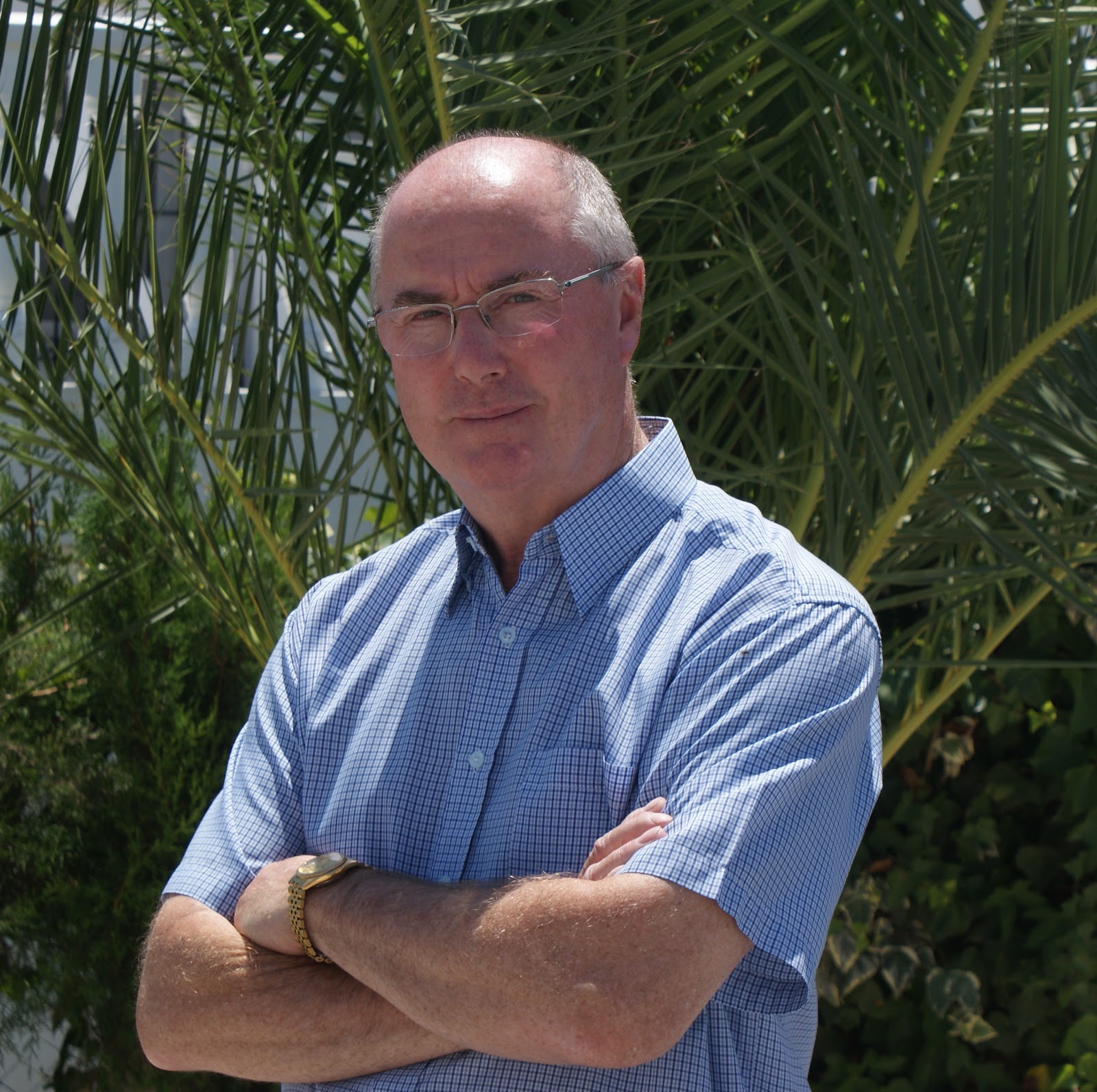
Michael Parker is an author with big experience. He’s got two pages with books, that are published in Amazon. The British writer continues to release quality novels. Let’s hear something more about his next book and others interesting topics that we discussed in the interview!
– Michael, What is your last book The Eagle’s covenant about?
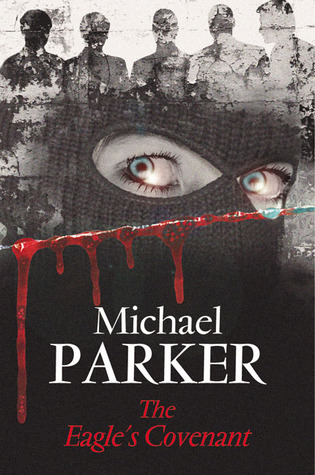
– The Eagle’s Covenant is set in modern Germany and is about the kidnap of a week old infant that goes badly wrong. The baby is the grandson of the world’s most powerful citizen, Manfred Schiller, whose empire touches almost everything people come into contact with during their everyday lives. Schiller plans to hand over his entire business empire to the Israeli nation because of his advancing years, and it is a plot by Franz Molke, leader of the Volkspartei that leads to the kidnap of the child. The group who kidnap the infant are led by a beautiful, South African, white extremist name Breggie de Kok. Among the group is Conor Lenihan, an ex SAS soldier and IRA terrorist. Conor is betrayed by Breggie de Kok and almost killed after a brutal blackmail leads to the death of most of the kidnap gang. Conor now seeks revenge, and persuades the baby’s mother, Joanna to help him find her baby. It is because of Joanna’s remarkable computer skills that she and Lenihan are able to wage a cyber-war against Manfred Schiller and his covenant to the Israeli nation.
– How you decide to write the story?
– There was no long thought out decision about the story. The idea drifted into my head and I began some research at my local library (in England). Eventually I contacted the German Embassy in London who sent me a comprehensive work on the German police force. This meant I was able to use all the correct ranks, department terminologies and processes that help to make the thriller more enjoyable.
– What was the biggest challenge during the write up process?
– Simply writing the book. I’ve always called my writing process the “Sweet curse”. I love writing but its hard work. It almost always takes me a year to complete a novel. Bearing in mind of course that it is my hobby; not a career.
– Tell us something more about your main character? Is it close to someone from your real life?
– Conor Lenihan is a figment of my imagination, and I’m glad I don’t have friends like him.
– How much time do you need to finish the story and to publish it?
– This book was first published by Robert Hale Ltd., of London. It usually takes them about a year to publish the print copy. Once I had acquired my paperback and e-book rights from them, it took about two months to publish on Amazon. The process is much quicker now because I am at the top of the learning curve. It’s still a fiddly job though from finishing the first draft to seeing it through to completion.
– You’ve got so many published books. Please give us highlights of the Top 3 of them that you value as the best ones.
– North Slope was my first novel. It was inspired by the discovery of oil in Alaska in 1968. I had set out to write a novel set in Canada. It was published by Macmillan when I was 38 years old. I thought I’d made it then as a writer. So that’s my favourite book. Hell’s Gate, a colonial venture set in Africa in 1898 is what I would call my masterpiece. I loved writing it and still think it’s a wonderful book. It was inspired by the building of the railway line from Mombassa to Lake Victoria at the end of the nineteenth century. There really is no No.3, but if pushed I think I would have to go for Roselli’s Gold. I just liked the idea of writing something to do with the Vatican, so arranged to have a fortune in Vatican gold secreted in the Sahara desert during the Second World War.
– Who are you?
– I have been writing thrillers for many years and have experienced the highs and lows of being a writer. My first novel, NORTH SLOPE was published in 1980, and is now available as a POD paperback and Kindle on Amazon. I have been married to Patricia for fifty four years and we live in Spain. We have four sons, ten grandchildren and one great grandson. My hobby is writing, of course, and to date I have had eight novels published. You can see my list in Author Central. My other hobbies are snooker, speedway, football and music. I play snooker, watch football and speedway, and play the keyboard (not too well). I am a born again Christian and played keyboard in my fellowship for several years. I worked as a maintenance technician most of my adult life, serving sixteen years in the Royal Air Force, and about seventeen years with a food manufacturer. I retired in 1996 (I was fifty five years old) and moved out to Spain a year later. Pat and I have lived here, on the Costa Blanca for seventeen years. We are now planning to return to the UK. Other jobs I have done include Merchant Seaman, Office boy, and general maintenance for a chicken farmer! I have received many excellent comments about my writing, but the proof of the pudding, as they say, is in the eating. I am a member of the International Thriller Writers and used to be a contributing editor with them. In 2009, I worked on a global project with eleven other writers and produced a novel called PASSAGE TO REDEMPTION. This is now available as a POD novel and Kindle by Acclaimed Books Ltd. (www.acclaimedbooks.com) of which I am an associate. For those of you who want to know a little more about me, and see me ‘in the flesh’, check out my website at http://www.michaeljparker.com, where you’ll be able to see a couple of TV interviews I have had. My last thriller novel titled THE BOY FROM BERLIN was released in December 2011. It has been picked up by Harlequin who have purchased (leased) the English language paperback rights for North America and Canada. This has been published (2013) now in paperback. Meanwhile my current paperbacks; NORTH SLOPE, A COVERT WAR ROSELLI’S GOLD, HELL’S GATE, THE DEVIL’S TRINITY, and SHADOW OF THE WOLF (March 2013) are available on Amazon and Kindle. THE EAGLE’S COVENANT paperback is available on Amazon.co.uk only because Harlequin have now agreed to publish THE EAGLE’S COVENANT in USA and Canada. My latest title, PAST IMPERFECT will be published by my London publisher, Hale, in 2014. This is a romance with a rough edged back story. Something of a change from my other titles!
– What are your writing habits?
Terrible. I still haven’t mastered the art of self-discipline when it comes to writing habits. It is probably due to the fact that I worked shifts for many years, including nights, and my writing has always been a hobby.
– Are you satisfied by the sales of the book and do you plan another one?
– I would like to sell a million books, but living in the real world I have to say that I am happy to be a writer who sells books. My figures are not high, but I have enjoyed a moderate success occasionally.
– What are you doing to promote by the best possible way your book?
– This is something that I call my ‘scattergun’ approach to marketing, and I keep promising myself I must do better. I blog all over the place, am on Twitter, Goodreads, Facebook, Stumble, Google plus, LinkedIn etc., etc. I spend money on advertising, but not all the better websites are amenable to a low, amazon ranked author.
– What is the secret to deal with publishers, as you’ve got a long successful story with them?
– Always remember that they will drop you the moment they think you are no longer worth their investment, but never forget that the publisher who takes you on has a certain amount of faith in you, and is taking a gamble. So make sure you respect the relationship and don’t get pushy.
– You’ve got great experience in writing. What are the biggest mistakes that you made as author?
– First mistake: believing I was as good as authors already published. Second mistake: Believing in the publicity (I was described as a ‘Gifted narrator’ in the Financial Times). Allowing my ego to get the better of me. Finally; not working hard enough.
– You have been married for 54 years. What is the secret of such long relationship?
– I love my wife.
– Why do you prefer Spain over UK?
– We came out to Spain seventeen years ago because I retired early and my wife was very keen on the idea of living out here. But now we are moving back to England where we will see the rest of our years out. Personally, I don’t prefer Spain over UK, but I’ve always been happy to defer to Pat’s choice unless I was strongly opposed to it.
Check out more about Michael on his
web page
Here are the top books of Michael Parker:
North Slope
Roselli’s Gold
A Covert War
The Eagle’s Covenant
The Devil’s Trinity
Hell’s Gate
HENRY MOSQUERA: I READ THE DIALOGUES IN MY BOOK OUT LOUD
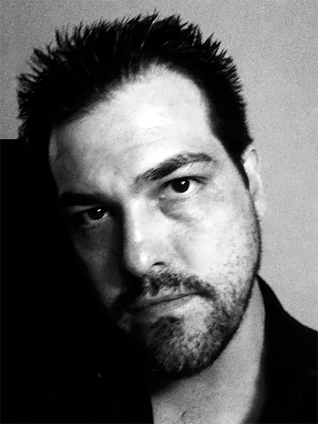
Henry Mosquera’s second book Status Quo was published in 2014. The author already established himself with his first novel “Sleeper’s run”. Here is the interview with him for our blog.
QUICK GOOD NEWS UPDATE: Henry just won 2014 Best Indie Book Award for Best Mainstream Novel for Status Quo! Congratulations!
– What is your last book Status Quo about?
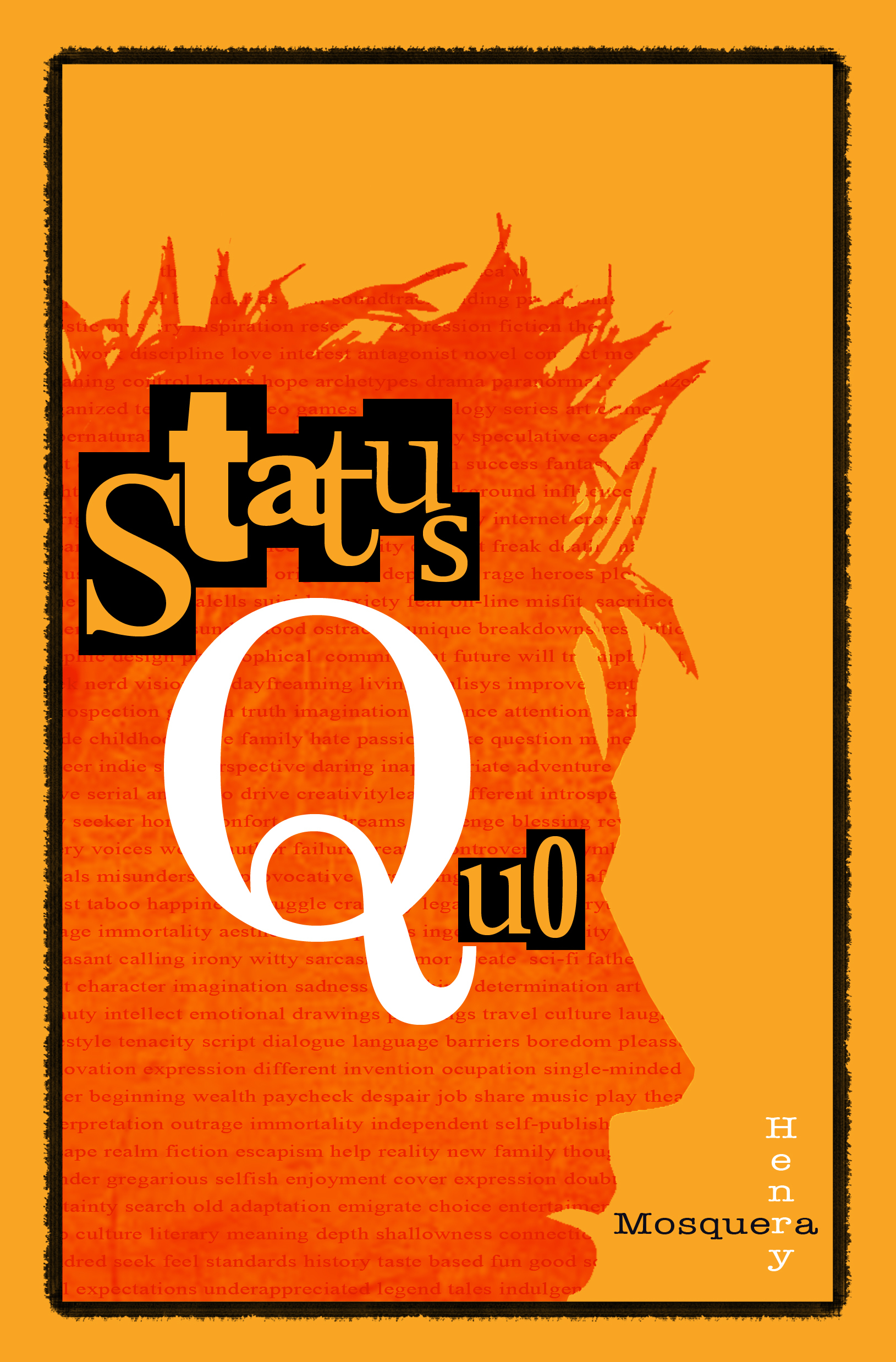
– Status Quo is a about a frustrated author trying to turn his writing into a self-sustaining career. It’s part-satire of the entertainment industry, and part-exploration of what it is to be creative; to have an uncontrollable urge to pursue something you love and what happens during that journey.
– How you decide to write the story?
– I always wanted to write an offbeat literary fiction novel populated with quirky characters. Curiously enough, Status Quo decided to write itself, not the other way around. It was definitely in the pipeline, marinating in my head. But then, one night I went to see Roger Waters performing “The Wall,” and after that, the story was constantly spamming my mind to the point were I had to stop the novel I was working on to put Status Quo down on paper. That had never happened to me before. I have a pretty good hold of my creative output: what’s just an idea, what I’m currently researching, what I’m currently working on. I guess Waters’ masterpiece of an artistic, introspective journey affected me more than I thought.
– What was the difference of being author and co-author?
– I’ve never co-written anything, so I don’t have a personal insight in what would constitute the differences. Interestingly enough, I don’t know if I could actually be a co-author on a fiction project. I’m at my best when left to my own devices. Also, the way I write would make it very difficult for someone to just step in. When you deal with layers, themes, and symbolisms injected into your stories, you’d have to find someone who sees the world as you do, and that’s a pretty tall order for anyone. Plus my stories tend to be very personal.
– Tell us something more about your main character? Is it close to someone from your real life?
– Lemat is a frustrated author who’s incredibly creative and driven, but life didn’t turned out so well for him. We always hear about how so and so had a tough time, but he miraculously managed to break into (fill in the blanks with the creative endeavor of your choice). But we never hear about the legion of others who, in spite of working hard, having talent, drive, and making sacrifices, never made it. They never met that one person who helped them out or were at the right place at the right time. That’s the basics of the character.
Lemat is basically me, or at least an isolated part of me that served as the seed for the character. Most characters in Status Quo are based on people I’ve known, or an amalgamation of certain individuals. That is the foundation of the characters in the beginning. Then you start writing and they grow and take personalities of their own.
– What is your first book Sleeper’s Run about?
– Sleeper’s Run is a political thriller that takes place largely in Venezuela. It’s about a Special Operations Forces veteran suffering from PTSD, who is trying to rebuild his life after years of fighting terrorism. Then suddenly, he finds himself tangled in a conspiracy that destabilizes the country and sends his life into a tailspin. I’m keeping it vague because I don’t want to give anything away. It’s a pretty frantic ride that sucks readers in until the very end.
– Who are you?
I’m a genre and literary fiction writer who was born in Caracas, Venezuela. I’ve lived half my life in the US. I’m also an artist; my first self-published work was a paranormal graphic novel called “Metasearch.” I love martial arts, food, traveling, and film. If you follow me on twitter @odditymedia, you’ll get to see a lot of the stuff I’m into. I have the most amazing wife in the world, and a dog that I adore.
– What are your writing habits?
– That depends on the project. If I have to research, then I go through a lengthy process of learning everything I can about the topics I’ll be touching on. For Metasearch, it was a lot of reading and stepping into the world of metaphysics and see who, why, and how these people go about their business. For Sleeper’s Run, the reading alone would have earned me a PhD. I also trained in some of the skills you see in the book like Urban Escape and Evasion, flying airplanes, tactical weapons, knife fighting, etc. It’s fun, but time consuming and expensive. I think in the end, all the research pays off because it grounds the writing in reality. Status Quo was all life experience and sheer creativity.
As for the mechanics of writing, I’m very disciplined. I write as much as my time allows every day, including weekends. If I can do twelve hours a day, so be it. But again, every project has been different. Each one brings a unique challenge. I write to music that suits the chapters I’m working on. A lot of it actually ends up showing up in the books. I read all the dialogues out loud (my neighbors probably think I’m crazy). And I go through as many re-writes as needed. Some people hate doing that, but I actually enjoy them. That’s when you see the story really take shape.
– Are you satisfied by the sales of the books and do you plan the next one?
– There are probably very few writers who are satisfied with their sales, indie or otherwise. As for the next book, I’m neck deep working on my next novel as you read this. It’s a sci-fi story that should be out next year.
– What are you doing to promote by the best possible way your books?
– The whole promotion thing mystifies me. For Sleeper’s Run, I had a larger budget so I went for broke: blog tours, interviews, international trade shows, press releases, social media, reviews, competitions, advertising, the works; you name it. It went on to win numerous awards and critical praise. For Status Quo the budget is way lower so, social media, reviews, giveaways, and interviews so far. I hope to do a blog tour later on, we’ll see. But it’s tough out there. Promoting a novel and getting any kind of decent attention is like winning the lottery.
– Tell us something more about Venezuela, what is the Top 3 of must see things in the country?
– Venezuela is currently going through some pretty hard times. I haven’t been there in long time, so I’m very disconnected with the day-to-day. There are many wonderful things to see like the tepuis, Angel Falls, the archipelago of Los Roques, and so on. Nightlife in Caracas used to be pretty amazing too, but it would be irresponsible of me to advise anyone to go there right now. It’s dangerous. This is definitely not the same country I grew up in.
Check out Henry’s books:
To leran more about Henry Mosquera check out his twitter
ELLIS SHUMAN: IN ISRAEL, WE PRAY FOR PEACE
Valley of Thracians: A novel about Bulgaria was a book title that took my attention. The author Ellis Shuman wrote with great passion for my country. Now it’s huge pleasure for me to introduce in the blog the Israeli writer. He is living in a small community near Jerusalem and works in online marketing. Writing is his hobby. He posts book reviews at The Times of Israel and travel articles at The Huffington Post. His great blog is nice place for some hints about indie publishing.
In my opinion this is one of the most interesting interviews for the blog and is a must read.

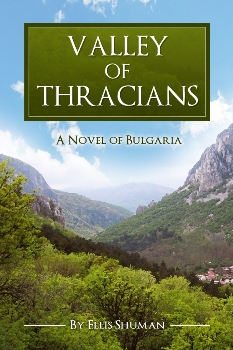
– What is Valley of Thracians about?
– Valley of Thracians is set in modern day Bulgaria. An American youth has come to the country to serve in the Peace Corps, but he goes missing and is presumed dead. The boy’s grandfather, believing that he is still alive, arrives in Bulgaria and travels around the country in search of his missing grandson, assisted by a beautiful Bulgarian history teacher who specializes in Thracian culture.
On the surface, the novel is a mystery, one that follows the clues to discover what happened to the missing Peace Corps volunteer. But more than that, Valley of Thracians is an introduction to Bulgaria, to the country’s rich history, traditions, culture, and people. Not many westerners have visited Bulgaria, but they will learn a lot about the country by reading this novel.
– How you decide to write the story?
– My job in online marketing was relocated to Sofia for two years, 2009 – 2010. During our time in Bulgaria, my wife and I traveled extensively around the country. We learned a lot about Bulgaria, enjoyed eating Bulgarian food, visiting picturesque villages and museums, and made many friends. Unfortunately, we failed to learn how to speak Bulgarian, but we managed just fine in English.
After returning to our permanent home in Israel, I couldn’t stop thinking about Bulgaria. As a writer, it was quite natural to begin to write down my experiences. I have published many travel articles highlighting how wonderful it is to visit Bulgaria, a country that is quite unfamiliar to western tourists. In addition, I began writing Valley of Thracians. I decided to develop the book as a suspense story, to keep readers turning the pages, but I couldn’t help myself from including a lot of background information about Bulgaria in the book.
– What was the biggest challenge during the writing process?
– I work a full time job and my commute is about an hour in each direction. By the time I get home in the evening, I am quite tired, both physically and mentally. On the weekends, I spend time with my family, read, and travel around Israel. The biggest challenge for me has always been finding the time to write. There are just enough hours in the day!
I solved this problem by finding an extra hour. I get up very early in the morning and drive to work before there is a lot of traffic on the highways. I park my car at the office, but then head to a coffee shop for an hour of creative time with my laptop. For some reason, the sound of coffee machines seems to stimulate my creativity. I get a lot of writing done during that early hour, and by the time I get to the office to start my work day, I feel that I have already accomplished quite a bit.
– Interesting idea! And very useful one for those, who may wake up very early. Tell us something more about your main character? Is it close to someone from your real life?
There are four main characters in Valley of Thracians, but the story highlights an American university professor, someone brave enough to travel to a foreign country and follow leads for his missing grandson, even when he is warned that he is wasting his time. This professor is quite unlike anyone I’ve ever met in real life. Many of my previous attempts at writing novels failed because the main character was too auto-biographical. In this novel, I succeeded in distancing my fiction from my real life. The characters and what happens to them are totally unlike anything I’ve experienced in real life.
– How much time did you need to finish the story and to publish it?
It took me about a year to write Valley of Thracians. Even though I work as an editor, I turned to a professional editor to help me improve the grammar and texts in the book. The process of revisions took some time as well. I spent about six months looking for a literary agent and/or publisher, but in the end I self-published the novel. It is now available as a digital e-book sold exclusively by Amazon, and as a paperback as well.
– Who are you?
– I was born in Sioux City, Iowa, in the United States and moved to Israel as a teenager with my family. I finished high school in Jerusalem and served for three years in the Israeli army. My wife and I were founding members of a kibbutz, in Israel’s southern desert. My experiences living on that small, agricultural community formed the basis for the stories that appeared in my book, The Virtual Kibbutz.
In 1983, when we had a growing family of three children, we moved to a small community near Jerusalem to be closer to our families, and to have a more independent lifestyle than what was offered on the kibbutz. I trained in hotel management and worked for many years in hotels, including my last position as Food and Beverage Comptroller at the Jerusalem Hilton.
I began writing on the Internet, and served as the Israeli Culture Guide at About.com. For four years, I was the editor of Israel Insider, an online magazine reporting news and views about Israel. Since 2004, I have worked in the online gaming industry in various marketing positions. This was the job that was relocated to Sofia for two years.
– What are your writing habits?
– I have already mentioned that my best writing time is early in the morning, sitting over a cup of cappuccino in a coffee house not far from my office. But I do a lot of writing at other times – as I drive to work, as I sleep. I often wake up with ideas that I quickly have to write down. On the weekends I take long exercise walks. I come back with many new ideas for my writing.
– Are you satisfied by the sales of the book and do you plan another one?
– As a self-published author, I have had some success marketing my novel. Nearly 10,000 copies of Valley of Thracians have been downloaded, but I assume that not everyone who downloaded the book has actually read it. I have tried various marketing tactics to increase sales of the book, including offering it for free, and also reducing its sales price from $4.99 to $0.99.
They say that the best way to sell a book, is by writing another one. I have followed this advice and am now in the final stages of revising my new novel. Again, the story will be set in Bulgaria, but this time the book will also have a very strong connection to Israel.
– What are you doing to promote your book?
– As I mentioned, I did give my book away for free at one time, and also temporarily reduced its sales price. As a result, I have quite a few reviews for the book posted at Amazon. The more reviews that an author can get, the better, even if not all of them are favorable. (The vast majority of my book’s reviews are very favorable).
I believe that an author must have a platform and establish himself/herself, and that this is the best basis for promoting one’s books. My book reviews in The Times of Israel and my travel articles at The Huffington Post, in addition to the many articles I post on my private blog, help establish my name.
In addition, I have become very active on Twitter. I have more than 24,000 followers, and the funny thing is, I never tweet to them, “Buy my book.” Instead, I tweet links to my book reviews, travel articles, and blog articles. As a result, many people are reading what I write. And as a side benefit, some of them are actually purchasing my book.
– What impresses you most about Bulgaria?
– I lived for two years in Sofia, and over time, I came to love and appreciate the city. But even more than that, I really enjoyed traveling around Bulgaria. What impressed me most was that even though Bulgaria is a very modern country, trying hard to catch up with the rest of the world, there is a very strong respect for the past. Many villages retain their appearance from the 19th century; there are many interesting ethnographical museums; and festivals where citizens wear colorful costumes. There was always something happening, and we continued to learn new things about Bulgaria the entire time we lived there.
– How do you describe the people of Bulgaria?
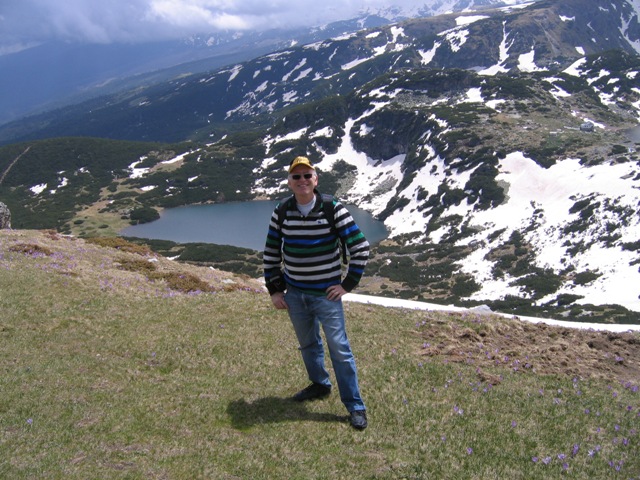
– We felt very comfortable living in Bulgaria and found the people very hospitable, and willing to share their traditions and customs. I hiked in the Rila Mountains with my Bulgarian friends. My wife attended a traditional pogacha ceremony following the birth of a colleague’s son. We dined out a lot, visiting the tasty restaurants of Sofia, but our most enjoyable experiences were when we ate in the homes of our friends, drinking homemade rakia and toasting ‘Nazdrave’ to each other.
– What is the next country you plan to visit and why?
– During the two years we lived in Bulgaria, we also managed to travel in the region. We visited Serbia, Turkey, Romania, Macedonia, Hungary, Italy, and the Czech Republic. We still have a huge desire to travel but unfortunately, we don’t have the time or resources to do it that much these days. We did just get back from a trip to Bosnia, Montenegro, and Croatia, a trip which gave me huge inspiration for future writing. Who knows, maybe these countries will feature in my future novels?
– How tough is to live under rocket bombardments, terrorist attacks and during so many military actions in Israel?
– Wow, this is a huge subject, and I could write a long article to tell you what it’s like to live in Israel these days. (Readers are invited to my blog to get a full picture of my feelings and thoughts about the war in Gaza).
In short, it hasn’t been easy. Israel is a very small country and citizens everywhere had the danger of rockets flying over their heads. I can’t imagine what it would be like to live in a community near the Gaza Strip with the danger of terrorists tunneling into their homes with the sheer purpose of killing as many civilians as possible.
Israel fought back in what we describe as a “just war.” Yes, many innocent Palestinian civilians were killed, and this was truly regrettable, but that is due to the nature of the enemy we were fighting. Israel uses its rockets and missiles to defend its citizens. Hamas uses its citizens to defend its rockets and missiles.
The bottom line is that Israel’s war is not against the Palestinians, but against the terrorist Hamas organization. In Israel, we long and pray for peace. I hope that day will come soon.
Here are the books of Ellis Shuman:
Check it Ellis Shuman’s blog
Learn more about my country with this very intriguing post by Ellis Shuman at
Huffington post
NICOLE MADDALO DIXON: I LOVE THE SENSE OF FREEDOM IN WESTERNS
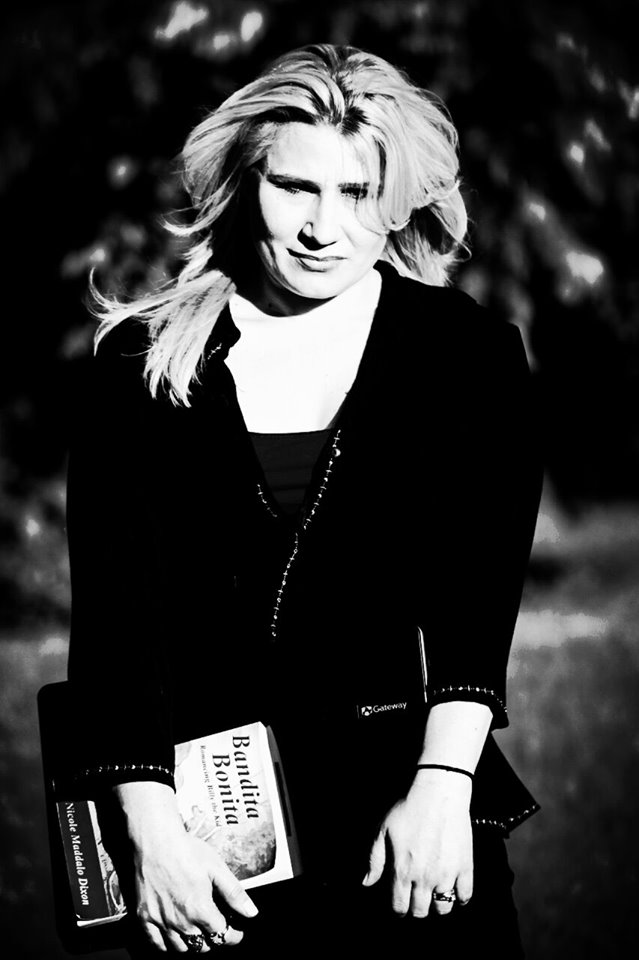
Nicole Maddalo Dixon published her first book Bandita Bonita: Romancing Billy the Kid in December 2013. I was always been lover of westerns, so this book is kind of reminder for my child years. I never stop wondering why cowboys, Indians, gold miners are almost forgotten in the current literature. Well, I am stopping with my nostalgia talks, because here is the interview with lady Nicole Maddalo Dixon.
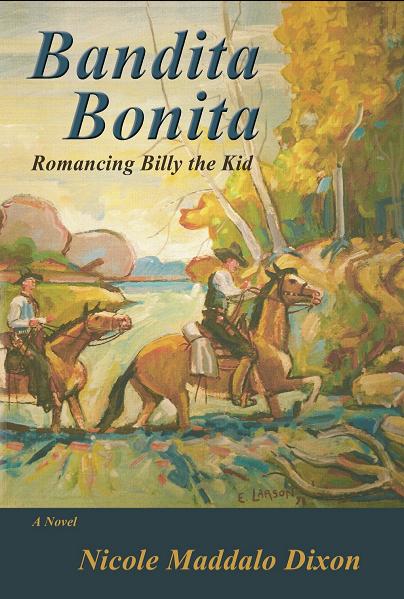
– What is your book Bandita Bonita: Romancing Billy the Kid about?
– Bandita takes place in 1877 New Mexico and is the story of a young New York heiress, Lucy, who is sent out west to marry her pre-contracted fiancé during the volatile days that lead up to what eventually breaks out as the infamous, bloody Lincoln County War in Lincoln County, NM.
Desperately inconsolable at the prospect of marriage to a man she does not love, she becomes close to and falls in love with a hired farmhand, William H. Bonney, who will soon become known to history as the notorious Billy the Kid.
Lucy’s fiancé is murdered in cold blood by his competitors, the Santa Fe Ring—a move that sparks the infamous war—and Lucy’s life is then in jeopardy as she is next on their list. She is then placed under the protection of the deputized Lincoln County Regulators and is forced to ride the trails with Billy and the boys, becoming a witness to the bloody battles that occur. During this trial, Lucy uses the war to her advantage as her own personal battle to win freedom from a life that is oppressive.
– How did you decide to write the story?
– I have always been fascinated by Billy the Kid and the kind of person he was. After my years of research I finally decided that I wanted to contribute to his legacy by helping to perpetuate the truth of what happened and who the Kid really was despite myth and legend. I thought I might tell it in a unique way that would appeal to a broader demographic, and therefore decided to write it as historical fiction while keeping the names, accounts, and events accurate.
– What was the biggest challenge during the write up process?
– Fortunately, the only challenges I have and do encounter are keeping the facts as accurate as possible. This presents a challenge only because it involves having to interrupt my writing flow in order to suitably double and triple check information before committing to writing it down responsibly. Other than that, writing the story is an absolute pleasure. It’s very cathartic and exhilarating for me to spin my version of the tale.
– Tell us something more about your main character? What is the difference with the real Billy the Kid?
– My main character, Lucy, is a brat, but charmingly so. She has a brilliant sense of humor that is sometimes acerbic, but always fun to play around with. She’s truly a strong-willed female during a time when women did not have many options. She and the character I’ve created for Billy play off of one another nicely, as I am able to create a composite of who I think Billy may have been based on accurate witness accounts. I’ve tried to maintain a total sense of truthfulness in regard to Billy’s personality according to the several accounts that have been documented by reputable sources.
– Why you decide to write a Western?
– I have always been partial to westerns. I love the sense of freedom that always accompanies such stories, but in this particular case and in wanting to write about Billy, I hadn’t much of a choice but to stick to that particular genre.
– How much time do you need to finish the story and to publish it?
– I wrote the first book in 3.5 months, but that was after having thought about it and mulling it over in my mind for 3 years prior. At present Book II is nearly complete as I am in the process of giving it the required, solid edit before I hand it over to my publisher.
– Who are you?
– I am a visionary—a creative thinker. I love to learn no matter how insignificant the topic may seem to others. All information is valuable to me, and that is paramount to a writer—finding value even in the mundane.
– What are your writing habits?
– When the dialogue/narration comes, I write it down. I have to, as do most writers. I am always able to sit down and write at will, but there are times when I am doing something else and the words just hit me. When the words beckon I respond, and that includes when I find myself exhausted and trying to sleep. I have to forgot the pleasantness of lying there blissfully in order to grab a pen and paper, or even my laptop, to get those words down.
– Are you satisfied by the sales of the book and do you plan another one?
– Bandita has only just launched as of last December (2013), and so reflecting on book sales at present would be premature. However, that said, I do feel that sales are right on course in conjunction with my promotion of the material and its only having just relatively launched.
As I have mentioned Book II is on deck, and I am planning a Book III & IV, the latter of which I plan to have stand on its own merit despite being a part of the original story/series.
– What are you doing to promote by the best possible way your book?
– I’m doing the usual; blogging, tweeting, posting, and making some rounds on the blog talk radio circuit, along with scheduling book signings and appearances at book clubs. Essentially, I am taking full advantage of social media, as any entrepreneur should do, and networking as often as I can by using both electronic and organic mediums.
– Do you think that the man from Western times is more honest and real man then current one?
– That is a difficult question to answer because one would have to compare the environment of the Wild West with today’s civilized west. It’s really on par with apples and oranges. I believe that there is probably the same total of honest v. dishonest men, respectably.
– Who is your favorite Western character and why?
– William H. Bonney (aka, Billy the Kid) of course. He’s one of the few romantic, tragic characters of the old west who literally has earned his legend.
Until fairly recent years, Billy was often suggested to be a sociopathic, cold-blooded killer, but that was just not true. He was a level-headed, clever leader who was kind and respectful, but who fought back (as any might) when backed into a corner. He was a vivacious individual who loved to dance, laugh, and romance the pretty girls.
He truly was a daring, romantic individual!
To order: Bandita Bonita: Romancing Billy the Kid
Check out more about Nicole:
Personal web page
Twitter
Blog – http://www.nicolemaddalodixon.blogspot.com
MICHAEL COORLIM: THE READERS MOTIVATE ME TO KEEP GOING
Michael Coorlim describes himself as “Teller of strange stories for stranger people”. He already established as a pro author with many well received books. If you are interested what is really to be into the writer’s business, check out this very interesting interview!

– What is your latest book Jericho rising about?
– Jericho rising is a prehistoric superhero story set in the Levant around 10,000 years ago, in and around the ancient city of Jericho. It tells the story of Clay, a young hunter from the Bear Clan as he comes of age in a world of savage warfare between Clan champions imbued with the power of their totem spirits. When his father falls, will Clay be the one to take up the mantle of Bear? Or will that honor go to one of his brothers, instead?
It’s the first volume in the Hero Historia historical superhero serial, covering the first story arc published over at http://www.herohistoria.com. Each 12-episode arc will cover a different historical period. The ebook version has undergone a fresh round of editing, and includes new material not offered in the free serial.

– How do you find the stories of your books?
– All of my stories come from life. It may be from a conversation that I had, or a story that I heard, or from something that I saw, but the core of every story is some element of the human experience. To tell these stories you need to get out and go live, talk to people, have adventures of your own. Fall in love, fall out of love, get in fights. You know, be human.
– What was the biggest challenge during the write up process of your fiction novels?
– The biggest challenge for me is that I don’t have a safety net. This is my only source of income, and if I spend months writing something that doesn’t sell, those are months I’m not getting paid for. Everything I write is a gamble in that way. Thankfully, people seem to like it.
– Tell us something more about your main characters?
– The main characters in the stories I write are often fragments of my own soul, or reflections on myself when I was younger. In Jericho Rising, Clay’s experiences are informed by what it was like for me when I left home for the first time. In Infernal Revelation, the different characters all share elements of the masks I wore in high school. In the steampunk mysteries I’ve written, the detectives feel like the halves of my id and superego, arguing with me over who I’m supposed to be.
– How much time you need to finish the story and to publish it?
– I’m a fast writer, but I have a lot of other responsibilities these days. I’m trying to start a film production company, and that takes up a lot of time and attention. The nice thing about working for yourself is that you can set your own hours. On the other hand, you don’t have days off, just days you don’t make progress.
Jericho Rising was published in twelve 3000 word weekly episodes, so it took three months to complete before I compiled the ebook. I can write a novel in three months if I push myself and don’t have any other distractions, depending on how long it takes my proofreaders and editors to get back to me.
– Who are you?
– I’m a full time author. I’ve written the Galvanic Century series of steampunk mysteries and thrillers, the literary apocalyptic short story collection Grief, the supernatural serial Profane Apotheosis, and the historical superhero thriller Hero Historia. I’m also a screenwriter, and am getting into film production with Burning Brigid Media.
– What are your writing habits?
– I treat it like a full-time job. 8 hours a day, 5 days a week, 50 weeks a year. I find what helps me stay on task is the Pomodoro method of productivity timing – I work for 25 minutes, take a 5 minute break, then work for 25 more. Every 2 hours I take a 20 minute break to make coffee or do some sit-ups or something.
– Are you satisfied by the sales of the book?
– Satisfied? Never. Who’s ever satisfied? We always wish sales were better, that we could reach more readers. If I was satisfied, maybe I’d stop trying!
– What’s next for you
– I’m currently working on two projects. The first is the next Hero Historia story arc, Aea Watched, set in ancient Sumeria. The second is a steampunk mystery set in 1910s China, the 5th Galvanic Century book, Ghosts of Shaolin.
– What are you doing to promote by the best possible way your book?
– I write more books. I have a twitter and a facebook, but that’s primarily to talk to the people who are my fans.
– Why the fiction books are so much popular then the non-fiction?
– I think that people prefer fiction because it deals with emotional resonance that ties in to our own lives. Take Star Wars. None of us have ever been Jedis, but we’ve all faced disappointment from our parents, we’ve all sacrificed for our loved ones, we’ve all blown up death-stars. Okay, maybe not that last one.
We read fiction for that internal resonance, and we read non-fiction to learn. Emotion trumps education almost every time. This is not to say that non-fiction cannot elicit emotion; it’s just that fiction has specialized in it for so long that it’s what we’ve come to expect.
– If you have a chance to write a non-fiction story for well known person who it will be and why you will select him?
– I have a project in mind that involves writing short 1-2 page biographies for lesser known historical figures. It’s still rolling around in my head for now.
– How important for you is the feedback from the readers. Would you give an example how the connection author-reader helped you in your writings?
– It’s very important. I could not write without my readers and their feedback. I may do this for a living, but it’s the readers that motivate me to keep going.
Every time a reader writes to me to talk about my books or just to share what they liked, it’s like a fresh shot of motivation to keep working, keep writing, keep creating.
Check out more about Michael at his official web page
More about Hero Historia series here
To order Michael Coorlim books look below:
Jericho Rising
Steampunk Omnibus: A Galvanic Century Collection
Last Words: A Story of Apocalyptic Loss
And They Called Her Spider (Galvanic Century)
STEPHANIE SMITH: 25 YEARS AGO, YOUNG PEOPLE HAD A FAR GREATER VOCABULARY
Stephanie Smith is our next featured author. She is kind of special, because her profession is to teach others to write and to understand English literature. It’s very useful read for all indie authors, who want to improve their language skills.
– Stephanie, tell us more about your last two novels: Content Burns and Baby Rocket?
– Content Burns is the third novel in the Warpaint Trilogy, Baby Rocket is the second and Warpaint was the first; the novels are connected by friendship and family ties, not by plot, so you don’t have to read them in any order. The WARPAINT trilogy is three intertwined novels, all of which deal with contemporary American women who are struggling to balance art, love, illness and trauma; WARPAINT (2012) is the haunting tale of friendship and rivalry between three women artists, who’ve known each other for years, who must come to terms with imminent mortality and artistic frustration; BABY ROCKET (2013) is the label given to a traumatized, abandoned child who, as an adult, has no memory of this event. She discovers her past when her adoptive father dies, and now, without him, she must piece together the past in a journey that will take her from California to NYC, from Florida to Martha’s Vineyard; CONTENT BURNS (2014) follows two women of the same Puritan name, in the same family but separated by three centuries, both of whom survive historical trauma: the massacre of the Pequot tribe in 1637 and the loss of the Twin Towers on 9/11.

– What is the biggest challenge for you during the write up process of your books?
My job as a Professor of American Literature, and as the Associate Chair of the English department at the University of Florida—it takes up a lot of time.
– How do you find the main characters of your books? Are they some persons from your real life?
– All of my characters are imagined amalgamations of people I have known, or encountered, but the characters ‘reveal’ themselves as the story-line progresses. They invent themselves if you like. And sometimes they surprise me.
– Strange Grace is your next novel; give us some hints about it?
Strange Grace is a departure for me, in that the main character is a man, and a film actor; but that said, he is a character in Content Burns, who decided he needed his own story.
– Who are you?
Stephanie A. Smith took her PhD from Berkeley (1990). Prior to UF, she free-lanced, worked as an editor for Western Imprints, as an assistant at Glamour and Mademoiselle magazines, at David Godine in Boston, and at Representations and is presently a consultant for Feminist Studies. A novelist, she is the author of: The Warpaint Trilogy, Warpaint (2012), Baby Rocket (2013) and Content Burns (2014) (Thames River Press in London); Other Nature (1995), The-Boy-Who-Was-Thrown-Away (1987) and Snow-Eyes (1985) and has won multiple fiction residencies at the Martha’s Vineyard Writer’s Residency in the Noepe Center for the Arts, Hedgebrook, Norcroft, Provincetown and Dorland.
Examining the intersection of science, literature, politics, race and gender, her essays appear in such journals as differences, Criticism, Genders, American Literature and American Literary History. A 1998 Visiting NEH Scholar at UCLA, she is the author of Conceived By Liberty: Maternal Figures and 19th-Century American Literature (Cornell 1995.) Excerpts from her new book, Household Words: bloomers, sucker, bombshell, scab, nigger, cyber (University of Minnesota 2006) appeared in Body Politcs and the Fictional Double and The Cambridge Companion to Women’s Writing. Her essay “Genetics” appears in Glossalalia: An Alphabet of Critical Keywords (University of Edinburgh Press, 2003). Currently, she is finishing a new critical book about aesthetics and the publishing industry in the United States, titled The Muse and The Marketplace, a chapter of which, “Union Blues: Melville’s Poetic In(ter)ventions,” will appear in the Duke journal Genre in 2013; she is also finishing a new novel, Strange Grace, as well as working on several other projects, in both criticism and fiction.
– What are your writing habits?
– Every day for at least two hours, usually in the early morning.
– Are you satisfied by the sales of your books
– No. Unfortunately, my press is very, very small and they have done little to no advertising. But, anyone who has read one of them loves them, so the readers I do reach are enthusiastic.
– What are you doing to promote by the best possible way your book?
– I’m trying anything and everything. Social media, friends, colleagues, local newspaper, libraries; I’m using Poets & Writers, applying to residencies, trying to go to book fairs, and working with independent bookshops. I feel like I’m shouting into a hurricane, though.
– You are a teacher of literature. Do you think that international authors on age 20+ with not so strong English, like me (I am 33), will be able to improve their English language in order to write their stories on English (I used a pro translator of my first book)
– This is hard question to answer because people learn a second or third language at different rates, and with differing levels of success. On the other hand, practice and dedication can work wonders.
– Would you compare the current English language students and those from your generation? Is there some decrease of reading interest among young people?
– Yes, most definitely. When I started teaching 25 years ago, young people had a far greater vocabulary than they do today, and read more. My generation clearly read more than the current generation, and I have seen a significant decline in advanced literacy. People can read, but on a very low level (3rd grade), and resent being encouraged to improve (unlike earlier generations who thought it important to improve). I’m afraid the current social climate in the U.S. is one that values ignorance, for complicated historical reasons that baffle me.

– What kind of advice you may give to all newbie writers who want to improve their writing skills?
– Read. Read. Read. Challenge yourself to read above your current reading level. Analyze the way your favorite writers compose—look at individual sentences, see how they are put together.
Check out the great books from Warpaint Trilogy
Warpaint
Baby Rocket
Content Burns
Here are the other works of Stephanie Smith:
Household Words: Bloomers, sucker, bombshell, scab, nigger, cyber
Other Nature
The Boy Who Was Thrown Away
Snow Eyes
SHIRLEY MCLAIN: RELAX AND HAVE FUN WITH YOUR WRITINGS
Our next guest Shirley McLain saw a lot of pain and people’s drama during her professional life. She worked as a nurse. After her retirement she published her first full book “Dobyns Chronicles”.
– How would you describe Dobyns Chronicles?
– Dobyns Chronicles follows a young man who has tragedy thrust upon his family and he takes the responsibility for his brother, David, and sister, Viola. In this story you follow his life from the mid 1800’s until 1955. This is a story of a changing way of life and adaptations made to survive. Charlie’s strong passion for life and dignity equipped him for survival as he raised his siblings with, likeability and dignity. It’s a story of loss, misfortune, hard times and heartbreak, but also love, determination, kindness, joy and spirituality.
Follow Charlie’s life through the adventures that shaped the man he became, and that of his family for generations.”
– When and why you decide to write the story?

– I thought about writing this book for many years. I grew up listening to my mother tell me stories about her Grandfather. I knew one day I would share this story. Parts of the story are fact but I had to create a lot about his life that I didn’t know. This story is tribute to my mother and her family.
– What was the biggest challenge during the write up process?
– Making sure that I showed Charley Dobyns as the man he really was. I did a lot of genealogy work on my mother’s family, tracing where they lived and other details.
– Is the main character someone, who you know from the real life?
– He was my Great Grandfather.
– Tell us more about it?
– I do remember meeting him and my Great Grandmother as a child in Oklahoma. We were on vacation from California we were lived at the time. We were heading back and stopped by their apartment in McAlester to tell them goodbye. I remember both of them standing out on the sidewalk hugging and kissing me and telling me goodbye. As I said before, I grew up listening to the stories my mother told about his life.
– What may we found in Shirley’s Shorts and Flashes?
– That book is a collection of short stories in different genres. There is something for everyone, from love to fantasy and horror. It was a fun book to do.
– Do you plan another book?
– I have a sequel to The Tower which is the YA mystery started. It’s going slow because of the promotion I’m doing for Dobyns Chronicles.
– What is the best part about being an author?
– I think creating the book or the story. I like the creation process with everything it entails from the setting to the characters to the story line itself.
– Do you have any advice you would give to a teen or young aspiring author?
– If you have had thoughts in your head that you want to write then just sit down and start writing. Let the flow happen, and it will. Relax and have fun with it. Get it on paper and then go back and add and subtract from it.
– Who are you?
– I was born and lived the first ten years of my life in the bay area of California. My parents moved back to their home state of Oklahoma and I then became an Okie. I have one sister so there’s just the two of us.
I am married to a wonderful man who spoils me rotten and I love it. I have two grown children, six grandchildren and a set of twins for Great Grands.
I retired from 32 years of being an RN (registered nurse). My specialties were Geriatrics as well as Labor and Delivery. I wouldn’t trade a minute of all my medical background and the adventures I encountered while practicing.
– Since you worked 32 years as a nurse. Do you miss something from your work?
– I miss interacting with my mothers and babies but most of all I miss the friends that I made along the way.
– Would you share the tough and the good moments of your profession?
– Labor and delivery is one of those areas that the majority of the time everyone is filled with joy at having this new tiny person in their life now. But when things go bad it is devastating for all who are involved. I can thankfully say that it didn’t happen many times over all the years I was practicing.
– What is your opinion on American health system and what you will change if you have a chance to do it?
– Our system has some good qualities but overall it is broken. It is overpriced and too many people are left without care. This is a topic that I could spend hours talking about and I don’t want to do that here.
– Every animal has some interesting story and a character. Tell us with one sentence, including their names, something about your three dogs and three cats.
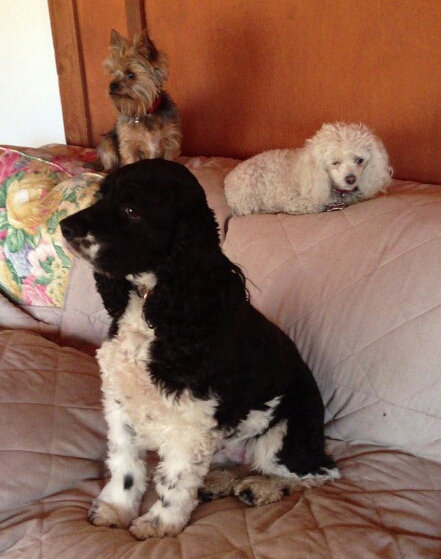
– Andy is my Springer Spaniel and he is the boss. Angel my teacup poodle thinks she is a princess and Booker, my teacup yorkie, thinks he’s a big dog. He protects everything.
If you are interested of Dobyns chronicles order here via Amazon
Learn more about Shirley:
Personal web page
FACEBOOK STORE
Twitter
PATRICK BRIGHAM: WRITING IS ABOUT 20% OF ANY PROJECT
The next guest Patrick Brigham is very interesting for me. The reason: He lived for many years in my country. He was in Sofia during the most controversial years in Bulgaria – late 90s. So here we are with the next Q&A:

– Patrick, Tell us more about your last book Abduction: An Angel over Rimini?

– Look at http://www.PatrickBrigham.co.uk and see the synopsis (I posted it below the interview).
– When was the first time when the story came up to your head and why you decide to make it as a novel?
– Rather like you I do not like trivial stories and with a background in journalism, the stories which capture my imagination are usually important. One of the EU’s great secrets is the story of illegal immigration. Bulgaria has had dreadful problems over the years, with refugees coming across its border with Turkey and elsewhere across the Black Sea. But Greece has been a favorite crossing point on the River Evros at the border where it meets Turkey and Bulgaria near Svilengrad. Inspired by the sad story of Madi McCann – who is just one of many unfortunate children abducted from within Europe – I modeled a fictional tory around an incident in Italy. This allowed me access to the Adriatic and to pursue a well traveled smuggling route from Greece, through Bulgaria and up into Western Europe.
– What was the biggest challenge during the write up process?
– You are a journalist and used to having deadlines! Having mapped out the story in my head – with many diversions I might add – it is a matter of good research and detailing, before embarking on the writing process, which comes with practice and of course my allotted time.
– What about your main character? How do you find him?
– Michael Lambert has been around for a long time. He is not a loud mouthed bully or a drunk and is a thoughtful and diligent detective. But he has suffered the usual policeman’s torment of a broken marriage, which inhibits him a bit, having been married for a number of years. In Abduction: An Angel over Rimini, there are some romantic interludes, which at the end of the story give both our main character and my readers a little hope.
– How long did it take to finish the story and publish it?
– I usually take about six months to complete a 85,000 word book. I have written three books in the last 18 months but that is just ‘the tip of the the iceberg!’
– Who are you?
I am an Englishman now living in Greece but I also lived in Sofia for some years where I started the first English language news magazine in Bulgaria, called The Sofia Western News.
– Writing is about – lets say – 20% of the any project, the rest of the time being devoted to promotion and getting ones profile in front of the reading public. This accounts for the remaining 80% and these days, which is the difference between success and failior.
– What is the current interest of the book and do you already plan your next one?
– It is early days to map out the success of this book which was only launched some three weeks ago but so far I have been interviewed on American radio and managed to fill up a few pages on Google.
– I know that your wife Madi is a PR specialist, but what do you think about promotion and marketing of the book?
– She is the expert but a word of caution to other writers: don’t be in a hurry, don’t expect things to happen quickly, and don’t be afraid to do some promotional work yourself.
– Tell me more about your first book Herodotus: The Gnome of Sofia?
– Herodotus: The Gnome of Sofia, is a fictional and humorous story about the British Embassy in Sofia, just after the changes. Herodotus is in fact a garden gnome which has been tampered with by MI6 – the British Secret Service – and is now a small and inconspicuous telephone base station, situated in the front garden of the embassy, and equipped to send and receive secret encrypted messages form its network of spy’s.
– How you ended up in Sofia and what do you think of the city?
– I first came to Sofia in 1985, during the old regime, and met many of the names and faces which have either been forgotten or have become a footnote in some historical account of the changes. Sofia in those days was bleak and rather grey and the only places of interest were hotel restaurants or if one was lucky a private party at a friends house. Artists, writers, musicians and actors, have always been the life blood of any capital, and Sofia was no exception. I haven’t been to Sofia for a while, but from memory it now looks much like any other modern European city.
But in the beginning, and after the changes, it became clear that the so-called democratization of Bulgaria was a myth and that the same people who were in power under Todor Zhivkov continued to pull the strings of those puppets who miraculously claimed to be politically unique and newly enlightened. You must tell me if this has changed – and by how much too – because people get old and die, and inevitably the mantle of power is then handed on to their young lieutenants.
– What is your Top 3 of the Bulgarian dishes?
– Bay Ganyo Restaurant serves up many good Bulgarian dishes – tongue cooked in salty butter, chicken kavarma, shopska salad and a good bottle of Khan Krum sounds about right.
– What is the difference between Bulgarians and the people from Western Europe in your personal view?
– The difference is how Bulgarians see themselves and this rather depends on how old they are too. The older generation were brought up to despise westerners under Communism. In those early days many would tell you that Bulgarians were generally disliked by the rest of Europe, and that consequently they had come to dislike other Europeans in return. But this was Bay Ganyo speaking on your behalf and having been a pawn at the Yalta Conference, it was no surprise that Bulgarians felt that they had been badly treated, and these memories do not go away in a hurry! But they are not your memories and this plethora of political contemp has now been swept away with modern technology the internet and the world wide web. Young Bulgarians are now open minded, uncomplicated, well educated and very ambitious. Good!
– You’ve been in Bulgaria during so called hungry democracy years. How you would describe those times?
– You don’t want to hear any more stories about bread cues and helpless optimism. The question is, did the Americans save you or was it the EU? I was there in the square with US Ambassador Saul Polanski outside the Sobranie that famous day in Spring where I heard all the grand hopes for Bulgaria and their US cousins. ‘You know Ralitza Vassilеva is a Bulgarian and she reads the news on CNN’ – there was a kind of forlorn hope amongst the crown that having left the strangle hold of the USSR, that Bulgarians in general would be saved by these kind and generous benefactors. Not true!
– Do you feel the touch of mafia in Sofia during the late 90-s?
– It was how much of business in Bulgaria was transacted. Bulgarian gangsters tried to emulate the Russian Mafia and were heavily involved in some very big frauds including fuel and gas fraud, VAT manipulation and of course drugs and prostitution. They were always on the lookout for new possibilities but generally, they were limited by their own intelligence. Unfortunately, this gangster steriotype has left its mark on Bulgarian society and many young people tend to develop this tough guy image as a matter of course.
– What is the most memorable moment of your stay in Bulgaria?
– The Sofia Western News used to put on a ‘Six a Side’ football championship. Up to 40 teams would take part, and it was managed by the late and great Rouman Yankov, who had been a Bulgarian professional footballer in his time, and also a TV personality. This tournament went on for some three years and took place at the Military Academy – which also had a team and also won the tournament on one occasion – and occupied a whole week. It was so popular that the players – who were all allegedly amateurs – were given time off from work by their employers, who also sponsored the occasion. It was great seeing Mobikom being thrashed by M Tel!
Take a look at Patrick’s books:
Abuduction: An Angel over Rimini
Judas Goat: The Kennet Narrow Boat Mystery
Herodotus: The Gnome of Sofia
Synopsis of Abuduction: An Angel over Rimini:
Detective Chief Inspector Michael Lambert has left the Thames Valley Police Authority and is now working for Europol as a front-line Europol Liaison Officer at The Hague. He has left England and, because of his recent divorce, now lives permanently in his holiday villa in the Calvados region of Northern France.
In An Angel over Rimini, his first case for Europol involves the abduction of a little English girl from a campsite in Riccione in Italy. It is a cold case, which has been re-opened due to public pressure, the intervention of the British government and the agitation of leading English newspapers.
DCI Lambert goes to Rimini to help the State Police re-investigate the kidnapping of little Penelope Scratchford, only to find that the investigating authorities are quite determined to blame the parents for her disappearance and murder. It becomes clear – as his investigation progresses – that there are too many unanswered questions and that much of the evidence has been ignored by the original investigating officer, Vice Inspector Daniel Bosola.
Whilst in Italy, DCI Lambert also finds time to catch up with his father’s mysterious past, during his wartime service in Bari as an RAF officer in a Pathfinder Squadron. This reveals some interesting, if not spectacular, revelations about his father’s secret wartime exploits and his peccadillos too! For Michael Lambert it is also an awakening, and romance in the shape of Countess Beatrix d’ Aragona finally brings the Europol detective back to life emotionally, somehow blotting out the past and his sterile marriage to Arabella.
Continuing his pursuit of the missing English girl, his investigations take him to Greece and the established smuggling routes through the Evros River delta up into Bulgaria. In Greece he discovers the horrors of organised illegal immigration, people trafficking and the gangsters involved. He also finds out that these established smuggling routes are Al Qaida’s way into Greece and the EU.
In his travels he comes across corrupt lawyers and orphanages in Bulgaria, but in so doing he also manages to pinpoint an established child trafficking trail which ultimately leads him back to Central Europe. The discovery of an illegal child adoption group in Hanover,the criminals who operate it, and the information gleaned during his trip through Bulgaria help DCI Lambert to learn if little Penny Scratchford is alive or dead.
CARMEN STEVENS: I CRAFTED THE MAIN CHARACTER FROM THE DARK SIDE OF MYSELF
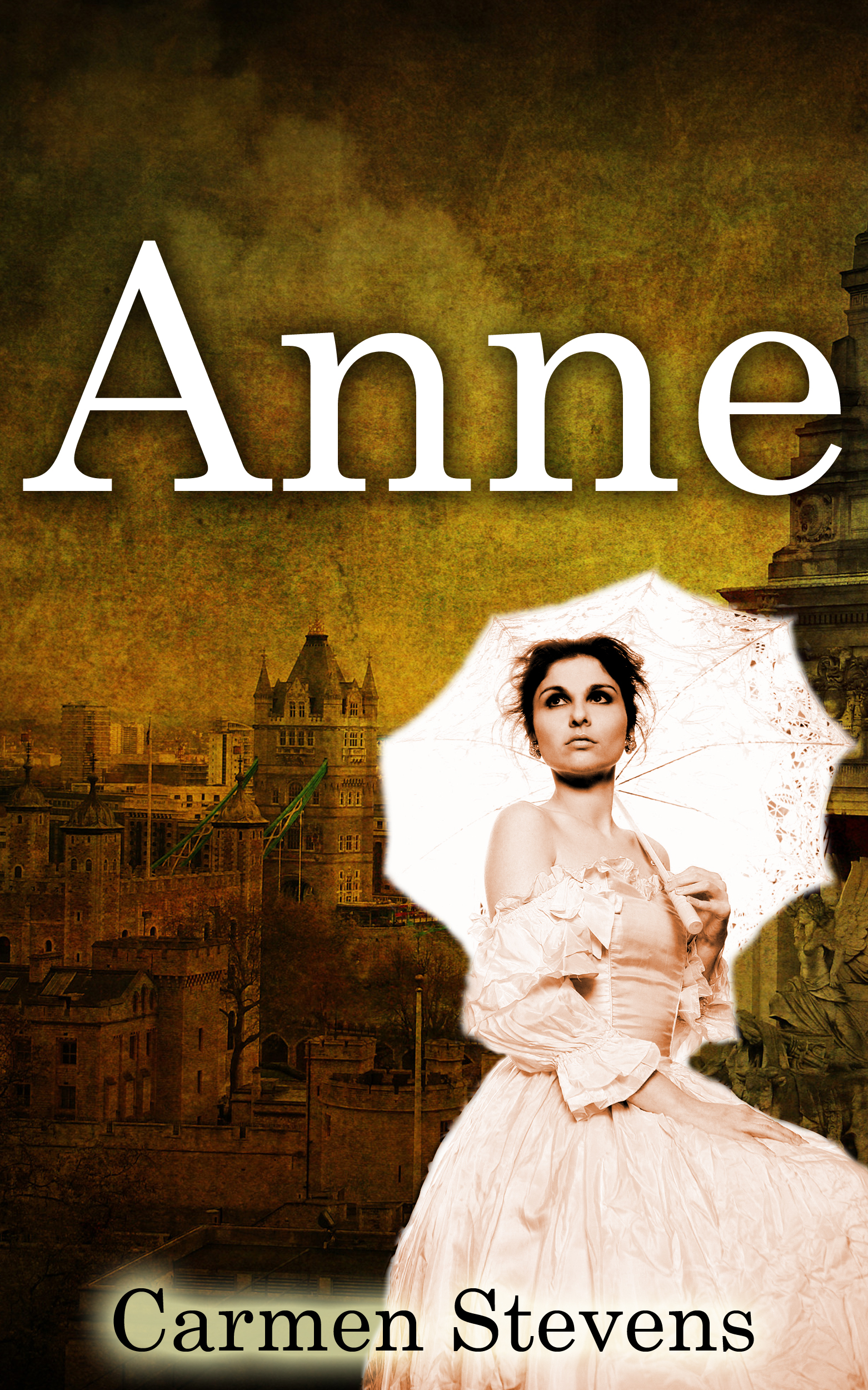
The next guest in our Q&A interviews with authors section is Carmen Gross. She is known by her pen name as Carmen Stevens. The American is born in Fargo and is one of the youngest writers around. Her first book “Anne” was published last year.
– What is your book about?
– My book is a historical thriller, titled “Anne”. It involves an egotistical, orphaned girl in eighteenth-century England who longs for true happiness in her life, but it’s not until Anne endures a series of hardships that she realizes what it means to be truly satisfied.
– How you decide to write the story?
– I have always loved to write, and I felt that I needed to write a story that would tell the world of the importance of loving and getting along with one another, not to take anything for granted, be rich in love, and all of the other themes that my story is about.
– What was the biggest challenge during the write up process?
– I didn’t have too much difficulty, except in some punctuation and grammar matters. I have trouble with commas.
– Tell us something more about your main character? Is it close to someone from your real life?
– I think Anne is a very interesting, complex character, and I think I kind of crafted her from the dark side of myself. Anne is fiercely independent, haughty, indifferent, seductive, potentially cruel, and way too prideful for a girl of her circumstances. She’s also incredibly selfish, putting her own well-being before anyone else’s. However, Anne dreams of a better life, a life in which she doesn’t live on the dirty streets of London, England, and in order to find this happiness, she must endure certain sufferings and gradually learn to be a kinder person.
– How much time you need to finish the story and to publish it?
– It actually took me a few years to finish writing “Anne,” but it took less than a day to publish it. This is because I self-published it.
– Who are you?
– I’m Carmen Gross, but my pen name is Carmen Stevens. I’m a 22-year old full-time college student and author. I’m studying law, but for the summer I’m working. I self-published “Anne” in July of 2013.
– What are your writing habits?
– I like to totally flesh out a story before writing it from the beginning. I believe that a person should know where a story is going to go before writing the actual story.
– Are you satisfied by the sales of the book and do you plan another one?
– I read somewhere that if a self-published author makes under 100 sales in his/her first year of having the book published, then that is a good thing. My book has only been out for a year and I’ve about made this goal, so for now, that has me satisfied. I love writing, so I certainly wouldn’t mind writing another book someday, but I think that would depend on what kind of reception my current novel takes and if my readers ever desire for me to write another.
– What are you doing to promote by the best possible way your book?
– I have several things I’m trying to do for promoting my novel. I have a blog that I write in, I ask people to review my story, and I keep my eyes open for any opportunities to expose my book, like author interviews and spots on others’ blogs.
– Who was the first person who took a full look into your book and what he told you?
– I don’t exactly remember who the very first person was who read my book, but one of the first must have been a blogger who I followed. She’s an author herself, and she was very willing and generous to read and review my book and give it a high rating.
– If you may select just one thing to do on Saturday evening, what it will be and why – to write, to go out with friends or to read a book?
– I like having my fun on weekends, so I think I would definitely love to hang out with friends on a Saturday night. If my friends happened to be busy, though, I love the thought of curling up at home with a good book. I love reading, and I love how it can take you away into a whole different, exciting world.
Check out “Anne” here
To read more interviews with authors go here
ROY DIMOND: CO-WRITING IS A DEEPER, RICHER EXPERIENCE
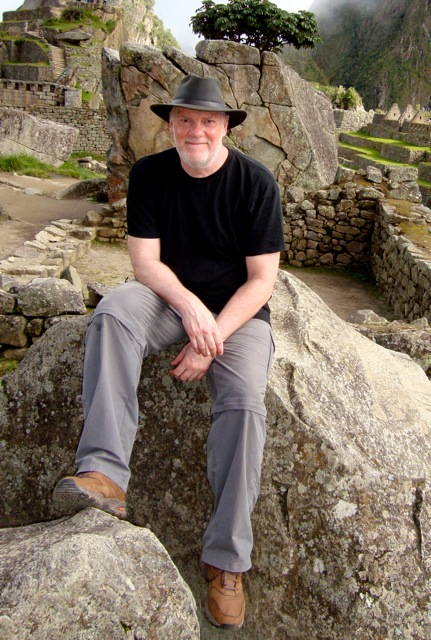
Roy Dimond is the next guest at our virtual Q&A room. Honestly, one of the reason for starting such a section in the blog is to meet some special people. The co-author of “Saving Our Pennys” is one of them. Why? The answers are below…
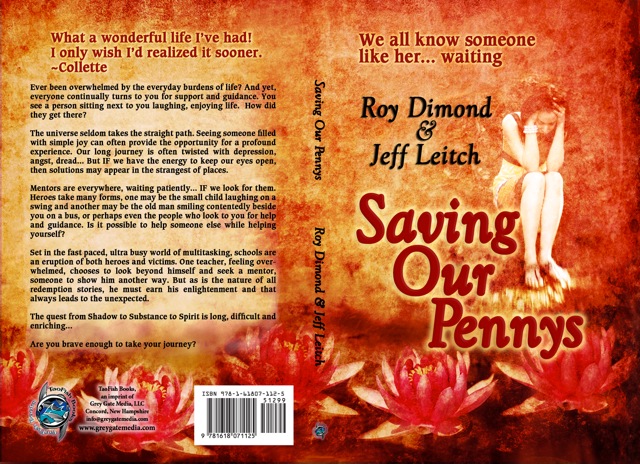
– What is your last book “Saving Our Pennys” about?
– First Ognian, please allow me to say thank you and tell you how much I appreciate you taking the time to interview me. It is greatly appreciated. Saving Our Pennys, is a work of non-fiction that I co authored with my good friend Jeff Leitch. It is best described as focusing on Self-Help and Personal Transformation with some humor and insight into the human condition. It is the story about a person who happens to be a teacher and he feels that something is missing in his life. He feels unfulfilled. The main character goes on a journey from Shadow, to Substance, to Spirit, and learns how the choices we make affect our lives.
– How did you decide to write the story?
– Combined, Jeff and I have worked for over 70 years in the education system and one day, while hiking, we decided that we wanted to write something of substance. Hopefully we have written something that will help others find their joy and therefore help them reach their potential.
– What is the difference between being an author and a co-author?
– Excellent question. The difference is significant. Writing alone is such a solitary experience. You are the master of the story and control everything that happens. A wonderful experience. Writing as a co-author however means giving up much of that control. But writing with someone else also means the story often soars to places unseen. I think working on a story with another in many ways is a deeper, richer experience. To do this successfully you must have great trust in the person you are writing with. Fortunately, Jeff and I have had a long friendship so we knew where we were both coming from. We are both able to set our ego aside and make it all about the story.
– Tell us something more about your main character? Is it close to someone from your real life?
– Yes and no. The main character is a composite of both Jeff and me, but we also included many characteristics of the people we know. We placed the main character in a school. First, because it is an environment we know well and also because that setting is filled with so many heroes. In any school, anywhere, someone is always trying to help another and that makes it a perfect setting to tell a story about redemption. Our hero grows from being unfulfilled in his life, to understanding what makes a life filled with joy. He finds a mentor and is taught that he can tell how he is doing by the things he values. His life takes on meaning. So I think you can see that our main character can be anyone. Anyone on a journey to find oneself.
– What are your other two books “The Rubicon Effect” and “The Singing Bowl” about?

– The Rubicon Effect, is the story of an environmentalist who takes on American Right-Wing politicians. International corporations manipulate politicians who in turn manipulate the church into proclaiming the End of Days. While the world ignores Global Climate Change until it is too late, a leader of the right wing by the name of Michele Yakin comes up with a horrific plan to deal with global change.
The story asks two fundamental questions. Who are we? And what do we believe in? I am very proud to say that the Pope I describe in this novel was created before the new Pope was ordained. The similarities are quite startling, down to having my character born in Buenos Aires and becoming the first Pope from South America.

The Singing Bowl, Will forever be my opus. A grand tale about a monk who is displaced from Tibet when the communist Chinese invade. His monastery is destroyed and his teacher, The Tenzin, meaning, The Holder of the Teachings, sends him on a quest to find a book that has been lost to the world. He travels the world looking for clues that lead him on a journey to ultimately learn that all quests are internal.
– Who are you?
– No easy question. Like most people, I am many things. A writer, husband, friend, wanderer, and searcher. I was a Youth Worker for thirty years in the education system and tried to help those who were struggling. I travel the world with my wife and gather insight from all those around me.
To be honest, if I had to describe myself in one word, I would say that I am a… listener.
– What are your writing habits?
– The first thing I do each morning is write. I write till I have nothing else to give for that day. Then I usually go for a hike or sit on my deck enjoying my life. I live in a very beautiful area of the west coast of Canada in a place called Garden Bay. So contemplating the beauty around me inspires my writing.
All three of my novels were at sometime enriched by the natural beauty I see everyday. If I do get stuck on a character or scene I ask my wife to join me for a walk around the three lakes near our log home and she usually has some helpful advice. If not, sometimes the deer, or birds, or bears provide insight.
– Are you satisfied by the sales of the books and do you plan another one?
– I don’t know many writers who are satisfied with book sales. We write not only for profit, but so that others may read our thoughts and feelings. So no matter how many read our books all authors wish another would pick it up.
I am presently working on my first children’s book about a small child struggling with change. I have just signed a contract recommended by my agent, Malaga Baldi, for a book with the working title of Silence and Circumstance. It will be coming out from Untreed Reads this January. It is about the eleven days that Agatha Christie went missing and is told from the perspective of her governess. I have also just completed a manuscript called I, Bully a Young Adult novel revealing the seriousness of bullying from both the perspectives of the bully and the victim.
– What are you doing to promote the best possible way your books?
– Unfortunately I think the best and most underrated way of promoting books is word of mouth. It’s unfortunate, because we authors have little control over that. But the better book you write the more people will talk about it.
I do find LinkedIn helpful and Madi Preda, a marketer, has been a great help.
– You worked with at-risk children and their families. How important is it to help those kids in time and what percentage of them may be helped along their life road?
– One of the interesting things about working with at-risk families is you seldom really know who you help. Some are obvious and you see change, but others evolve over time and if you are lucky you find out years later that you bumped them, in a small way, towards a better life.
Helping someone as early as possible is fundamental not only to their happiness, but for the well being of society. It takes less time and has longer lasting results to intervene as early as possible. To break bad cycles now can save generations in the future.
As to what percentage is helped, I honestly believe that 100% of those who realize we care, are helped. It may not show immediately, but the next person that cares, or the next, or the next, may make a breakthrough because others before them cared. If we ignore those who struggle, I do not know if their life’s road is more difficult. And as a society that should be important to us.
– You traveled on four continents. Please make a top 3 destinations that you visit and why you selected them?
Tsumago in Japan… It is a small village of no more than a hundred people that is located in the Japanese Alps. It has been kept exactly as it was for hundreds of years.
Santorini in Greece… To watch the sun set from your cave home is an experience well worth having.
Machu Picchu in Peru… (the author’s picture is in front of the famous monument) From high in the sacred mountains, to look through a window carved in the stone, knowing that hundreds of years ago, another stood there looking down to the river thousands of feet below, transports you to another time and place.
If you want to take a look over Mr. Dimond’s books, check them out here:
Saving Our Pennys
The Rubicon Effect
The Singing Bowl
Roy is very interesting person. I recommend you to check his web space
 Land Of Books