Category Archives: Uncategorized
NICOLE MADDALO DIXON: I LOVE THE SENSE OF FREEDOM IN WESTERNS
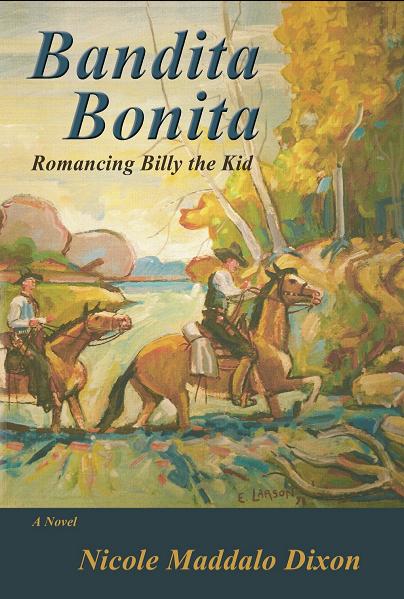
Nicole Maddalo Dixon published her first book Bandita Bonita: Romancing Billy the Kid in December 2013. I was always been lover of westerns, so this book is kind of reminder for my child years. I never stop wondering why cowboys, Indians, gold miners are almost forgotten in the current literature. Well, I am stopping with my nostalgia talks, because here is the interview with lady Nicole Maddalo Dixon.
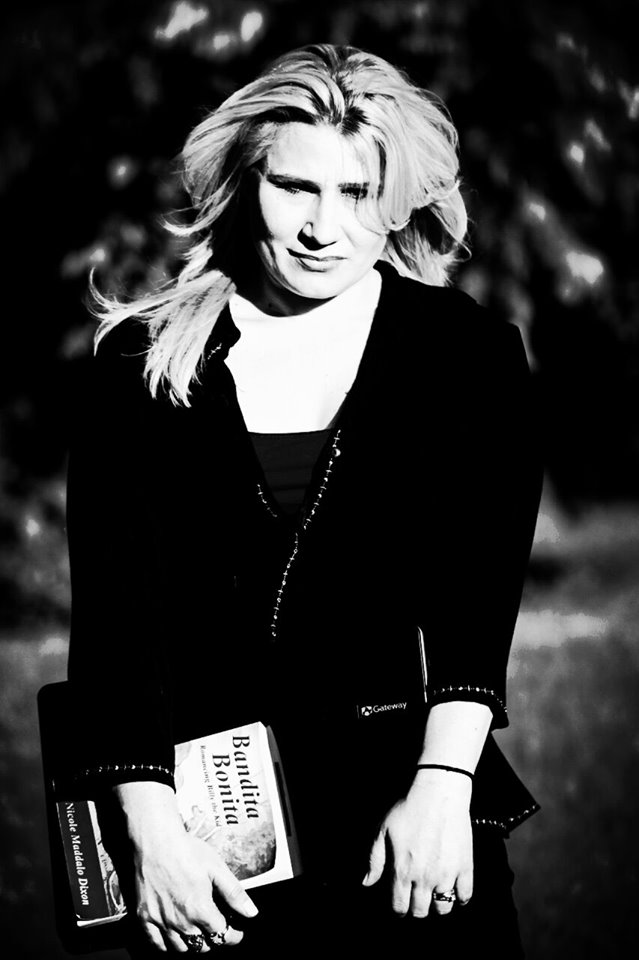
– What is your book Bandita Bonita: Romancing Billy the Kid about?
– Bandita takes place in 1877 New Mexico and is the story of a young New York heiress, Lucy, who is sent out west to marry her pre-contracted fiancé during the volatile days that lead up to what eventually breaks out as the infamous, bloody Lincoln County War in Lincoln County, NM.
Desperately inconsolable at the prospect of marriage to a man she does not love, she becomes close to and falls in love with a hired farmhand, William H. Bonney, who will soon become known to history as the notorious Billy the Kid.
Lucy’s fiancé is murdered in cold blood by his competitors, the Santa Fe Ring—a move that sparks the infamous war—and Lucy’s life is then in jeopardy as she is next on their list. She is then placed under the protection of the deputized Lincoln County Regulators and is forced to ride the trails with Billy and the boys, becoming a witness to the bloody battles that occur. During this trial, Lucy uses the war to her advantage as her own personal battle to win freedom from a life that is oppressive.
– How did you decide to write the story?
– I have always been fascinated by Billy the Kid and the kind of person he was. After my years of research I finally decided that I wanted to contribute to his legacy by helping to perpetuate the truth of what happened and who the Kid really was despite myth and legend. I thought I might tell it in a unique way that would appeal to a broader demographic, and therefore decided to write it as historical fiction while keeping the names, accounts, and events accurate.
– What was the biggest challenge during the write up process?
– Fortunately, the only challenges I have and do encounter are keeping the facts as accurate as possible. This presents a challenge only because it involves having to interrupt my writing flow in order to suitably double and triple check information before committing to writing it down responsibly. Other than that, writing the story is an absolute pleasure. It’s very cathartic and exhilarating for me to spin my version of the tale.
– Tell us something more about your main character? What is the difference with the real Billy the Kid?
– My main character, Lucy, is a brat, but charmingly so. She has a brilliant sense of humor that is sometimes acerbic, but always fun to play around with. She’s truly a strong-willed female during a time when women did not have many options. She and the character I’ve created for Billy play off of one another nicely, as I am able to create a composite of who I think Billy may have been based on accurate witness accounts. I’ve tried to maintain a total sense of truthfulness in regard to Billy’s personality according to the several accounts that have been documented by reputable sources.
– Why you decide to write a Western?
– I have always been partial to westerns. I love the sense of freedom that always accompanies such stories, but in this particular case and in wanting to write about Billy, I hadn’t much of a choice but to stick to that particular genre.
– How much time do you need to finish the story and to publish it?
– I wrote the first book in 3.5 months, but that was after having thought about it and mulling it over in my mind for 3 years prior. At present Book II is nearly complete as I am in the process of giving it the required, solid edit before I hand it over to my publisher.
– Who are you?
– I am a visionary—a creative thinker. I love to learn no matter how insignificant the topic may seem to others. All information is valuable to me, and that is paramount to a writer—finding value even in the mundane.
– What are your writing habits?
– When the dialogue/narration comes, I write it down. I have to, as do most writers. I am always able to sit down and write at will, but there are times when I am doing something else and the words just hit me. When the words beckon I respond, and that includes when I find myself exhausted and trying to sleep. I have to forgot the pleasantness of lying there blissfully in order to grab a pen and paper, or even my laptop, to get those words down.
– Are you satisfied by the sales of the book and do you plan another one?
– Bandita has only just launched as of last December (2013), and so reflecting on book sales at present would be premature. However, that said, I do feel that sales are right on course in conjunction with my promotion of the material and its only having just relatively launched.
As I have mentioned Book II is on deck, and I am planning a Book III & IV, the latter of which I plan to have stand on its own merit despite being a part of the original story/series.
– What are you doing to promote by the best possible way your book?
– I’m doing the usual; blogging, tweeting, posting, and making some rounds on the blog talk radio circuit, along with scheduling book signings and appearances at book clubs. Essentially, I am taking full advantage of social media, as any entrepreneur should do, and networking as often as I can by using both electronic and organic mediums.
– Do you think that the man from Western times is more honest and real man then current one?
– That is a difficult question to answer because one would have to compare the environment of the Wild West with today’s civilized west. It’s really on par with apples and oranges. I believe that there is probably the same total of honest v. dishonest men, respectably.
– Who is your favorite Western character and why?
– William H. Bonney (aka, Billy the Kid) of course. He’s one of the few romantic, tragic characters of the old west who literally has earned his legend.
Until fairly recent years, Billy was often suggested to be a sociopathic, cold-blooded killer, but that was just not true. He was a level-headed, clever leader who was kind and respectful, but who fought back (as any might) when backed into a corner. He was a vivacious individual who loved to dance, laugh, and romance the pretty girls.
He truly was a daring, romantic individual!
To order: Bandita Bonita: Romancing Billy the Kid
Check out more about Nicole:
Personal web page
Twitter
Blog – http://www.nicolemaddalodixon.blogspot.com
MICHAEL COORLIM: THE READERS MOTIVATE ME TO KEEP GOING
Michael Coorlim describes himself as “Teller of strange stories for stranger people”. He already established as a pro author with many well received books. If you are interested what is really to be into the writer’s business, check out this very interesting interview!

– What is your latest book Jericho rising about?
– Jericho rising is a prehistoric superhero story set in the Levant around 10,000 years ago, in and around the ancient city of Jericho. It tells the story of Clay, a young hunter from the Bear Clan as he comes of age in a world of savage warfare between Clan champions imbued with the power of their totem spirits. When his father falls, will Clay be the one to take up the mantle of Bear? Or will that honor go to one of his brothers, instead?
It’s the first volume in the Hero Historia historical superhero serial, covering the first story arc published over at http://www.herohistoria.com. Each 12-episode arc will cover a different historical period. The ebook version has undergone a fresh round of editing, and includes new material not offered in the free serial.

– How do you find the stories of your books?
– All of my stories come from life. It may be from a conversation that I had, or a story that I heard, or from something that I saw, but the core of every story is some element of the human experience. To tell these stories you need to get out and go live, talk to people, have adventures of your own. Fall in love, fall out of love, get in fights. You know, be human.
– What was the biggest challenge during the write up process of your fiction novels?
– The biggest challenge for me is that I don’t have a safety net. This is my only source of income, and if I spend months writing something that doesn’t sell, those are months I’m not getting paid for. Everything I write is a gamble in that way. Thankfully, people seem to like it.
– Tell us something more about your main characters?
– The main characters in the stories I write are often fragments of my own soul, or reflections on myself when I was younger. In Jericho Rising, Clay’s experiences are informed by what it was like for me when I left home for the first time. In Infernal Revelation, the different characters all share elements of the masks I wore in high school. In the steampunk mysteries I’ve written, the detectives feel like the halves of my id and superego, arguing with me over who I’m supposed to be.
– How much time you need to finish the story and to publish it?
– I’m a fast writer, but I have a lot of other responsibilities these days. I’m trying to start a film production company, and that takes up a lot of time and attention. The nice thing about working for yourself is that you can set your own hours. On the other hand, you don’t have days off, just days you don’t make progress.
Jericho Rising was published in twelve 3000 word weekly episodes, so it took three months to complete before I compiled the ebook. I can write a novel in three months if I push myself and don’t have any other distractions, depending on how long it takes my proofreaders and editors to get back to me.
– Who are you?
– I’m a full time author. I’ve written the Galvanic Century series of steampunk mysteries and thrillers, the literary apocalyptic short story collection Grief, the supernatural serial Profane Apotheosis, and the historical superhero thriller Hero Historia. I’m also a screenwriter, and am getting into film production with Burning Brigid Media.
– What are your writing habits?
– I treat it like a full-time job. 8 hours a day, 5 days a week, 50 weeks a year. I find what helps me stay on task is the Pomodoro method of productivity timing – I work for 25 minutes, take a 5 minute break, then work for 25 more. Every 2 hours I take a 20 minute break to make coffee or do some sit-ups or something.
– Are you satisfied by the sales of the book?
– Satisfied? Never. Who’s ever satisfied? We always wish sales were better, that we could reach more readers. If I was satisfied, maybe I’d stop trying!
– What’s next for you
– I’m currently working on two projects. The first is the next Hero Historia story arc, Aea Watched, set in ancient Sumeria. The second is a steampunk mystery set in 1910s China, the 5th Galvanic Century book, Ghosts of Shaolin.
– What are you doing to promote by the best possible way your book?
– I write more books. I have a twitter and a facebook, but that’s primarily to talk to the people who are my fans.
– Why the fiction books are so much popular then the non-fiction?
– I think that people prefer fiction because it deals with emotional resonance that ties in to our own lives. Take Star Wars. None of us have ever been Jedis, but we’ve all faced disappointment from our parents, we’ve all sacrificed for our loved ones, we’ve all blown up death-stars. Okay, maybe not that last one.
We read fiction for that internal resonance, and we read non-fiction to learn. Emotion trumps education almost every time. This is not to say that non-fiction cannot elicit emotion; it’s just that fiction has specialized in it for so long that it’s what we’ve come to expect.
– If you have a chance to write a non-fiction story for well known person who it will be and why you will select him?
– I have a project in mind that involves writing short 1-2 page biographies for lesser known historical figures. It’s still rolling around in my head for now.
– How important for you is the feedback from the readers. Would you give an example how the connection author-reader helped you in your writings?
– It’s very important. I could not write without my readers and their feedback. I may do this for a living, but it’s the readers that motivate me to keep going.
Every time a reader writes to me to talk about my books or just to share what they liked, it’s like a fresh shot of motivation to keep working, keep writing, keep creating.
Check out more about Michael at his official web page
More about Hero Historia series here
To order Michael Coorlim books look below:
Jericho Rising
Steampunk Omnibus: A Galvanic Century Collection
Last Words: A Story of Apocalyptic Loss
And They Called Her Spider (Galvanic Century)
STEPHANIE SMITH: 25 YEARS AGO, YOUNG PEOPLE HAD A FAR GREATER VOCABULARY
Stephanie Smith is our next featured author. She is kind of special, because her profession is to teach others to write and to understand English literature. It’s very useful read for all indie authors, who want to improve their language skills.
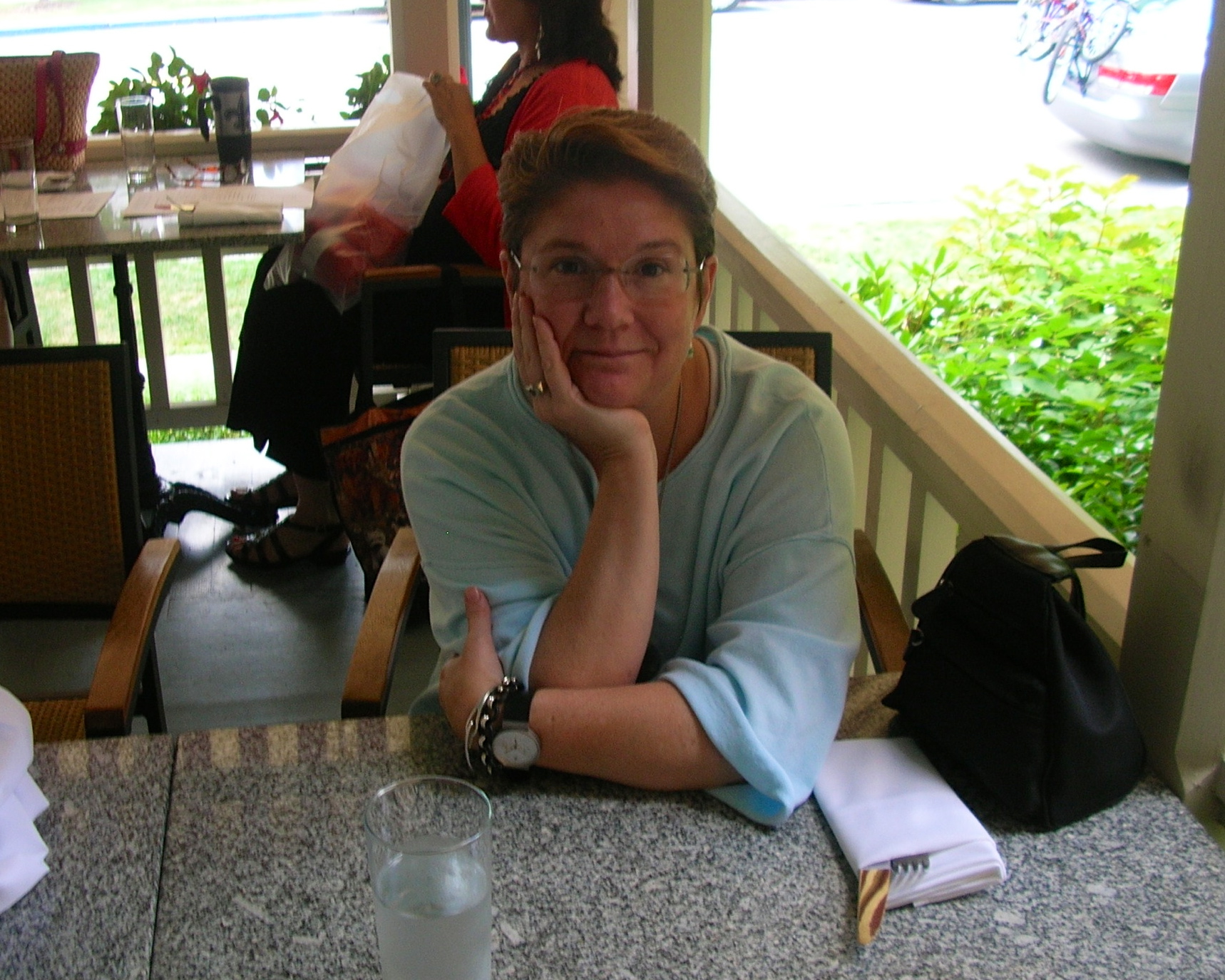
– Stephanie, tell us more about your last two novels: Content Burns and Baby Rocket?
– Content Burns is the third novel in the Warpaint Trilogy, Baby Rocket is the second and Warpaint was the first; the novels are connected by friendship and family ties, not by plot, so you don’t have to read them in any order. The WARPAINT trilogy is three intertwined novels, all of which deal with contemporary American women who are struggling to balance art, love, illness and trauma; WARPAINT (2012) is the haunting tale of friendship and rivalry between three women artists, who’ve known each other for years, who must come to terms with imminent mortality and artistic frustration; BABY ROCKET (2013) is the label given to a traumatized, abandoned child who, as an adult, has no memory of this event. She discovers her past when her adoptive father dies, and now, without him, she must piece together the past in a journey that will take her from California to NYC, from Florida to Martha’s Vineyard; CONTENT BURNS (2014) follows two women of the same Puritan name, in the same family but separated by three centuries, both of whom survive historical trauma: the massacre of the Pequot tribe in 1637 and the loss of the Twin Towers on 9/11.

– What is the biggest challenge for you during the write up process of your books?
My job as a Professor of American Literature, and as the Associate Chair of the English department at the University of Florida—it takes up a lot of time.
– How do you find the main characters of your books? Are they some persons from your real life?
– All of my characters are imagined amalgamations of people I have known, or encountered, but the characters ‘reveal’ themselves as the story-line progresses. They invent themselves if you like. And sometimes they surprise me.
– Strange Grace is your next novel; give us some hints about it?
Strange Grace is a departure for me, in that the main character is a man, and a film actor; but that said, he is a character in Content Burns, who decided he needed his own story.
– Who are you?
Stephanie A. Smith took her PhD from Berkeley (1990). Prior to UF, she free-lanced, worked as an editor for Western Imprints, as an assistant at Glamour and Mademoiselle magazines, at David Godine in Boston, and at Representations and is presently a consultant for Feminist Studies. A novelist, she is the author of: The Warpaint Trilogy, Warpaint (2012), Baby Rocket (2013) and Content Burns (2014) (Thames River Press in London); Other Nature (1995), The-Boy-Who-Was-Thrown-Away (1987) and Snow-Eyes (1985) and has won multiple fiction residencies at the Martha’s Vineyard Writer’s Residency in the Noepe Center for the Arts, Hedgebrook, Norcroft, Provincetown and Dorland.
Examining the intersection of science, literature, politics, race and gender, her essays appear in such journals as differences, Criticism, Genders, American Literature and American Literary History. A 1998 Visiting NEH Scholar at UCLA, she is the author of Conceived By Liberty: Maternal Figures and 19th-Century American Literature (Cornell 1995.) Excerpts from her new book, Household Words: bloomers, sucker, bombshell, scab, nigger, cyber (University of Minnesota 2006) appeared in Body Politcs and the Fictional Double and The Cambridge Companion to Women’s Writing. Her essay “Genetics” appears in Glossalalia: An Alphabet of Critical Keywords (University of Edinburgh Press, 2003). Currently, she is finishing a new critical book about aesthetics and the publishing industry in the United States, titled The Muse and The Marketplace, a chapter of which, “Union Blues: Melville’s Poetic In(ter)ventions,” will appear in the Duke journal Genre in 2013; she is also finishing a new novel, Strange Grace, as well as working on several other projects, in both criticism and fiction.
– What are your writing habits?
– Every day for at least two hours, usually in the early morning.
– Are you satisfied by the sales of your books
– No. Unfortunately, my press is very, very small and they have done little to no advertising. But, anyone who has read one of them loves them, so the readers I do reach are enthusiastic.
– What are you doing to promote by the best possible way your book?
– I’m trying anything and everything. Social media, friends, colleagues, local newspaper, libraries; I’m using Poets & Writers, applying to residencies, trying to go to book fairs, and working with independent bookshops. I feel like I’m shouting into a hurricane, though.
– You are a teacher of literature. Do you think that international authors on age 20+ with not so strong English, like me (I am 33), will be able to improve their English language in order to write their stories on English (I used a pro translator of my first book)
– This is hard question to answer because people learn a second or third language at different rates, and with differing levels of success. On the other hand, practice and dedication can work wonders.
– Would you compare the current English language students and those from your generation? Is there some decrease of reading interest among young people?
– Yes, most definitely. When I started teaching 25 years ago, young people had a far greater vocabulary than they do today, and read more. My generation clearly read more than the current generation, and I have seen a significant decline in advanced literacy. People can read, but on a very low level (3rd grade), and resent being encouraged to improve (unlike earlier generations who thought it important to improve). I’m afraid the current social climate in the U.S. is one that values ignorance, for complicated historical reasons that baffle me.

– What kind of advice you may give to all newbie writers who want to improve their writing skills?
– Read. Read. Read. Challenge yourself to read above your current reading level. Analyze the way your favorite writers compose—look at individual sentences, see how they are put together.
Check out the great books from Warpaint Trilogy
Warpaint
Baby Rocket
Content Burns
Here are the other works of Stephanie Smith:
Household Words: Bloomers, sucker, bombshell, scab, nigger, cyber
Other Nature
The Boy Who Was Thrown Away
Snow Eyes
SHIRLEY MCLAIN: RELAX AND HAVE FUN WITH YOUR WRITINGS
Our next guest Shirley McLain saw a lot of pain and people’s drama during her professional life. She worked as a nurse. After her retirement she published her first full book “Dobyns Chronicles”.
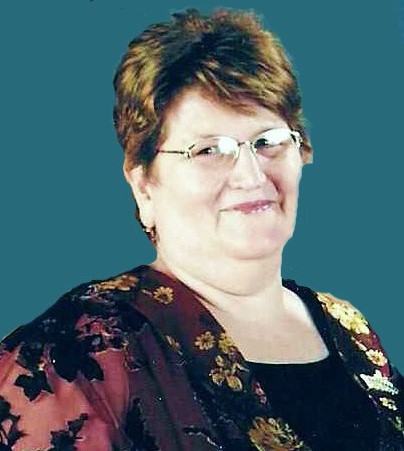
– How would you describe Dobyns Chronicles?
– Dobyns Chronicles follows a young man who has tragedy thrust upon his family and he takes the responsibility for his brother, David, and sister, Viola. In this story you follow his life from the mid 1800’s until 1955. This is a story of a changing way of life and adaptations made to survive. Charlie’s strong passion for life and dignity equipped him for survival as he raised his siblings with, likeability and dignity. It’s a story of loss, misfortune, hard times and heartbreak, but also love, determination, kindness, joy and spirituality.
Follow Charlie’s life through the adventures that shaped the man he became, and that of his family for generations.”
– When and why you decide to write the story?

– I thought about writing this book for many years. I grew up listening to my mother tell me stories about her Grandfather. I knew one day I would share this story. Parts of the story are fact but I had to create a lot about his life that I didn’t know. This story is tribute to my mother and her family.
– What was the biggest challenge during the write up process?
– Making sure that I showed Charley Dobyns as the man he really was. I did a lot of genealogy work on my mother’s family, tracing where they lived and other details.
– Is the main character someone, who you know from the real life?
– He was my Great Grandfather.
– Tell us more about it?
– I do remember meeting him and my Great Grandmother as a child in Oklahoma. We were on vacation from California we were lived at the time. We were heading back and stopped by their apartment in McAlester to tell them goodbye. I remember both of them standing out on the sidewalk hugging and kissing me and telling me goodbye. As I said before, I grew up listening to the stories my mother told about his life.
– What may we found in Shirley’s Shorts and Flashes?
– That book is a collection of short stories in different genres. There is something for everyone, from love to fantasy and horror. It was a fun book to do.
– Do you plan another book?
– I have a sequel to The Tower which is the YA mystery started. It’s going slow because of the promotion I’m doing for Dobyns Chronicles.
– What is the best part about being an author?
– I think creating the book or the story. I like the creation process with everything it entails from the setting to the characters to the story line itself.
– Do you have any advice you would give to a teen or young aspiring author?
– If you have had thoughts in your head that you want to write then just sit down and start writing. Let the flow happen, and it will. Relax and have fun with it. Get it on paper and then go back and add and subtract from it.
– Who are you?
– I was born and lived the first ten years of my life in the bay area of California. My parents moved back to their home state of Oklahoma and I then became an Okie. I have one sister so there’s just the two of us.
I am married to a wonderful man who spoils me rotten and I love it. I have two grown children, six grandchildren and a set of twins for Great Grands.
I retired from 32 years of being an RN (registered nurse). My specialties were Geriatrics as well as Labor and Delivery. I wouldn’t trade a minute of all my medical background and the adventures I encountered while practicing.
– Since you worked 32 years as a nurse. Do you miss something from your work?
– I miss interacting with my mothers and babies but most of all I miss the friends that I made along the way.
– Would you share the tough and the good moments of your profession?
– Labor and delivery is one of those areas that the majority of the time everyone is filled with joy at having this new tiny person in their life now. But when things go bad it is devastating for all who are involved. I can thankfully say that it didn’t happen many times over all the years I was practicing.
– What is your opinion on American health system and what you will change if you have a chance to do it?
– Our system has some good qualities but overall it is broken. It is overpriced and too many people are left without care. This is a topic that I could spend hours talking about and I don’t want to do that here.
– Every animal has some interesting story and a character. Tell us with one sentence, including their names, something about your three dogs and three cats.
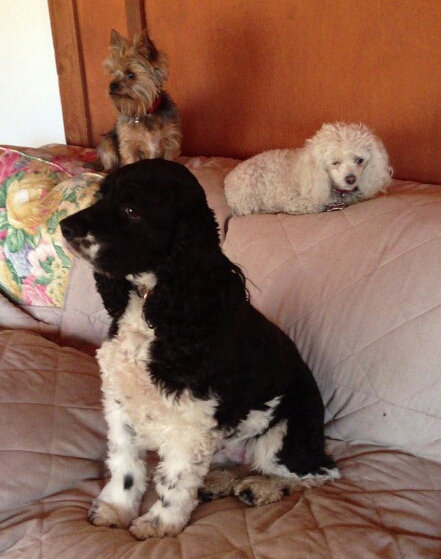
– Andy is my Springer Spaniel and he is the boss. Angel my teacup poodle thinks she is a princess and Booker, my teacup yorkie, thinks he’s a big dog. He protects everything.
If you are interested of Dobyns chronicles order here via Amazon
Learn more about Shirley:
Personal web page
FACEBOOK STORE
Twitter
PATRICK BRIGHAM: WRITING IS ABOUT 20% OF ANY PROJECT
The next guest Patrick Brigham is very interesting for me. The reason: He lived for many years in my country. He was in Sofia during the most controversial years in Bulgaria – late 90s. So here we are with the next Q&A:

– Patrick, Tell us more about your last book Abduction: An Angel over Rimini?

– Look at http://www.PatrickBrigham.co.uk and see the synopsis (I posted it below the interview).
– When was the first time when the story came up to your head and why you decide to make it as a novel?
– Rather like you I do not like trivial stories and with a background in journalism, the stories which capture my imagination are usually important. One of the EU’s great secrets is the story of illegal immigration. Bulgaria has had dreadful problems over the years, with refugees coming across its border with Turkey and elsewhere across the Black Sea. But Greece has been a favorite crossing point on the River Evros at the border where it meets Turkey and Bulgaria near Svilengrad. Inspired by the sad story of Madi McCann – who is just one of many unfortunate children abducted from within Europe – I modeled a fictional tory around an incident in Italy. This allowed me access to the Adriatic and to pursue a well traveled smuggling route from Greece, through Bulgaria and up into Western Europe.
– What was the biggest challenge during the write up process?
– You are a journalist and used to having deadlines! Having mapped out the story in my head – with many diversions I might add – it is a matter of good research and detailing, before embarking on the writing process, which comes with practice and of course my allotted time.
– What about your main character? How do you find him?
– Michael Lambert has been around for a long time. He is not a loud mouthed bully or a drunk and is a thoughtful and diligent detective. But he has suffered the usual policeman’s torment of a broken marriage, which inhibits him a bit, having been married for a number of years. In Abduction: An Angel over Rimini, there are some romantic interludes, which at the end of the story give both our main character and my readers a little hope.
– How long did it take to finish the story and publish it?
– I usually take about six months to complete a 85,000 word book. I have written three books in the last 18 months but that is just ‘the tip of the the iceberg!’
– Who are you?
I am an Englishman now living in Greece but I also lived in Sofia for some years where I started the first English language news magazine in Bulgaria, called The Sofia Western News.
– Writing is about – lets say – 20% of the any project, the rest of the time being devoted to promotion and getting ones profile in front of the reading public. This accounts for the remaining 80% and these days, which is the difference between success and failior.
– What is the current interest of the book and do you already plan your next one?
– It is early days to map out the success of this book which was only launched some three weeks ago but so far I have been interviewed on American radio and managed to fill up a few pages on Google.
– I know that your wife Madi is a PR specialist, but what do you think about promotion and marketing of the book?
– She is the expert but a word of caution to other writers: don’t be in a hurry, don’t expect things to happen quickly, and don’t be afraid to do some promotional work yourself.
– Tell me more about your first book Herodotus: The Gnome of Sofia?
– Herodotus: The Gnome of Sofia, is a fictional and humorous story about the British Embassy in Sofia, just after the changes. Herodotus is in fact a garden gnome which has been tampered with by MI6 – the British Secret Service – and is now a small and inconspicuous telephone base station, situated in the front garden of the embassy, and equipped to send and receive secret encrypted messages form its network of spy’s.
– How you ended up in Sofia and what do you think of the city?
– I first came to Sofia in 1985, during the old regime, and met many of the names and faces which have either been forgotten or have become a footnote in some historical account of the changes. Sofia in those days was bleak and rather grey and the only places of interest were hotel restaurants or if one was lucky a private party at a friends house. Artists, writers, musicians and actors, have always been the life blood of any capital, and Sofia was no exception. I haven’t been to Sofia for a while, but from memory it now looks much like any other modern European city.
But in the beginning, and after the changes, it became clear that the so-called democratization of Bulgaria was a myth and that the same people who were in power under Todor Zhivkov continued to pull the strings of those puppets who miraculously claimed to be politically unique and newly enlightened. You must tell me if this has changed – and by how much too – because people get old and die, and inevitably the mantle of power is then handed on to their young lieutenants.
– What is your Top 3 of the Bulgarian dishes?
– Bay Ganyo Restaurant serves up many good Bulgarian dishes – tongue cooked in salty butter, chicken kavarma, shopska salad and a good bottle of Khan Krum sounds about right.
– What is the difference between Bulgarians and the people from Western Europe in your personal view?
– The difference is how Bulgarians see themselves and this rather depends on how old they are too. The older generation were brought up to despise westerners under Communism. In those early days many would tell you that Bulgarians were generally disliked by the rest of Europe, and that consequently they had come to dislike other Europeans in return. But this was Bay Ganyo speaking on your behalf and having been a pawn at the Yalta Conference, it was no surprise that Bulgarians felt that they had been badly treated, and these memories do not go away in a hurry! But they are not your memories and this plethora of political contemp has now been swept away with modern technology the internet and the world wide web. Young Bulgarians are now open minded, uncomplicated, well educated and very ambitious. Good!
– You’ve been in Bulgaria during so called hungry democracy years. How you would describe those times?
– You don’t want to hear any more stories about bread cues and helpless optimism. The question is, did the Americans save you or was it the EU? I was there in the square with US Ambassador Saul Polanski outside the Sobranie that famous day in Spring where I heard all the grand hopes for Bulgaria and their US cousins. ‘You know Ralitza Vassilеva is a Bulgarian and she reads the news on CNN’ – there was a kind of forlorn hope amongst the crown that having left the strangle hold of the USSR, that Bulgarians in general would be saved by these kind and generous benefactors. Not true!
– Do you feel the touch of mafia in Sofia during the late 90-s?
– It was how much of business in Bulgaria was transacted. Bulgarian gangsters tried to emulate the Russian Mafia and were heavily involved in some very big frauds including fuel and gas fraud, VAT manipulation and of course drugs and prostitution. They were always on the lookout for new possibilities but generally, they were limited by their own intelligence. Unfortunately, this gangster steriotype has left its mark on Bulgarian society and many young people tend to develop this tough guy image as a matter of course.
– What is the most memorable moment of your stay in Bulgaria?
– The Sofia Western News used to put on a ‘Six a Side’ football championship. Up to 40 teams would take part, and it was managed by the late and great Rouman Yankov, who had been a Bulgarian professional footballer in his time, and also a TV personality. This tournament went on for some three years and took place at the Military Academy – which also had a team and also won the tournament on one occasion – and occupied a whole week. It was so popular that the players – who were all allegedly amateurs – were given time off from work by their employers, who also sponsored the occasion. It was great seeing Mobikom being thrashed by M Tel!
Take a look at Patrick’s books:
Abuduction: An Angel over Rimini
Judas Goat: The Kennet Narrow Boat Mystery
Herodotus: The Gnome of Sofia
Synopsis of Abuduction: An Angel over Rimini:
Detective Chief Inspector Michael Lambert has left the Thames Valley Police Authority and is now working for Europol as a front-line Europol Liaison Officer at The Hague. He has left England and, because of his recent divorce, now lives permanently in his holiday villa in the Calvados region of Northern France.
In An Angel over Rimini, his first case for Europol involves the abduction of a little English girl from a campsite in Riccione in Italy. It is a cold case, which has been re-opened due to public pressure, the intervention of the British government and the agitation of leading English newspapers.
DCI Lambert goes to Rimini to help the State Police re-investigate the kidnapping of little Penelope Scratchford, only to find that the investigating authorities are quite determined to blame the parents for her disappearance and murder. It becomes clear – as his investigation progresses – that there are too many unanswered questions and that much of the evidence has been ignored by the original investigating officer, Vice Inspector Daniel Bosola.
Whilst in Italy, DCI Lambert also finds time to catch up with his father’s mysterious past, during his wartime service in Bari as an RAF officer in a Pathfinder Squadron. This reveals some interesting, if not spectacular, revelations about his father’s secret wartime exploits and his peccadillos too! For Michael Lambert it is also an awakening, and romance in the shape of Countess Beatrix d’ Aragona finally brings the Europol detective back to life emotionally, somehow blotting out the past and his sterile marriage to Arabella.
Continuing his pursuit of the missing English girl, his investigations take him to Greece and the established smuggling routes through the Evros River delta up into Bulgaria. In Greece he discovers the horrors of organised illegal immigration, people trafficking and the gangsters involved. He also finds out that these established smuggling routes are Al Qaida’s way into Greece and the EU.
In his travels he comes across corrupt lawyers and orphanages in Bulgaria, but in so doing he also manages to pinpoint an established child trafficking trail which ultimately leads him back to Central Europe. The discovery of an illegal child adoption group in Hanover,the criminals who operate it, and the information gleaned during his trip through Bulgaria help DCI Lambert to learn if little Penny Scratchford is alive or dead.
HOW TO BEAT WLADIMIR KLITSCHKO
In the last 17 years the World heavyweight boxing champion Wladimir Klitschko has just three losses. The first one was in 1998. In front of his country-mates the Ukrainian was knocked out by the American outsider Ross “The Boss” Puritty.
As you probably know, I am a Bulgarian and a sports journalist. On 6 September 2014 I will travel to Hamburg, Germany, to cover and to commentate for Nova Tv the fight between Wladimir Klitschko and Bulgarian Kubrat Pulev.
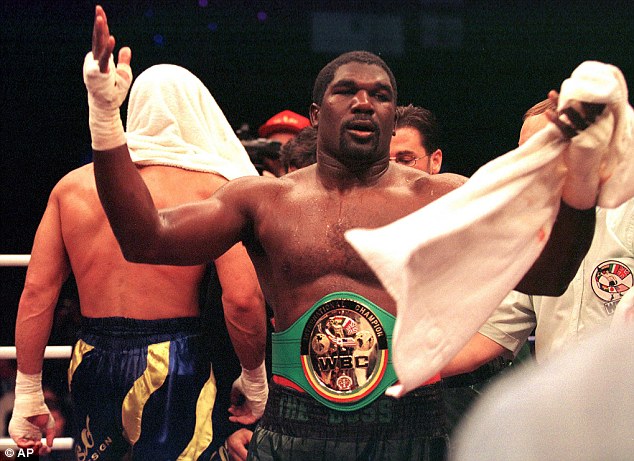
This was the reason to contact with Ross “The Boss” Puritty. He was very gentle to give me an interview via phone. The entire story you may read on the most popular boxing news source fightnews.com, where I am contributing from time to time. Just in short:
– Overhand right is the best shot against Wladimir
– Never box with Klitschko, you must fight him
– The stamina and the good chin are essentials
Check out the full interview here
MADI PREDA: THE FIRST PERSON WHO SHOULD PROMOTE A BOOK IS THE WRITER
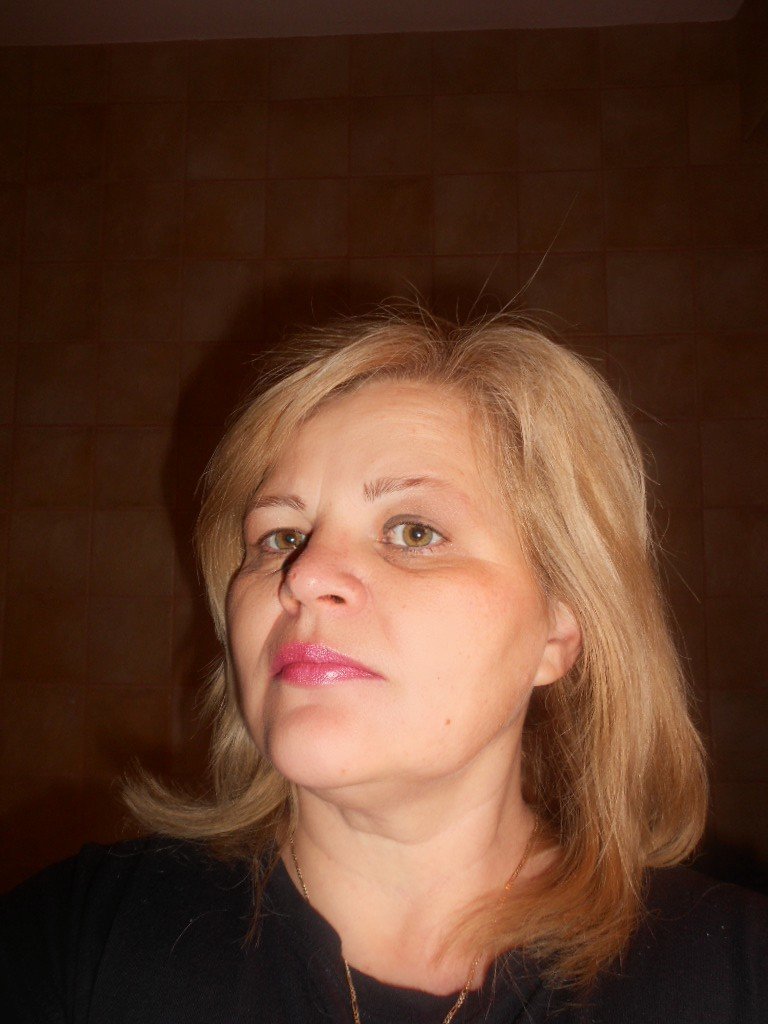
Madi Preda is a very special author. All the reviews of project “How To Promote and Market Your Book – Publicists Tips & Tricks” are very positive. She dedicated her time to help authors. This is why Madi is so interesting to all of us – indie authors.
– What is your book about?
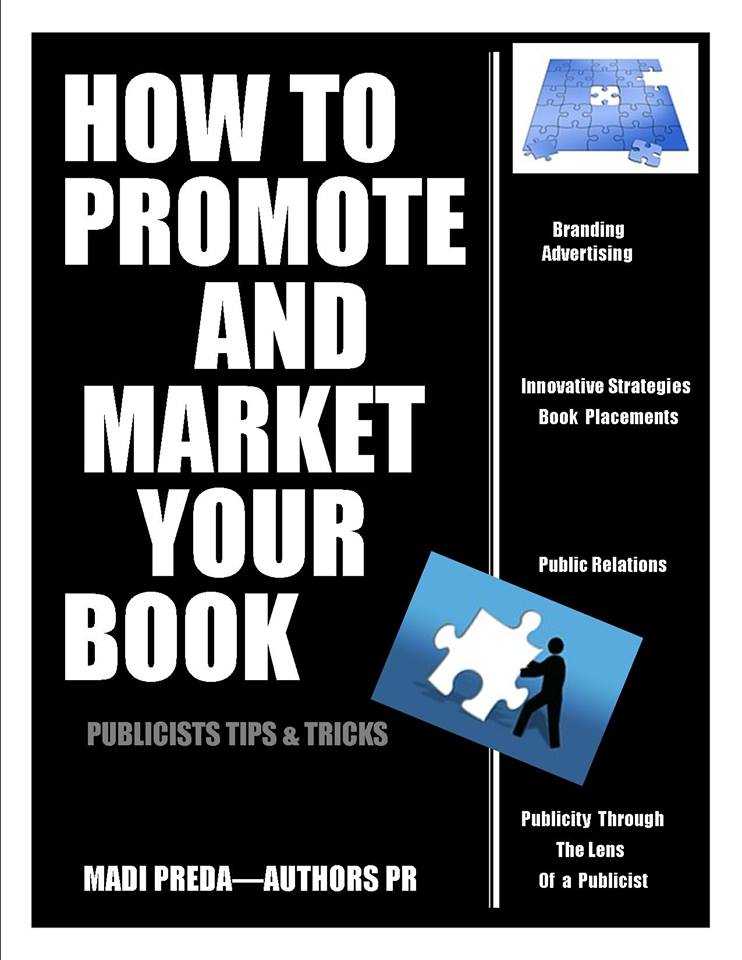
– First of all I want to thank you for having me as a guest on your blog today. As the title sais “How To Promote and Market Your Book – Publicists Tips & Tricks” is a book about book marketing,based on my experience as a publicist and its meant to be a help for every writer. The book contains general notions about book marketing, step by step ideas on how to build an author brand. Three case studies for promotion on different genres and lots of resources and useful contacts.
– How you decide to write this kind of book?
– I have met many authors complaining that their publisher don’t do much publicity for their books and I think here is a bit of misunderstanding. The first person who should promote a book is the writer because he knows best what the message of his story is and he is the most qualified person to share this message with the audience. How readers perceive a book has an important role when it comes to brand yourself as a writer, to promote a book efficiently and the ability to do this has become essential. No matter how talented an author is – if the readers don’t know about a book, how will they know to buy it or if it is a good one or not?
How To Promote and Market Your Book by Madi Preda is an easy to read and understandable guide designed to help every author to chart their own path and stand up and say to the world “Here is my book” and communicate the message from between the covers in an original way that call to action and make their book a must read.
Writing a book without promoting it is like waving to someone in a dark room. You know what have you done but nobody else do.
– What was the biggest challenge during the write up process?
– The biggest challenge for me it was not to write in my language, which is Romanian and always there was the fear that I will make mistakes and readers will penalize me for that. I was lucky enough to meet Nancy King – the author of Changing Spaces and she did the editing for me. So that problem was solved.
Another challenge it was my determination to do everything on my own, and that was a big one. I designed the cover and I had to find out how to format an e-book. Many new things for me and I had to study a bit in order to complete this project.
– How much time you need to finish the story and to publish it?
– It wasn’t such a long time. Many materials such as lists of bloggers and other resources were part of my daily activity as a marketer. Then there was a pre order campaign for about a month and finally the book was published on 1st of July. All together about three months I think.
– Who are you?
– This is a tough one. You know, I can do PR for other people quite easy but I find difficult to talk about me. So,lets start with…I am Romanian and I am living now in Greece. I was dreaming to become a doctor and I ended up by being an economist. Because I couldn’t practice that here in Greece and because I didn’t manage to learn the language, I was trying hard to find something to do online using English language. I like reading and when my husband published his first two novels, “Herodotus The Gnome of Sofia” and “Judas Goat The Kennet Narrow Boat Mystery” I helped him a bit by designing some electronic newsletters and spread the word about his novels. After that the idea grew and here I am doing promotion and public relations for authors.
About my human being, I have to say that I always liked to see only the good side in people and in everything which happens to me.
– Do you have some kind of system or writing procedure when you wrote the book?
– Not really, it is my first book and I like to say that I am unique, not necessary as a plus. Everything it was about back and forwards, cutting some pieces off, developing some others, cover design before finishing the book.
– Are you satisfied by the sales of the book and do you plan another one?
– I think it is a bit early to discuss the book sales, and it is not that the point. More important for me is the engagement and the response for my targeted audience; with that yes, definitely I am satisfied. The book it has a few reviews on GoodReads, and lucky me all of them are five stars.
Also I am satisfied with the number of downloads during the pre order campaign and I have to say its worth the effort to set it up and this is an advice for every single author. If they do pre orders and they promote the pre-order campaign efficiently they will be pleased with the results.
– What are you doing to promote the promotion book?
– You made me smile with this question. You know what is amazing, I found myself in the position of others now and sometimes I am a bit shy to say, hey here is my book. Funny enough I think I do less for my book than I have done for others.
*Please list the Top 5 advises that authors must follow in order to make good promotion?
*Do research to find the right audience
*Draw a marketing plan
*Be cooperative, ask and offer help to other authors
*Start marketing the book before its finished (post excerpts, do a cover reveal, mention it as a work in progress every time you can)
*”Think outside the box” and find new and original ideas
– What is the rate of importance between being a good author and good promoter in order the book to be well discovered by the readers?
– I don’t like to talk about numbers and statistics, what I can say is that being a good writer is not enough.
– You are born in the Balkan peninsula, how would you describe with three phrases this part of the earth?
– In that part of the world, generally speaking, people are very sensitive and caring people with an open and sincere display of emotions. Abroad this is not always so… and the humanity has been polluted by materialism and wrong values. Probably being away makes me to idealize a bit and to remember only the good things.
You may find “How To Promote and Market Your Book – Publicists Tips & Tricks” on:
Barnes & Noble
Smashwords
Kobo
DO YOU WANT TO KNOW MORE ABOUT ME?
Then check out my interview for Ira’s Love Hate Poetry web page. Go here
BOOK IN THE TRAINING BAG
Here is a very interesting photo, made by Ian Haya! Credits to him and his club (www.Facebook.com/justliftinc and http://www.JustLift.ca)!
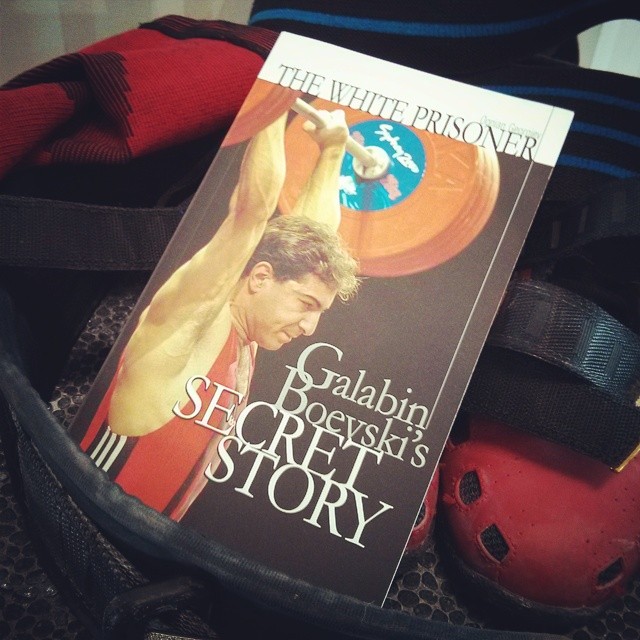
The print copy of “The white prisoner: Galabin Boevski’s secret story” is available here:
CARMEN STEVENS: I CRAFTED THE MAIN CHARACTER FROM THE DARK SIDE OF MYSELF
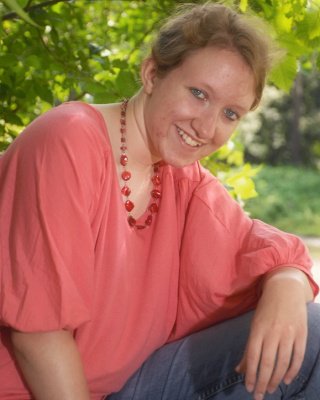
The next guest in our Q&A interviews with authors section is Carmen Gross. She is known by her pen name as Carmen Stevens. The American is born in Fargo and is one of the youngest writers around. Her first book “Anne” was published last year.
– What is your book about?
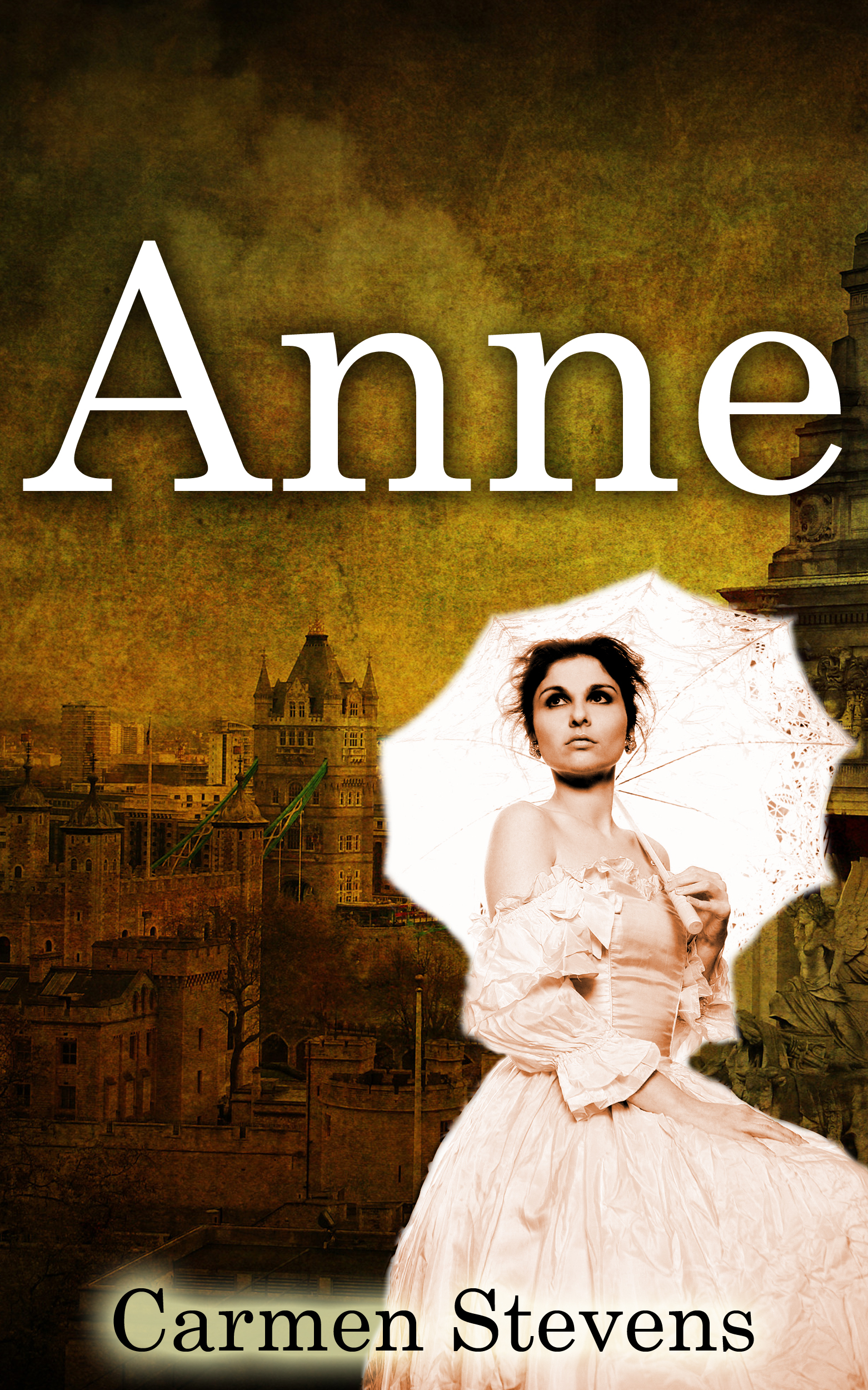
– My book is a historical thriller, titled “Anne”. It involves an egotistical, orphaned girl in eighteenth-century England who longs for true happiness in her life, but it’s not until Anne endures a series of hardships that she realizes what it means to be truly satisfied.
– How you decide to write the story?
– I have always loved to write, and I felt that I needed to write a story that would tell the world of the importance of loving and getting along with one another, not to take anything for granted, be rich in love, and all of the other themes that my story is about.
– What was the biggest challenge during the write up process?
– I didn’t have too much difficulty, except in some punctuation and grammar matters. I have trouble with commas.
– Tell us something more about your main character? Is it close to someone from your real life?
– I think Anne is a very interesting, complex character, and I think I kind of crafted her from the dark side of myself. Anne is fiercely independent, haughty, indifferent, seductive, potentially cruel, and way too prideful for a girl of her circumstances. She’s also incredibly selfish, putting her own well-being before anyone else’s. However, Anne dreams of a better life, a life in which she doesn’t live on the dirty streets of London, England, and in order to find this happiness, she must endure certain sufferings and gradually learn to be a kinder person.
– How much time you need to finish the story and to publish it?
– It actually took me a few years to finish writing “Anne,” but it took less than a day to publish it. This is because I self-published it.
– Who are you?
– I’m Carmen Gross, but my pen name is Carmen Stevens. I’m a 22-year old full-time college student and author. I’m studying law, but for the summer I’m working. I self-published “Anne” in July of 2013.
– What are your writing habits?
– I like to totally flesh out a story before writing it from the beginning. I believe that a person should know where a story is going to go before writing the actual story.
– Are you satisfied by the sales of the book and do you plan another one?
– I read somewhere that if a self-published author makes under 100 sales in his/her first year of having the book published, then that is a good thing. My book has only been out for a year and I’ve about made this goal, so for now, that has me satisfied. I love writing, so I certainly wouldn’t mind writing another book someday, but I think that would depend on what kind of reception my current novel takes and if my readers ever desire for me to write another.
– What are you doing to promote by the best possible way your book?
– I have several things I’m trying to do for promoting my novel. I have a blog that I write in, I ask people to review my story, and I keep my eyes open for any opportunities to expose my book, like author interviews and spots on others’ blogs.
– Who was the first person who took a full look into your book and what he told you?
– I don’t exactly remember who the very first person was who read my book, but one of the first must have been a blogger who I followed. She’s an author herself, and she was very willing and generous to read and review my book and give it a high rating.
– If you may select just one thing to do on Saturday evening, what it will be and why – to write, to go out with friends or to read a book?
– I like having my fun on weekends, so I think I would definitely love to hang out with friends on a Saturday night. If my friends happened to be busy, though, I love the thought of curling up at home with a good book. I love reading, and I love how it can take you away into a whole different, exciting world.
Check out “Anne” here
To read more interviews with authors go here
 Land Of Books